
The enduring challenge of earthquake prediction isn’t a failure of technology, but a fundamental problem of timing. For decades, seismologists have faced a “Doc Brown” dilemma – knowing that an earthquake will happen somewhere along a fault line is one thing, but knowing when it will happen is another entirely. This uncertainty, famously illustrated in Back to the Future with the unpredictable nature of lightning, has hampered efforts to understand the complex processes that trigger these devastating events. Now, a new project nestled deep within the Swiss Alps is attempting a bold solution: create their own earthquakes, on a small scale, to study them in unprecedented detail.
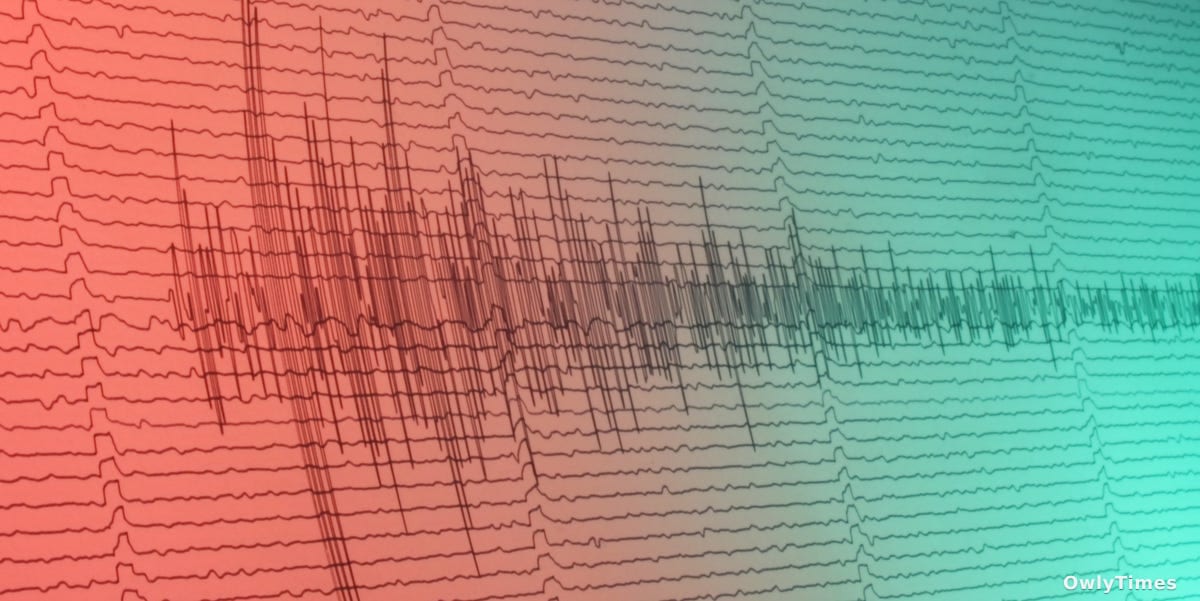
The Fault Activation and Earthquake Rupture (FEAR) project, based at the Bedretto Underground Laboratory for Geosciences and Geoenergy (BedrettoLab) in Ticino, Switzerland, isn’t about inducing large-scale seismic activity. Instead, researchers led by ETH Zurich are using hydraulic injection to trigger tiny, non-damaging earthquakes along a naturally occurring fault line. This approach, detailed in a recent paper published in Seismica, represents a significant shift in earthquake research, moving beyond observation to controlled experimentation. The initial “FEAR-1” experiment, conducted in late 2024, involved 14 injections that generated approximately 9,000 seismic events, all meticulously recorded by a dense network of sensors embedded within boreholes surrounding the fault.
What’s crucial to understand is that these aren’t simply laboratory simulations. While rock mechanics labs provide valuable insights into fault behavior, they often struggle to replicate the complexities of a natural geological setting. Florian Amann, an engineering geologist from RWTH Aachen University and co-author of the study, emphasized this point to the European Research Council (ERC), stating, “If we want to understand earthquakes, we need sensors extremely close to where they happen…But in nature, you could wait a lifetime and never be in the right place. In FEAR, we go where we know we can trigger a tiny earthquake and measure it.” This ability to study earthquake initiation and propagation in a real-world fault zone, rather than a simplified model, is the core innovation of the FEAR project.
This article draws on reporting from popularmechanics.com.
The project’s design also addresses a critical safety concern. Hydraulic injection is a common practice in industries like fracking and superhot-rock geothermal energy, both of which have been linked to induced seismicity. By carefully controlling the injection process and monitoring the resulting seismic activity, FEAR aims to improve our understanding of how these activities can trigger earthquakes – and potentially how to mitigate those risks. Stefan Wiemer, also from ETH Zurich, explained to the ERC that “FEAR tries to understand better how earthquakes really start, how they propagate, and how they stop.” This knowledge isn’t just academically interesting; it has direct implications for the responsible development of geothermal energy and the safe operation of resource extraction industries.
However, it’s important to acknowledge the limitations of this approach. While the controlled environment of BedrettoLab allows for detailed data collection, the induced earthquakes are still relatively small in magnitude. The FEAR-1 experiment focused on events detectable only by instruments a few meters away. Next month, the team plans to increase the magnitude to 1, a step up but still far below the scale of most naturally occurring earthquakes. As Wiemer points out, the underlying physics are the same regardless of magnitude, but extrapolating findings from micro-earthquakes to larger events requires careful consideration. Furthermore, the MC fault, while natural, is only a segment of a larger, more complex fault system. The behavior observed at BedrettoLab may not be representative of all fault zones.
The next phase of FEAR will be critical. Increasing the magnitude of the induced earthquakes, while maintaining rigorous safety protocols, will allow researchers to test the scalability of their findings. Specifically, they will be looking for patterns in the seismic data that can predict how an earthquake will grow and potentially stop. The ultimate goal isn’t to eliminate earthquakes entirely – a task likely beyond our reach – but to improve our ability to assess seismic hazards and develop strategies to reduce their impact. The question now is whether the insights gained from these carefully orchestrated tremors will translate into a more predictable and safer future for communities living in earthquake-prone regions. Will we be able to move beyond simply reacting to earthquakes and begin to anticipate, and perhaps even influence, their behavior?