
The collective intake of breath across England on Wednesday night was almost audible. Just a week prior, the national mood was so dizzyingly optimistic that the BBC was already exploring the political feasibility of a nationwide bank holiday should the Three Lions finally bring football home. But in the 92nd minute of a grueling semifinal in East Rutherford, that dream dissolved into the familiar, cold ache of what-might-have-been. It is the human drama of the World Cup: the razor-thin margin between national ecstasy and a quiet, agonizing flight to the third-place playoff.
Tactical Retreat and Political Critiques
The tactical collapse that sealed England’s fate has ignited a fierce post-mortem that reaches far beyond the sports pages. England took a promising lead in the 55th minute when winger Anthony Gordon converted a cross from Morgan Rogers, seemingly putting one foot in the final. However, as Euronews reported, manager Thomas Tuchel responded by retreating into a defensive shell, bringing on Aston Villa centre-back Ezri Konsa and Newcastle full-back Dan Burn to transition into a back five. This tactical shift invited relentless pressure from Lionel Scaloni's Argentina squad, culminating in an 85th-minute equalizer by Chelsea midfielder Enzo Fernández and a heart-wrenching, stoppage-time winner by Lautaro Martínez.
The backlash was swift, with former England captain Gary Lineker publicly questioning whether Tuchel was truly the right man to break England’s decades-long curse, according to Al Jazeera. Even US President Donald Trump, speaking alongside FIFA President Gianni Infantino in New York, chimed in on the tactical blunder. Trump questioned the decision to force England striker Harry Kane into a defensive role, noting, "You have a great player in England, who I play golf with, Harry... I think they perhaps made a mistake when they made him a defensive player." While FA chief executive Mark Bullingham offered his full backing to Tuchel, calling the defeat "heartbreaking," the tactical retreat felt painfully reminiscent of the cautious, near-miss eras of former manager Gareth Southgate.
A Generational Convergence Born in a Bathtub
Beyond the tactical debates lies a narrative so cinematic it feels scripted by destiny itself. When Argentina faces Spain in Sunday's final, the match will serve as a generational passing of the torch between Lionel Messi and Lamine Yamal. The poetic symmetry of this matchup is anchored in a newly resurfaced 2007 charity photo shoot, captured by photographer Joan Monfort for the Sport newspaper and UNICEF. In those photos, a 20-year-old Messi is seen gently bathing a baby in a plastic tub—an infant who, by pure chance, was Yamal, whose family won a charity raffle in Mataro.
Monfort expressed his sheer disbelief at the coincidence to reporters, admitting that while he never used to believe in destiny, he is now starting to have his doubts. Messi, who solidified his status as a global icon at Barcelona before leaving in 2021, now faces the very teenager he once bathed, who has since emerged as Barcelona’s newest prodigy. This final is not just a battle for international supremacy; it is a living mythology, a full-circle moment for a sport that thrives on the magic of its own lore.
Wildfires, Rings, and the Changing Landscape of the Game
As Sunday's final at the New York-New Jersey Stadium in East Rutherford approaches, external forces are threatening to pressure the spectacle on the pitch. Hazy skies and hazardous air quality, caused by drifting smoke from Canadian wildfires in northern Ontario, have disrupted team preparations. Spain was forced to conduct an outdoor training session in northern New Jersey under severe health advisories, with media allowed to watch only the first 15 minutes. Meanwhile, Argentina remained at its training base near Atlanta, avoiding the worst of the pollution due to its southern location.
This environmental hazard has drawn sharp criticism from medical experts, including Dr. Courtney Howard, an emergency physician and Global Climate and Health Alliance official, who warned that elite athletes should not be exercising in such conditions. Despite the environmental anxiety, organizers maintain that the final will proceed as scheduled on Sunday, July 19, at 19:00 GMT. The spectacle will also mark a major cultural shift for FIFA, which plans to introduce North American-style championship rings—producing 30 custom rings for the winning squad and selling 1,996 collector's editions to fans.
The Final Countdown to Glory and Redemption
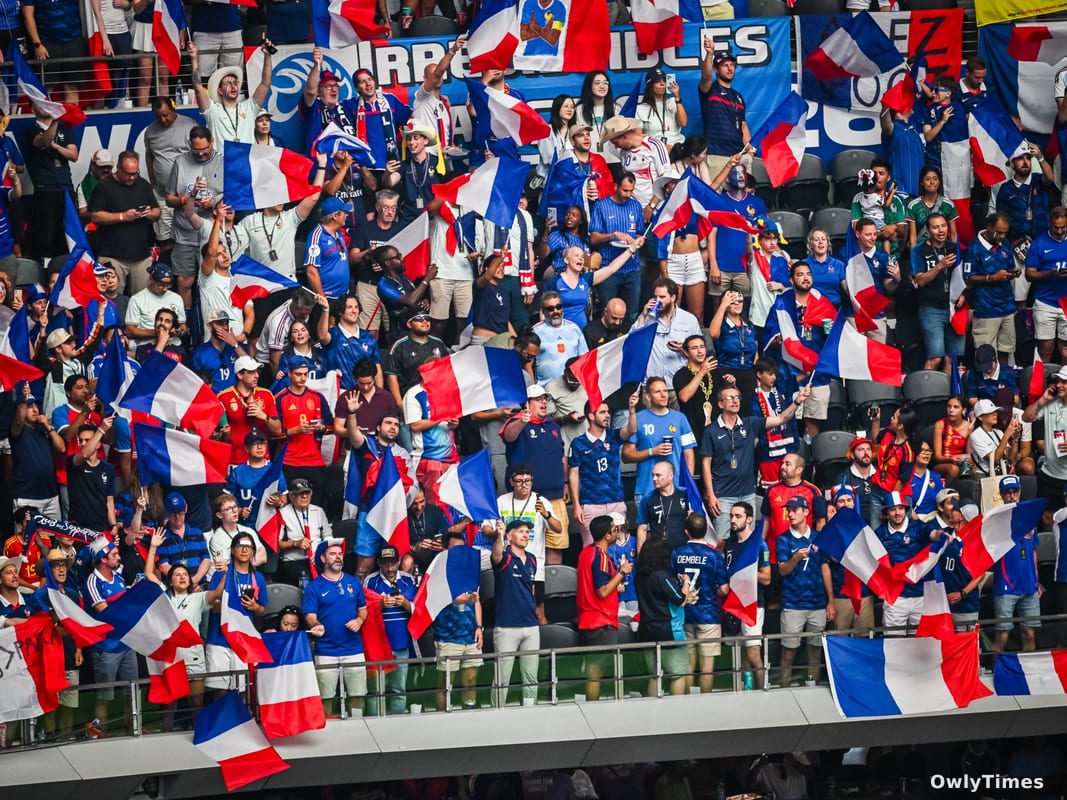
Before the world crowns its champion, Saturday's third-place playoff in Miami on Saturday, July 17, will see a dejected England battle Didier Deschamps' France, a match Opta's supercomputer heavily favors the French to win. According to pre-match simulations, France has a 50.7 percent chance of winning in regulation, compared to England's 25.6 percent chance. But regardless of who claims third place, the true cultural gravity of this tournament lies in Sunday's final, where President Trump is scheduled to present the trophy. This tournament has proven that football is no longer just a game played within the lines of a pitch; it is an intersection of global politics, environmental realities, and deeply human stories of fate.