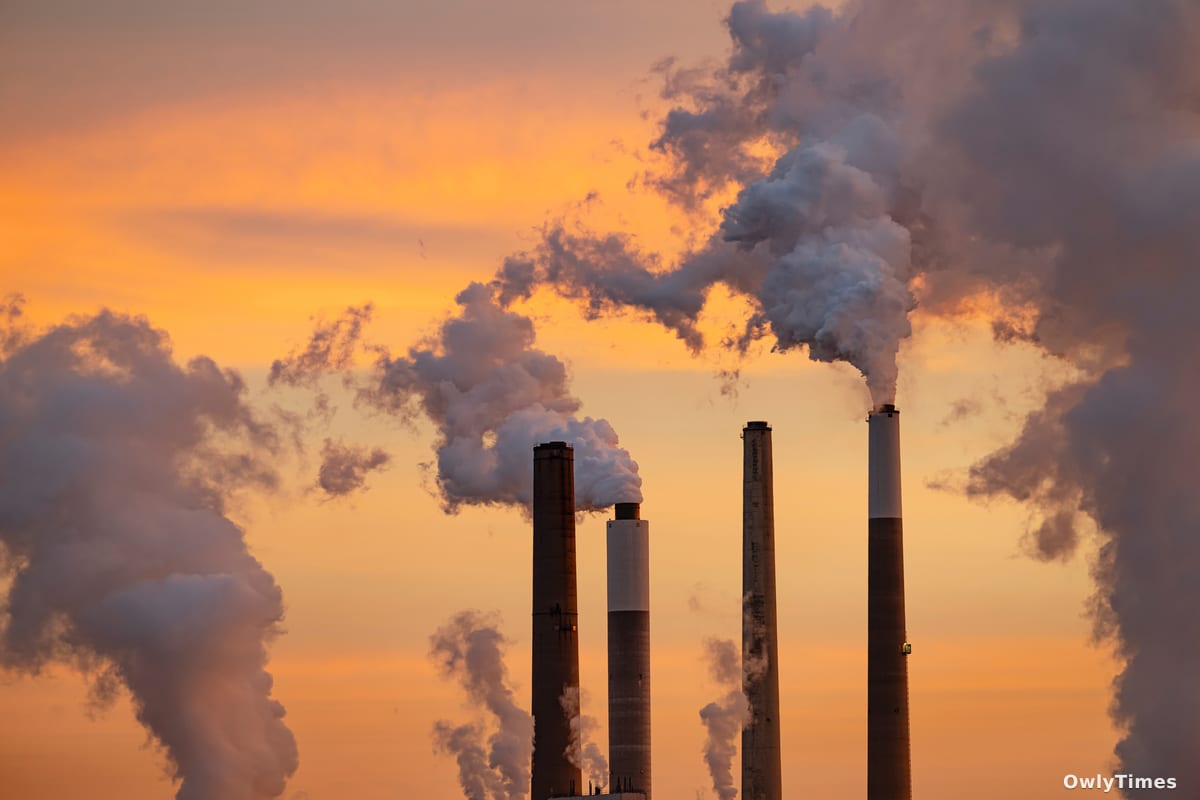

The question of whether the federal government can – and should – regulate greenhouse gas emissions has been a legal and political battleground for decades. Recent actions by the Environmental Protection Agency (EPA) to rescind the “endangerment finding” – the scientific determination that greenhouse gases threaten public health – aren’t simply a rollback of environmental policy; they represent a fundamental challenge to the legal foundation for climate action in the United States. While headlines proclaim a sweeping deregulation, the reality is a complex legal maneuver with uncertain outcomes, and one that fundamentally shifts the debate from whether climate change is dangerous to whether the EPA has the authority to address it.
The roots of this conflict lie in the 2007 Supreme Court case Massachusetts v. EPA. In a 5-4 decision, the Court ruled that carbon dioxide and other greenhouse gases qualify as “air pollutants” under the Clean Air Act, triggering the EPA’s obligation to regulate them if they were found to endanger public health. Eight years later, in 2009, under the Barack Obama administration, the EPA fulfilled that obligation, formally finding that greenhouse gases do indeed pose a threat. This finding became the bedrock for regulations targeting emissions from vehicles, power plants, and oil and gas operations. The current EPA, under the Donald Trump administration and now continuing with Joe Biden’s appointed administrator Lee Zeldin, is attempting to dismantle that foundation, arguing the original interpretation of the Clean Air Act was a misreach of Congressional intent.
Pat Parenteau, an emeritus professor at Vermont Law and Graduate School and former EPA regional counsel under Ronald Reagan, describes the move as “the most devastating decision by the federal government endangering public health and welfare in the history of the country.” He clarifies that the administration isn’t necessarily disputing the science of climate change itself, but rather claiming a lack of legal authority to act on it. This is a crucial distinction. The EPA’s argument, as Parenteau explains, is essentially that even if the science is “rock solid,” the agency lacks the power to regulate based on the current wording of the Clean Air Act. This strategic shift avoids a potentially losing battle over established climate science, instead focusing on a narrower legal challenge.
See the original insideclimatenews.org story for the full account.
The projected consequences of repealing the endangerment finding are substantial. According to estimates discussed in the Living on Earth interview, inaction could lead to eighteen billion tons of additional pollution in the atmosphere by 2055, contributing to climate change and resulting in 58,000 additional deaths linked to climate-related events like heat waves, floods, and wildfires. Beyond mortality, the EPA’s action is projected to cause 37 million more asthma attacks among Americans. While the Trump administration touted a $1 trillion cost savings for industry by removing regulatory burdens, Parenteau points out this calculation ignores the far greater economic costs associated with the impacts of a changing climate, potentially increasing fuel prices by 25 cents per gallon by 2035 and resulting in $1.7 trillion in consumer impacts. These figures aren’t simply abstract projections; they represent tangible risks to public health and economic stability.
The legal path forward is far from certain. Parenteau outlines three potential scenarios, each hinging on the speed of litigation and the composition of the Supreme Court. The first, and most optimistic from an environmental perspective, is that the case won’t even reach the Supreme Court before a new administration takes office, allowing a reversal of the repeal. The second scenario involves the case reaching the Court and being decided 5-4 in favor of upholding the original Massachusetts v. EPA ruling, mirroring the initial decision. However, Parenteau acknowledges the possibility – and expresses concern – that the Court could overturn its previous ruling, effectively stripping the EPA of its authority to regulate greenhouse gases unless Congress intervenes. This outcome would represent a significant setback for federal climate policy.
It’s important to understand that the EPA’s rule takes effect 60 days after publication in the Federal Register, but its implementation is currently stayed pending legal challenges brought by states like California and Massachusetts. These challenges seek a stay of the rule, essentially pausing its implementation while the courts review its legality. This legal maneuvering underscores that the fight over the endangerment finding is far from over. The EPA’s action isn’t a definitive end to federal climate regulation, but rather a calculated attempt to force a showdown in the courts and ultimately reshape the legal landscape of environmental protection.
Looking ahead, the critical question isn’t simply whether the EPA’s repeal will stand, but what signal this sends to states and the private sector. If the federal government retreats from climate regulation, will states like California, already leaders in environmental policy, step up to fill the void? Will businesses continue to invest in sustainable practices, or will the removal of federal incentives and regulations stifle innovation? The next few years will be pivotal in determining the future of climate action in the United States, and the outcome will depend not only on legal rulings but also on the political will of states, businesses, and future administrations. We should be watching closely to see if the D.C. Circuit Court grants a stay of the rule, and whether the case ultimately reaches the Supreme Court – and, crucially, how Justice Barrett votes if it does. The fate of federal climate regulation may well rest on her decision.