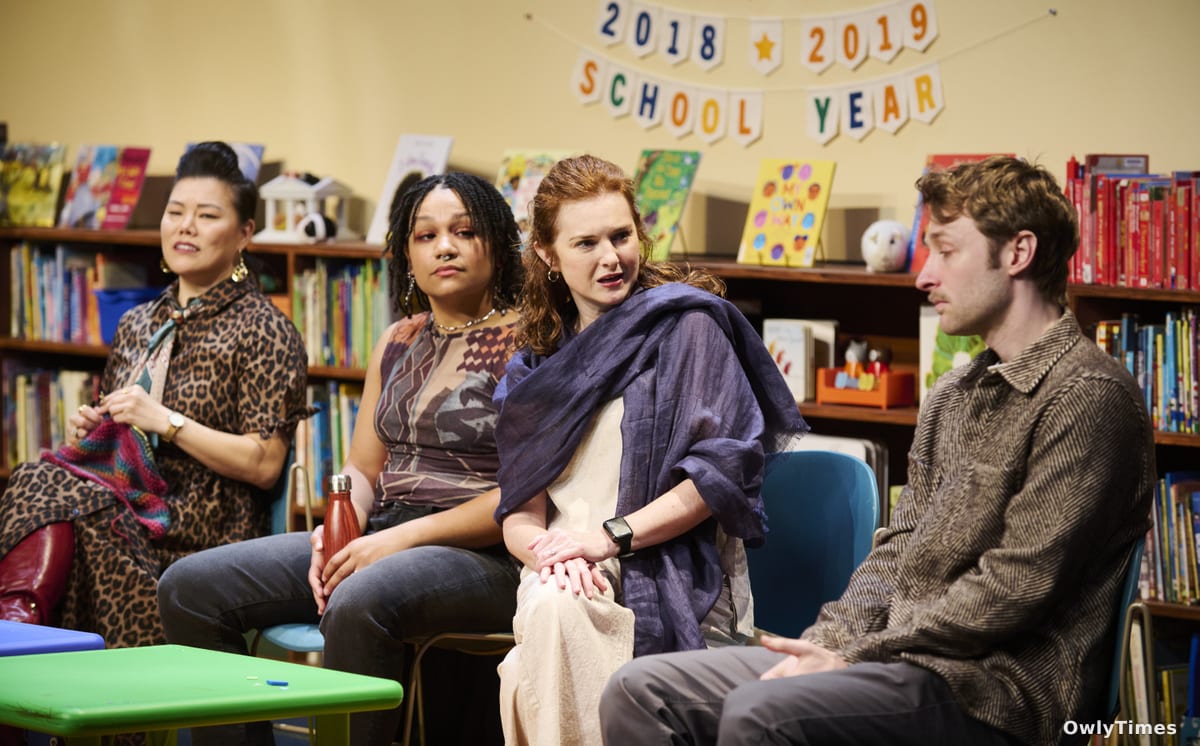

The hushed anticipation in the City Theatre lobby last night wasn’t just for the curtain to rise on “Eureka Day.” It was a quiet reckoning. As patrons filtered in, checking phones for the latest measles outbreak updates – the US is already seeing numbers roughly three times higher than this time last year – the irony wasn’t lost on anyone. Jonathan Spector’s play, set in the seemingly idyllic, hyper-progressive world of a Berkeley, California private school, isn’t just a comedy; it’s a chillingly prescient mirror reflecting our current fractured reality. It’s a reminder that the battles over public health aren’t new, and that the fault lines run far deeper than political affiliation.
“Eureka Day,” which premiered in 2018, follows the executive committee of a progressive school as they grapple with a mumps outbreak and the thorny issue of vaccination rates. What makes the play so unsettling, and what’s resonating with audiences now more than ever, is where this conflict erupts. We’ve become accustomed to framing vaccine hesitancy as a right-wing phenomenon, a talking point amplified during the pandemic. But Spector shrewdly points out that the seeds of this discord were sown in liberal enclaves long before Donald Trump entered the political arena. The play’s brilliance lies in depicting characters who, by all outward appearances, share the same values – a commitment to holistic wellness, social justice, and informed decision-making – yet find themselves utterly paralyzed by a single, divisive issue.
The play gained unexpected notoriety in 2025 when a planned production at the Kennedy Center was abruptly canceled shortly after Trump assumed the board chair of the Manhattan Theatre Club. While MTC cited “financial challenges,” the timing felt less than coincidental, fueling speculation that the administration objected to a play that, despite satirizing progressive ideals, ultimately champions childhood vaccinations. This cancellation wasn’t merely a theatrical setback; it was a stark illustration of how easily art can become collateral damage in the culture wars. It highlighted the precarious position of narratives that challenge entrenched beliefs, even those rooted in demonstrably false information. The fact that “Eureka Day” then went on to a successful Broadway run in 2024 speaks to its enduring power, but the Kennedy Center incident remains a cautionary tale.
See the original wesa.fm story for the full account.
Adil Mansoor’s direction at City Theatre is particularly effective in capturing the play’s chaotic energy. The staging, especially the use of projected chat avatars during a virtual community meeting, brilliantly satirizes the performative outrage and unproductive discourse that dominate online spaces. The escalating comment wars, drowning out the onstage actors, are painfully familiar to anyone who’s attempted to navigate a contentious online discussion. But Spector doesn’t simply mock the absurdity of it all. He delves into the underlying psychological mechanisms that fuel this polarization, exploring how deeply held beliefs can render even the most basic concepts – like “safety” or “scientific consensus” – utterly meaningless. When “safety” means something different to the vaccinated and the unvaccinated, genuine dialogue becomes impossible.
Beyond the headlines about rising measles cases and political maneuvering, “Eureka Day” asks a fundamental question: can we even agree on what constitutes reality? The play doesn’t offer easy answers, and it doesn’t shy away from portraying the frustrating limitations of empathy and reason. It suggests that even among those who ostensibly share the same values, the chasm of distrust and misinformation can be too wide to bridge. Daina Michelle Griffith’s portrayal of Suzanne, the anti-vax parent, is particularly nuanced, avoiding caricature and instead presenting a complex individual driven by genuine, if misguided, concerns. This isn’t a play about villains; it’s a play about the human capacity for self-deception and the corrosive effects of ideological rigidity.
As we navigate a landscape increasingly defined by echo chambers and misinformation, “Eureka Day” serves as a vital reminder that the fight for public health isn’t just a scientific debate; it’s a cultural and political one. The question isn’t simply whether we can convince people to get vaccinated, but whether we can rebuild a shared sense of trust and a common understanding of facts. Will the current measles outbreak serve as a wake-up call, or will it further entrench existing divisions? That’s the uncomfortable question audiences will be grappling with long after the curtain falls at City Theatre.





