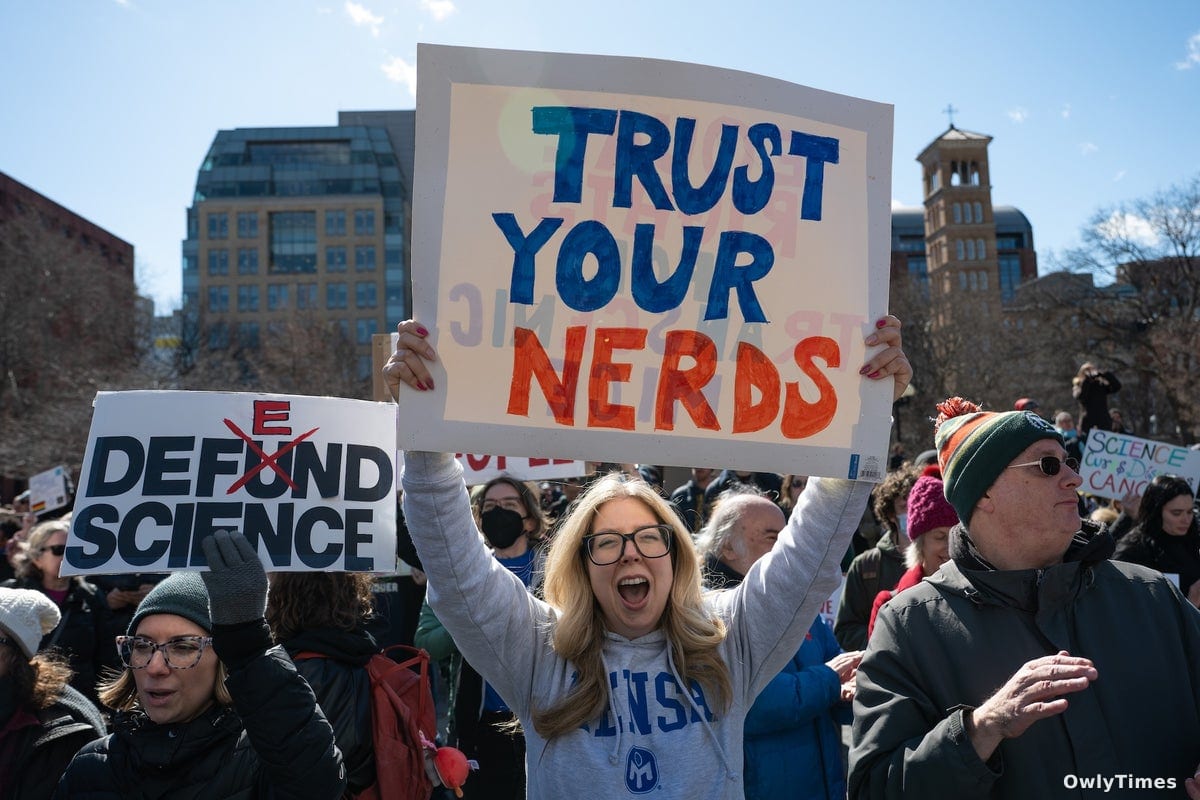

The surge in measles cases—over 1,000 confirmed infections in the first two months of 2025 alone, reversing decades of progress toward elimination—isn’t simply a public health statistic. It’s a symptom of a broader, and increasingly urgent, crisis: the erosion of trust in scientific institutions and the deliberate undermining of evidence-based policy. This isn’t a debate about abstract scientific principles; it’s about real-world consequences unfolding now, and the upcoming “Stand Up for Science” rally on March 7th represents a critical inflection point in how the scientific community responds. While headlines focus on protests against the Trump administration, the deeper story is about a fundamental shift in the relationship between science, policy, and public wellbeing.
The second nationwide “Stand Up for Science” rally, organized by the nonprofit founded by Colette Delawalla, a Ph.D. candidate in clinical psychology at Emory University, is expanding significantly. Demonstrations are planned in 25 cities across the country, including Washington D.C., New York City, and Seattle, with additional smaller events in another 25 locations, alongside a virtual component. This expansion isn’t a sign of escalating alarmism, but a direct response to developments since the first rally in March 2025. As Delawalla herself notes, “Last year we were warning people…Pretty much everything that we warned about has happened, which is extraordinarily unfortunate.” That initial warning centered on the potential for politicization of science, political interference in research, and the dangers of misinformation surrounding public health issues like vaccines. The subsequent actions of the administration—slashing research funding, downsizing science agencies, and overhauling public health policies—have validated those concerns.
The impact extends beyond budgetary concerns. Researchers are now reporting a subtle but significant shift in how they approach grant writing, tailoring proposals to align with the administration’s stated priorities, rather than pursuing the most scientifically compelling questions. This isn’t overt censorship, but a form of self-censorship driven by the practical realities of securing funding. This subtle pressure to conform represents a chilling effect on scientific inquiry, potentially stifling innovation and leading to a skewed research landscape. The appointment of figures like Robert F. Kennedy, Jr. as U.S. Secretary of Health and Human Services further exacerbates these anxieties. Kennedy’s long-held skepticism towards vaccines, and his subsequent leadership in reducing recommended childhood vaccinations, directly contradicts decades of established scientific consensus.
However, it’s crucial to understand what the administration says versus what it does. White House spokesperson Kush Desai maintains that “Under President Trump, the United States remains the largest funder of scientific research and home to the largest public-private ecosystem for innovation in the world.” Similarly, Department of Health and Human Services press secretary Emily Hilliard asserts that Secretary Kennedy’s focus is on ensuring the safety of medical interventions. These statements, while technically true in some respects—the U.S. still invests heavily in research overall—mask the critical direction of that investment and the prioritization of certain viewpoints over others. A large overall budget doesn’t negate the impact of targeted cuts to specific agencies or the influence of anti-science rhetoric on public health policy. The claim of prioritizing safety, in the context of reduced vaccine uptake, is particularly fraught, given the documented increase in preventable diseases.
Drawn from scientificamerican.com.
Michael Osterholm, an epidemiologist at the University of Minnesota, highlights the unprecedented nature of the current situation. “For the first time in modern history, the appointed officials who lead our federal health agencies do not see vaccines as a first line of defense to protect the health of the American people,” he states. This isn’t simply a disagreement over policy; it’s a fundamental divergence from the core principles of public health. Delawalla and others fear that science itself is being weaponized, used not to inform and protect the public, but to justify pre-determined political agendas. The rally’s focus this year reflects this concern: ensuring that publicly funded science is used “appropriately for the good of the public and to better the human experience.”
Looking ahead, the immediate next step is observing the impact of the March 7th rally itself. Will it galvanize broader public support for science? Will it influence policy decisions, or at least shift the narrative surrounding science funding and public health? More importantly, we need to watch for how the administration responds to the growing measles outbreak and whether they will reaffirm their commitment to evidence-based vaccination strategies. The long-term question is whether the scientific community can effectively counter the spread of misinformation and rebuild public trust in a climate of increasing political polarization. If the current trajectory continues, will future generations view the erosion of scientific consensus not as a temporary setback, but as a permanent feature of the American landscape?