
$64.6 Million in Reserves: Fall River’s Economic Trajectory Signals a Shift in Regional Power
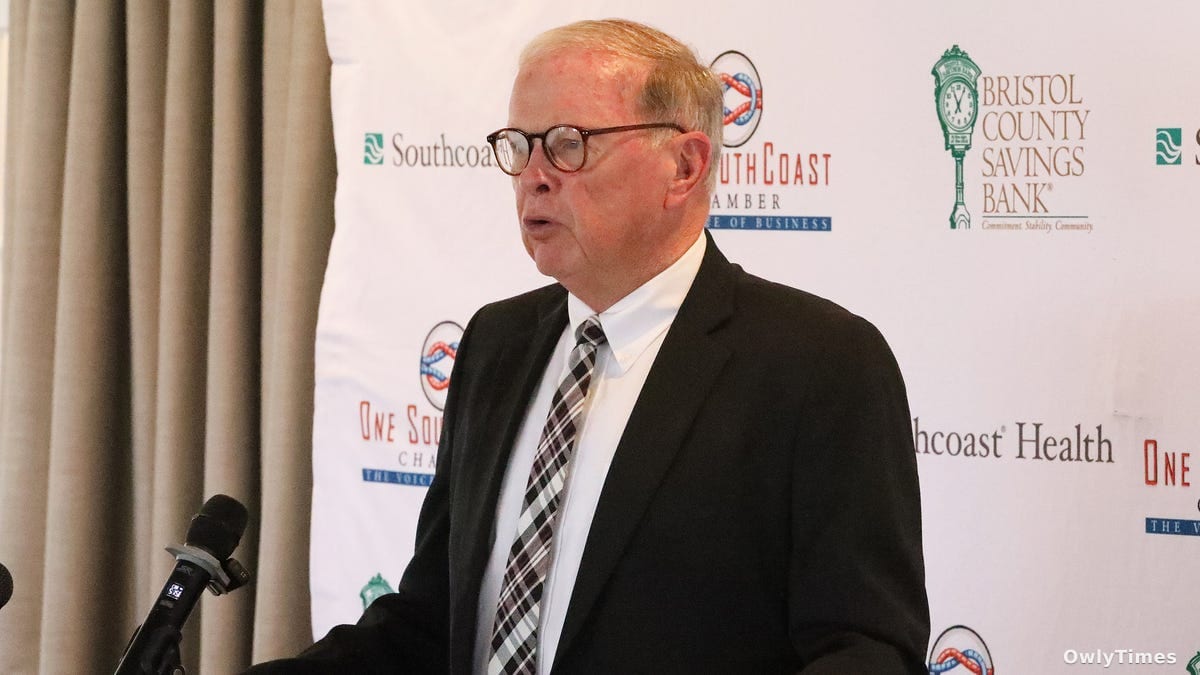
Fall River isn’t just maintaining its historic industrial base – it’s actively reshaping the economic landscape of Southeastern Massachusetts, backed by a staggering $64.6 million in combined stabilization funds and reserves. This figure, highlighted by Mayor Paul Coogan in his 2026 State of Business address on April 1st, isn’t simply a matter of fiscal prudence; it’s a deliberate investment in a self-sustaining economic cycle fueled by workforce development and strategic infrastructure projects. While many municipalities grapple with budget shortfalls, Fall River’s financial strength allows it to proactively attract businesses and cultivate talent, a dynamic that’s beginning to significantly alter the regional balance of power.
The city’s financial health is demonstrably improving. The $24 million in stabilization funds and $40 million in reserves represent a substantial increase year-over-year, exceeding expectations given the broader economic climate. This robust position is further underscored by projected 2026 tax revenues nearing $2.6 million. This isn’t simply about collecting more taxes; it’s about a diversifying tax base, driven by both commercial expansion and a growing residential population. Coogan’s announcement of the city’s first finalized Capital Improvement Plan, spanning 2027-2031, signals a commitment to long-term, strategic investment, moving beyond reactive budgeting to proactive infrastructure development.
This article draws on reporting from heraldnews.com.
A key component of Fall River’s strategy is its focus on internal talent acquisition. The improvements within the public school system are directly linked to the city’s economic ambitions. Durfee High School’s removal from the bottom 10% of state rankings is a significant achievement, but the 34% increase in Early College enrollment – with 97% of students earning college credit and 88% of the 2025 graduating class continuing to higher education – is the more telling metric. This isn’t just about boosting graduation rates; it’s about creating a pipeline of skilled workers who are more likely to remain in Fall River, contributing to the local economy. The potential purchase of the former Bishop Connolly High School for a 300-student pre-K program further demonstrates a commitment to early childhood education, laying the groundwork for future workforce development.
Manufacturing remains a cornerstone of Fall River’s economy, but the nature of that manufacturing is evolving. The recent expansions of Gold Medal Bakery ($90,000-square-foot facility, 30-50 jobs), Taco Comfort Solutions ($20 million investment, 75 jobs), Ice Cube Cold Storage (84,000-square-foot expansion, 40+ jobs), FreezePack Logistics (200,000-square-foot facility, 100 jobs), and Invagen Pharmaceuticals (70 jobs) represent a combined investment exceeding $50 million and the creation of over 325 jobs. These aren’t simply expansions of existing businesses; they’re strategic investments in modern facilities and higher-skilled positions, signaling a shift away from traditional manufacturing towards more specialized and technologically advanced operations. The presence of Northeastern University’s accelerated nursing program within the Durfee-Union Mills complex further reinforces this trend, feeding a healthcare sector that already accounts for over a third of the city’s employment.
Beyond individual business investments, Fall River is leveraging infrastructure improvements to unlock significant economic potential. The completed Route 79-Davol Street Improvement Project has opened up 21.55 acres of waterfront land valued at billions for private sector development. The restoration of the Northfield Point shoreline and improvements to the Thomas Norton City Pier are designed to attract tourism and public engagement, while the “NoMa” initiative – focused on revitalizing the North Main Street corridor – aims to create a vibrant commercial district. The $1.6 million investment in Pleasant Street sidewalk improvements and facade restorations demonstrates a commitment to improving the aesthetic appeal of key commercial areas, attracting both businesses and residents. The city’s success in reclaiming and reselling former school buildings, generating $533,000 in net income, highlights a shrewd approach to asset management.
What this means for your wallet: Fall River’s economic momentum isn’t just benefiting businesses; it’s creating opportunities for residents. Increased job growth, coupled with a growing housing market (96 residential permits and 229 commercial permits issued in 2025), is likely to drive up wages and property values. However, the city’s commitment to affordable housing – with 39 of the 99 new housing units designated as affordable – is crucial to ensuring that the benefits of economic growth are shared by all. The key question for investors and residents alike is whether Fall River can maintain this trajectory while addressing potential challenges related to infrastructure capacity and housing affordability. Will the city’s proactive approach to workforce development be enough to meet the growing demand for skilled labor, or will talent shortages become a limiting factor?