
The challenge of sustainable forestry is often framed as a technical puzzle—a matter of calculating growth rates, managing soil acidity, or identifying pathogens. Yet, as I learned during a field excursion in Denmark as a graduate student, the true complexity of forest management rarely lies within the tree rings themselves. It resides in the friction between scientific diagnosis and the human lives that depend on the land. We are failing to bridge the gap between empirical data and the communities tasked with managing our natural resources, creating a disconnect that threatens both our forests and our credibility.
The Cost of Silvicultural Silos
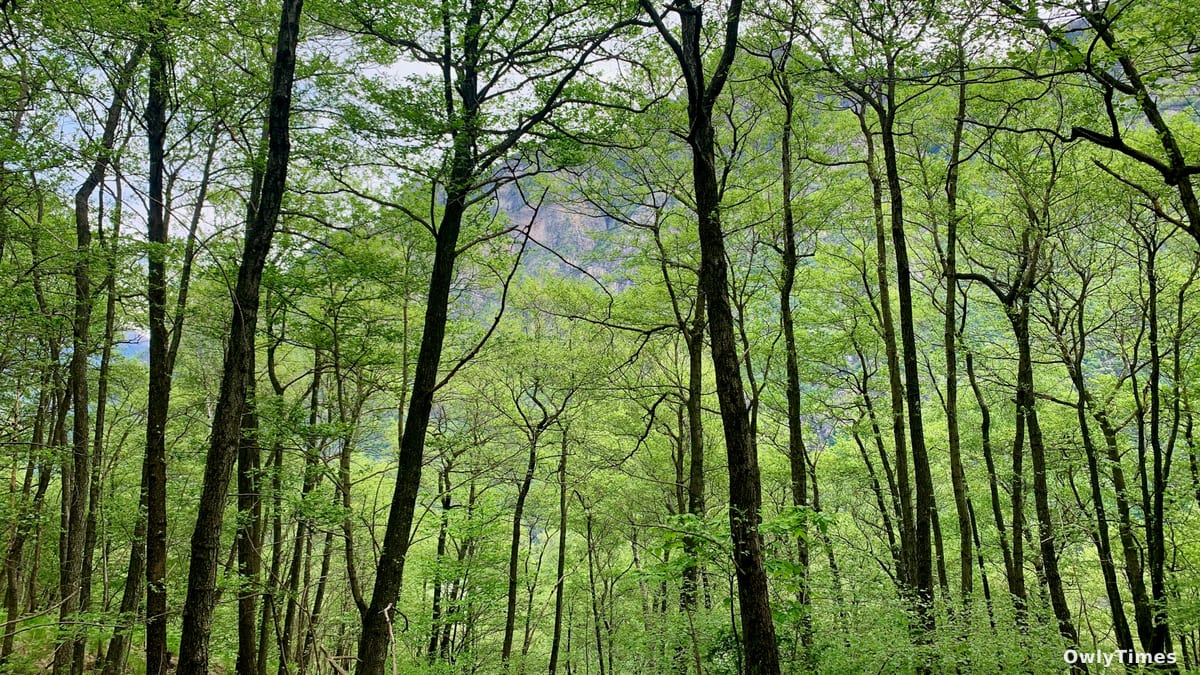
Denmark offers a compelling case study in long-term landscape transformation. Since the introduction of the Danish Forest Act in 1805, the nation has seen a steady increase in forest cover, rising from roughly 2% to 15% over the past two centuries. This growth is not merely a product of nature, but of deliberate policy. Many landowners, encouraged by government subsidies, have converted agricultural plots into timber-producing forests, often opting for North American conifer species to meet global market demand.
When my cohort of forestry students visited a family-owned plot, our training led us to a diagnostic conclusion almost immediately. The uniform rows of nonnative trees were suffering from Heterobasidion root rot, a pathogen that rendered the site compromised for the immediate generation. The science was incontrovertible: the forest was declining and would not be profitable for the elderly father and son who owned it. However, while our ecological analysis was sound, our ability to communicate it was catastrophic. We viewed the landowners through the lens of our data, leading to a tense, judgmental atmosphere that failed to account for why these owners had planted those trees in the first place—often acting in direct accordance with the financial incentives provided by their own government.
What the Data Actually Measures
There is a significant difference between a scientific finding and its practical implementation. Headlines often herald new research into sustainable timber yields or climate resilience, suggesting that if we simply "follow the science," the problems will resolve themselves. What the field experience revealed, however, is that the "science" in these reports is frequently decoupled from the socioeconomic reality of the landowner.
When we identify a forest as "unhealthy," we are providing a biological assessment, but we are often ignoring the social and political context that dictated the management choices. The rift between the academic community and the public is not just a lack of data; it is a failure of dissemination. Universities often treat social sciences as peripheral to "hard" science, leaving graduates equipped to diagnose a root rot infection but entirely unprepared to navigate the human conflict that such a diagnosis inevitably triggers.
Limitations to Consider
It is important to recognize that this is a systemic failure of educational institutions, not individual students. My peers and I were products of a curriculum that prioritized silvicultural theory over interdisciplinary engagement. We were never taught how to ask the most fundamental question: What do the landowners actually need from us? The limitation here is that current forestry education treats the environment as an isolated laboratory, ignoring the fact that management decisions are embedded in cultural and economic histories. Without training in conflict navigation and historical awareness, we risk alienating the very people who hold the keys to forest stewardship.
The Path Toward Integrated Science
The next step for the scientific community must be the integration of iterative, relational communication into the research process itself. We must move toward an educational model that treats "soft skills"—such as creative thinking and the ability to synthesize diverse knowledge systems—as mandatory learning outcomes.
The measurable signal for success will be the frequency with which researchers engage in collaborative, bidirectional dialogue with forest owners before a crisis point is reached. We must shift from providing technical post-mortems to building a toolkit that allows for constructive, solution-oriented conversations. If we fail to do this, the next generation of scientists will continue to deliver accurate diagnoses to empty rooms, while the forests we aim to protect continue to struggle under the weight of policies that ignore the people who live within them.