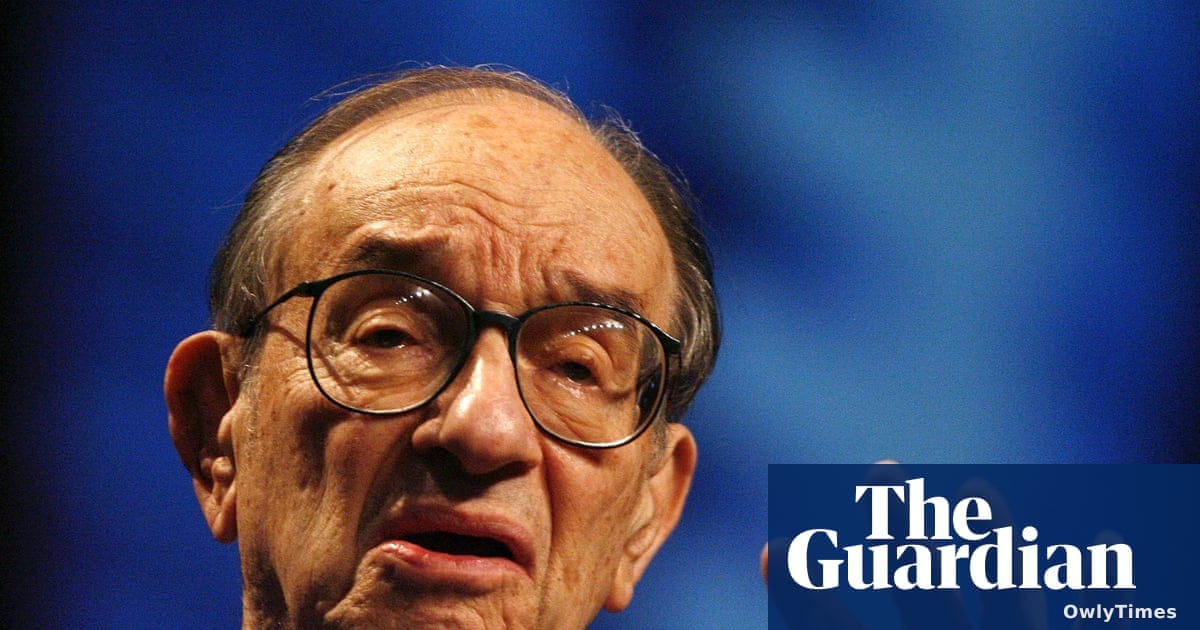

22.6%—that is the single-day percentage drop the Dow Jones index suffered during the 1987 Black Monday crash, a baptism by fire that defined the early tenure of Alan Greenspan. As the world marks the passing of the man who chaired the US Federal Reserve from 1987 to 2006, the legacy left behind is not merely one of long-term economic expansion, but of a fundamental pivot in how global markets interpret central bank authority.
Follow the money through Greenspan’s two-decade reign, and you find a consistent mechanism: the aggressive deployment of liquidity to stabilize volatility. Whether it was the 1997 Asian financial crisis or the injection of $100bn into the monetary system following the 2001 attacks on New York and Washington, Greenspan’s approach cemented the "Fed put"—the market’s expectation that the central bank would act as a backstop during systemic distress. This policy of providing cheap credit, while credited with fueling the longest economic boom in US history between 1991 and 2001, simultaneously sowed the seeds of the subsequent credit expansion.
The Ideological Fracture
Greenspan’s career was defined by a stark tension between his roots in the libertarian philosophy of Ayn Rand and the practical, often interventionist, requirements of his office. While he famously argued that capitalism functions best through rational self-interest and minimal government interference, his actions as Fed chair frequently contradicted this. The contradiction was most visible in his reliance on deregulation, which a congressional commission later cited as a catalyst for stripping away safeguards that might have averted the 2008 financial crash.
The shift in his public standing remains a study in professional vulnerability. Once dubbed "the Maestro" and hailed by Justin Martin in Greenspan: The Man Behind Money as a figure adored by "Wall Street and Main Street," his reputation underwent a sharp correction following the 2008 housing bubble. During a 2008 House oversight committee hearing, Greenspan made the stunning admission that he had found "a flaw" in his own libertarian ideology, conceding that he had overestimated the ability of financial institutions to protect their own shareholders.
Market Transparency and the "Irrational Exuberance"
Beyond his policy decisions, Greenspan fundamentally altered the relationship between the Fed and the financial press. He understood that in a market driven by expectations, the chairman’s language was as potent as interest rate adjustments. His 1996 "irrational exuberance" remark serves as the primary historical benchmark for this power, as it single-handedly triggered a panic on the Tokyo stock market.
He was famously cryptic, a deliberate strategy he explained in his own words: "I know you think you understand what you thought I said, but I’m not sure you realise that what you heard is not what I meant." For investors, this meant that parsing the Fed’s communication became a primary industry of its own. He moved the institution toward greater transparency, yet maintained an air of "Olympian detachment" that shielded him from the direct political pressures he navigated while serving under Ronald Reagan, George HW Bush, Bill Clinton, and George W Bush.
What This Means for Your Wallet
The lasting takeaway for the modern investor is the cyclical nature of the "Great Moderation." Greenspan’s era proved that while low interest rates and deregulation can sustain long periods of growth, they also facilitate the accumulation of systemic risk. As you evaluate today’s economic climate, watch the next reading of the Fed’s monetary policy statements; they remain the direct, albeit more refined, descendants of the "Maestro’s" own communication strategies. His life serves as a reminder that the credibility of a central bank is its most important asset, yet it is a currency that can be devalued rapidly when the complexity of the global financial system outpaces the tools used to manage it.