
$1.8 Billion to $11 Million: The Counterintuitive Economics of Faith-Based Turnarounds
$1.8 billion. That was the valuation of the uniform and career apparel group at Aramark overseen by Thomas Vozzo during his tenure as CEO. Now, as senior advisor to Homeboy Industries, a Los Angeles-based reentry program for formerly incarcerated individuals, Vozzo is applying the same leadership principles to an organization that began with just $11 million in assets and a radically different bottom line. This isn’t a story about charitable giving; it’s a case study in how a fundamental shift in prioritizing people over profit can reshape an organization’s trajectory – and challenge conventional business wisdom.
Reporting from pepperdine.edu informs this analysis.
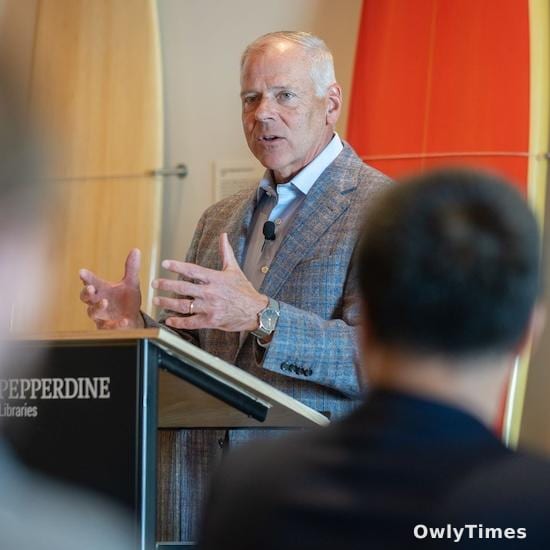
Vozzo’s recent lecture at Pepperdine University’s Faith and Business Initiative, sponsored by a $260,000 grant from the Templeton Foundation extending to 2025, wasn’t a feel-good story about altruism. It was a dissection of the inherent tensions within the modern corporate model, where shareholder value routinely eclipses all other considerations. After 26 years navigating that landscape, Vozzo found himself disillusioned, recognizing that the relentless pursuit of capital often came at the expense of human dignity. “Immersed in the corporate world,” he observed, “the goal of increasing shareholder value outweighed all other aspects of the business practice.” This realization, coupled with a growing faith, prompted a dramatic career pivot.
The contrast between Aramark and Homeboy Industries is stark. Aramark, a publicly traded food service and facilities management giant, operates within a system demanding quarterly growth and maximizing returns for investors. Homeboy Industries, founded by Father Greg Boyle, operates on an “upside-down” model, prioritizing the needs of its clients – individuals often marginalized and overlooked by society – above financial gain. When Vozzo took the helm at Homeboy, the organization’s limited liquidity presented immediate challenges. However, the core issue wasn’t cash flow; it was a fundamental re-evaluation of what constituted “value.” The organization’s worth wasn’t measured in dollars, but in the transformative impact it had on the lives of those it served.
This shift in perspective isn’t simply a matter of ethics; it has demonstrable economic consequences. Vozzo’s experience highlights a growing body of research suggesting that organizations prioritizing employee well-being and social impact often exhibit higher levels of innovation, productivity, and long-term sustainability. While Aramark’s $1.8 billion valuation represents significant market capitalization, it doesn’t account for the potential costs associated with employee turnover, reputational damage, or the erosion of trust – factors that Homeboy Industries actively mitigates through its relational approach. The Pepperdine initiative, led by Regan Schaffer, Chris Collins, and Jooho Lee, recognizes this intersection, aiming to foster a “deeper theological exploration of business” – a tacit acknowledgement that traditional economic models are incomplete.
The success of Homeboy Industries isn’t about replicating a corporate structure within a non-profit. It’s about recognizing that human connection and genuine care are not simply “soft skills,” but essential drivers of organizational success. Vozzo’s emphasis on “being in relationship with people living at the margins of society” isn’t just a moral imperative; it’s a strategic advantage. By fostering a culture of empathy and forgiveness, Homeboy unlocks the potential of individuals who have been systematically excluded from the traditional economy. This, in turn, generates social and economic value that is difficult to quantify using conventional metrics.
What this means for your wallet: the Vozzo story isn’t a call to abandon profit, but to redefine it. Investors and consumers alike should begin to scrutinize the true cost of goods and services, factoring in the social and ethical implications of production. Are we willing to accept lower prices at the expense of worker exploitation or environmental degradation? The future of sustainable business may hinge on our willingness to prioritize people over pure profit – and to demand greater transparency from the companies we support. The question now is: will other organizations follow Homeboy Industries’ lead, or will the pursuit of shareholder value continue to overshadow the fundamental human needs that drive long-term prosperity?





