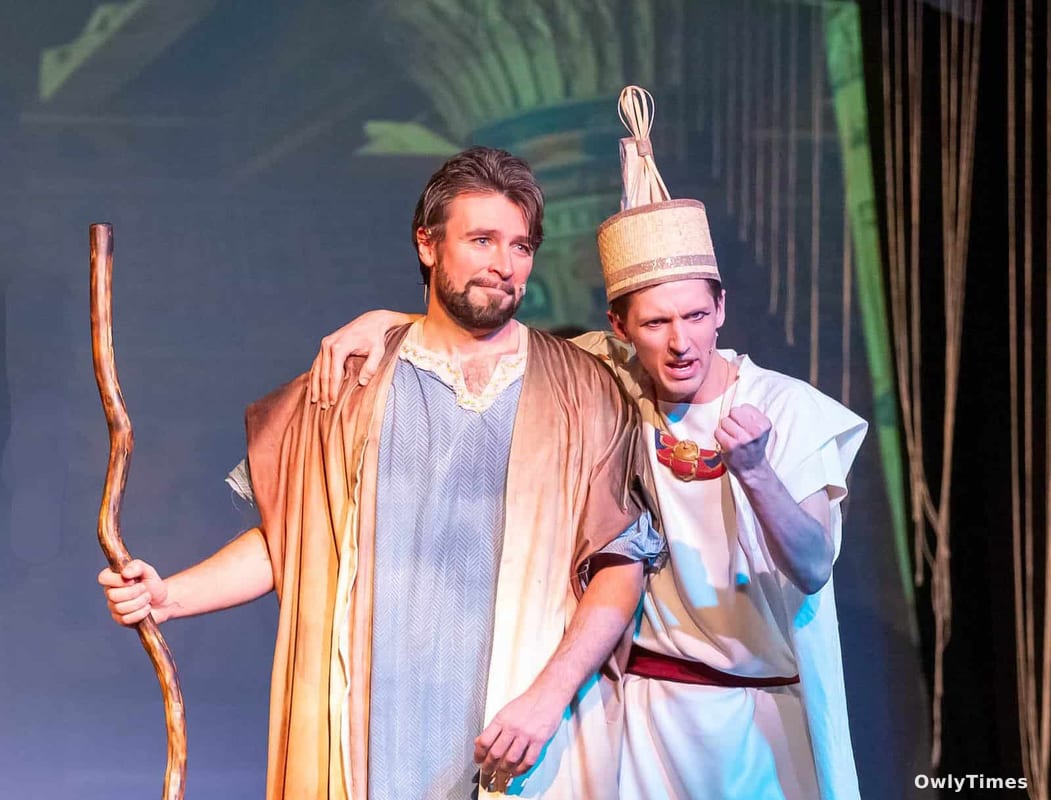

The scent of dust and anticipation hung thick in the Journey Theater last night, a fitting atmosphere for a story born from desert wanderings and divine intervention. But this wasn’t Charlton Heston’s epic, nor even the brightly colored world of VeggieTales. It was Triune Entertainment’s ambitious and surprisingly intimate production of The Prince of Egypt, a musical that’s quickly becoming a touchstone for regional theater companies eager to tackle material with both grand scope and profound emotional weight. Beyond the headlines of a local theater group staging a beloved story, this production signals a shift in how we’re approaching faith-based narratives – and what it means to tell stories about leadership, identity, and the messy business of believing.
The story of Moses is, of course, familiar. But what makes this adaptation, penned by Stephen Schwartz and Philip LaZebnik, and particularly Triune Entertainment’s execution of it, so compelling is its willingness to grapple with the humanity within the myth. Audiences likely come armed with preconceived notions – the booming voice of authority, the dramatic parting of the Red Sea – but this production doesn’t rely on spectacle to deliver its message. Instead, it focuses on the internal struggles of its characters, particularly Andreas Moffett’s nuanced portrayal of Moses, a leader acutely aware of his own shortcomings, famously “slow of speech and slow of tongue” (Exodus 4:10). Moffett commands the stage not with bombast, but with a quiet vulnerability that makes Moses’s journey all the more relatable.
Drawn from dctheaterarts.org.
This isn’t a simple tale of good versus evil, either. Luke Tessier’s Ramses is no cardboard villain. He’s a brother torn between loyalty and duty, a ruler wrestling with the consequences of his power. Their early scenes together, brimming with genuine affection, make their eventual conflict heartbreakingly poignant. The production smartly avoids painting either man as wholly righteous or irredeemable, instead presenting them as complex individuals caught in the currents of history and faith. This is a deliberate choice, one that resonates deeply in a cultural moment increasingly skeptical of simplistic narratives and demanding moral ambiguity in storytelling. The $25 ticket price (or $22 for students and seniors) feels almost a bargain for the level of emotional investment this production demands – and delivers.
The visual storytelling, too, is remarkably effective. Amber Kiffney’s costume design is a masterclass in subtle symbolism, shifting from the shimmering gold and lapis of the Egyptian court to the earthy tones of the Israelites’ hardship. But it’s Christie Dubnansky’s choreography that truly elevates the production. The chariot race through the market, the ethereal depiction of the burning bush, and, crucially, the parting of the Red Sea are all rendered with ingenuity and grace, relying on theatrical creativity rather than expensive special effects. These moments aren’t about showing a miracle; they’re about evoking the feeling of awe and wonder. The dance ensemble, led by Ava Botros, isn’t merely performing steps; they’re building worlds.
What’s particularly noteworthy is that Triune Entertainment is the first in the Washington, DC, region to produce this newly adapted version of The Prince of Egypt. This isn’t a revival of a well-worn classic; it’s a pioneering effort, a testament to the vibrancy of community theater and its willingness to take risks. The success of this production – running through March 22, 2026, at Journey Theater in Warrenton, VA – could very well open doors for other regional companies to explore similarly ambitious projects. The musical’s strength also lies in its ensemble, with standout performances from Katy Benko Miner as Yocheved in “Deliver Us” and Paul Correll as Jethro in “Through Heaven’s Eyes,” both numbers powerfully supported by a chorus expertly directed by Catie Moore.
But beyond the impressive vocals and captivating choreography, The Prince of Egypt at Triune Entertainment asks a crucial question for our time: what does it mean to lead, especially when you doubt your own abilities? In an era defined by political polarization and a crisis of faith in institutions, the story of Moses – a reluctant leader who stumbles and argues with the divine – feels remarkably relevant. Will this production inspire other theaters to embrace stories that challenge, rather than simply comfort? Will it encourage audiences to look beyond the spectacle and engage with the complex moral questions at the heart of these ancient narratives? That’s the real miracle worth watching for.