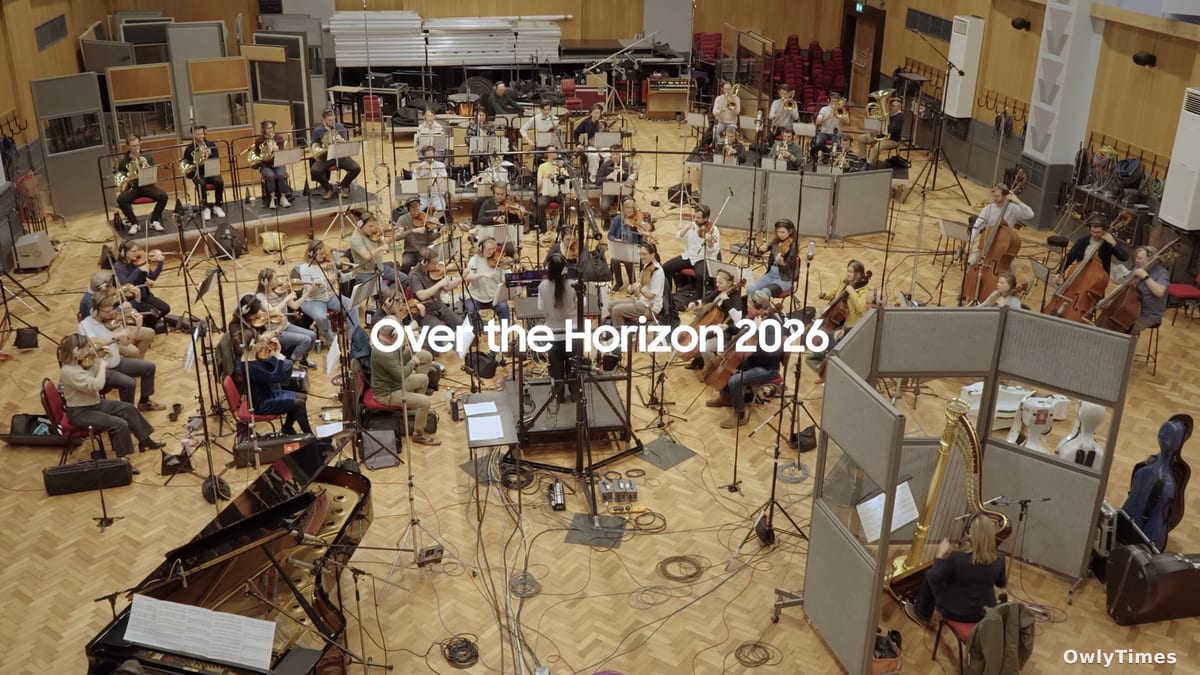

Is Samsung now a sound company masquerading as a phone maker? The sheer effort lavished on the 2026 version of its “Over the Horizon” ringtone – recorded with the Royal Philharmonic Orchestra at Abbey Road Studios, mastered in Dolby Atmos by Jonathan Allen, and unveiled before the actual Galaxy S26 launch – suggests a strategic pivot. The real story here isn't a new phone; it’s Samsung’s increasingly desperate attempt to build brand loyalty through emotional resonance, and they’re betting that resonance comes through your ears, not just your hands.
From Notification to Narrative: The Evolution of a Ringtone
For years, phone ringtones were an afterthought, a default beep quickly silenced or replaced with a snippet of a pop song. Samsung, however, has been quietly building a tradition around “Over the Horizon” since 2011. It began as a simple, elegant chime, but has evolved into an annual orchestral event. This year’s iteration, themed “A Soundtrack of the Earth,” isn’t just a tune; it’s a statement. A statement about sustainability, about harmony between technology and nature, and, crucially, about Samsung’s willingness to invest heavily in perceived “soft” branding. The company spent an undisclosed sum – likely exceeding the R&D budget for several mid-range phone features – to create an experience around a notification sound.
Reporting from sammobile.com informs this analysis.
The Power of a Viral Rendition
The origin story of this year’s ringtone is particularly telling. Eunike Tanzil, a Los Angeles-based composer and pianist, caught Samsung’s attention not through a formal pitch, but by posting her own rendition of “Over the Horizon” on social media in February 2024. This wasn’t a calculated marketing ploy; it was a genuine fan expressing her creativity. Samsung’s decision to collaborate with her, rather than commission a well-known composer, speaks volumes. They’re tapping into the power of user-generated content and attempting to cultivate a sense of authenticity – a quality increasingly rare in the polished world of Silicon Valley. It’s a smart move, considering that 78% of consumers say authenticity is “very important” when deciding what brands they like and support, according to a 2023 Stackla study.
Beyond the Specs: Why Sound Matters to Samsung
The progression of “Over the Horizon” reflects broader trends in smartphone marketing. In 2024, Samsung leaned into its Korean heritage with a traditional Korean orchestra. In 2025, they opted for a big band jazz style, signaling a desire for broader appeal. Now, with a focus on orchestral grandeur and environmental themes, they’re aiming for a sense of sophistication and social responsibility. This isn’t about better cameras or faster processors; it’s about crafting a lifestyle association. Samsung is betting that consumers will choose their phones not just for what they do, but for how they feel. This is a direct response to the increasingly commoditized nature of smartphone hardware. Specs are converging, and differentiation is becoming harder.
The Immersive Future of Notifications
The Dolby Atmos mastering by Jonathan Allen is the final, crucial piece of this puzzle. It’s not enough to have a beautiful ringtone; it needs to be an immersive experience. This signals a future where our phones aren’t just devices, but portals to carefully curated sonic landscapes. Expect to see other manufacturers follow suit, investing in high-fidelity audio experiences and collaborating with artists to create unique notification sounds. But here’s the question: will consumers actually notice the difference? Will they care about the nuances of Dolby Atmos mastering when they’re rushing through a busy day? If Samsung can’t convince users that this sonic investment is worth their attention, the entire strategy will fall flat. I predict that by 2028, we’ll see a tiered notification system emerge, where users can pay a premium for “artist-curated” soundscapes, turning our phones into personalized concert halls – or, more likely, another subscription service we quietly forget about.