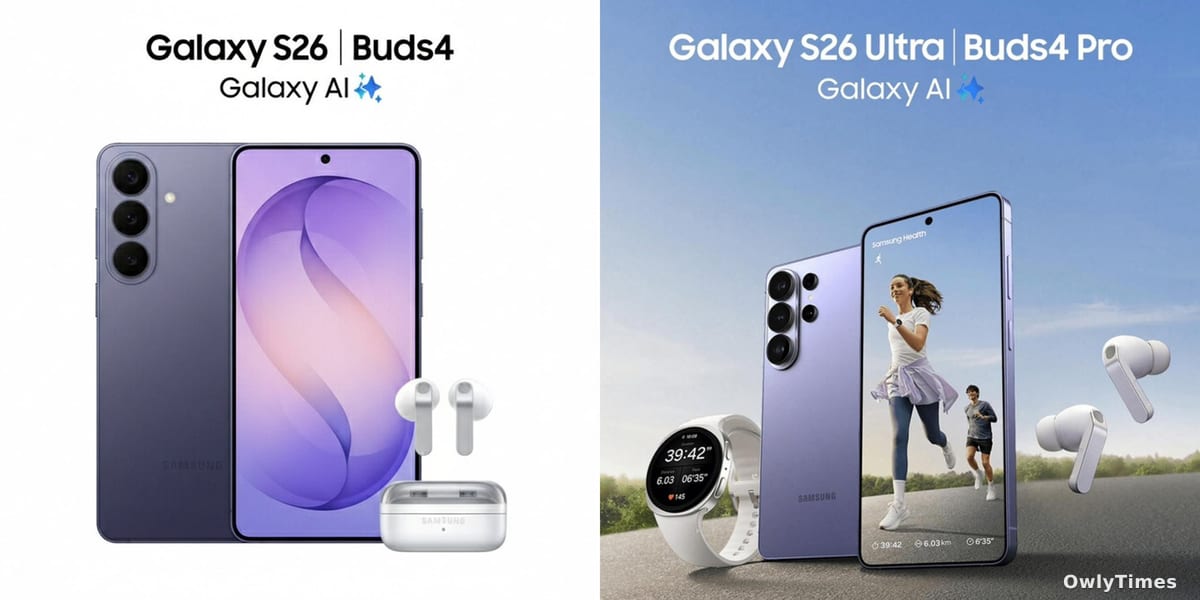

Is anyone actually excited about incremental smartphone upgrades anymore? The endless cycle of slightly-better cameras and marginally-faster processors feels less like innovation and more like a carefully orchestrated exercise in planned obsolescence. The latest leak of Samsung’s Galaxy S26 series promo materials, courtesy of @ya_sking12767 on X, perfectly illustrates this point. The real story here isn't the new features – it's the conspicuous lack of them, and what that says about the state of the smartphone market.
The Privacy Theater of the S26 Ultra
The most visually striking element of the leak is the “Privacy Display” for the Galaxy S26 Ultra. The images show the screen darkening completely when viewed from an angle, ostensibly to prevent shoulder surfing. It’s a clever trick, and a welcome addition for anyone concerned about prying eyes on public transport. But let’s be honest: this isn’t a revolutionary feature. It’s a digital curtain, a software solution to a problem that arguably requires a hardware fix – like a truly private screen filter. The ambiguity around whether this is an all-or-nothing setting, or if granular control will be offered, further underscores this. Is Samsung offering genuine privacy, or just the illusion of it?
AI as a Placeholder for Innovation
The pervasive “Galaxy AI” branding is another telling detail. Samsung is leaning hard into artificial intelligence, teasing features like “Photo Assist” with prompt-based image editing. This isn’t surprising; every tech company is scrambling to slap an AI label on existing products. But the question remains: is this AI genuinely enhancing the user experience, or is it a distraction from the fact that the underlying hardware hasn’t fundamentally changed? The promise of a “brightest and easiest” camera thanks to AI feels less like a breakthrough and more like a software band-aid for limitations in sensor technology. We’ve seen this before – AI-powered noise reduction that smooths out details, AI-enhanced zoom that creates artificial clarity. It’s impressive, but it’s not magic.
Original reporting: 9to5Google.
The Battery and Charging Plateau
Perhaps the most deflating aspect of the leak is the stagnation in battery and charging technology. The Galaxy S26 Ultra will retain the 5,000 mAh battery of its predecessor, with an estimated 31 hours of battery life – unchanged. Despite rumors of 60W charging, the leaked materials suggest the phone will still only reach 75% charge in 30 minutes, the same as last year’s model. In a world where we’re increasingly reliant on our phones for everything from navigation to entertainment, this lack of progress is frustrating. We’re told to embrace a mobile-first lifestyle, but the technology isn’t keeping pace with our demands. This isn’t just about Samsung; it’s a systemic issue. The physics of battery technology are challenging, yes, but the lack of significant investment in alternative charging solutions feels like a missed opportunity.
Bixby's Second Act and the Wider Ecosystem
Alongside the S26 leaks, Samsung is also prepping a reboot of Bixby, its long-maligned virtual assistant, with device controls and AI integration in One UI 8.5. This, coupled with the metallic finish of the leaked Galaxy Buds 4 dummies, suggests a broader strategy of refining the existing ecosystem rather than disrupting it. Even reports of rare display failures in the Galaxy Z TriFold, while concerning, feel almost…expected. Foldable phones are still in their infancy, and teething problems are inevitable. Samsung is betting on incremental improvements across the board, hoping to maintain its market share through a combination of software polish and ecosystem lock-in.
The February 25th launch event will undoubtedly be a spectacle, filled with carefully crafted marketing and breathless pronouncements about the future of mobile. But don’t be fooled. The Galaxy S26 series isn’t a leap forward; it’s a sidestep. Watch for a surge in AI-powered features marketed as “essential,” while the core hardware remains largely unchanged. The real question isn’t whether the S26 is a good phone – it almost certainly will be. It’s whether Samsung, and the industry as a whole, can deliver genuine innovation, or if we’re destined to remain in this cycle of diminishing returns. I predict that by the end of 2024, users will begin actively resisting the annual upgrade cycle, demanding more substantial improvements before opening their wallets. The era of "good enough" is coming to an end.