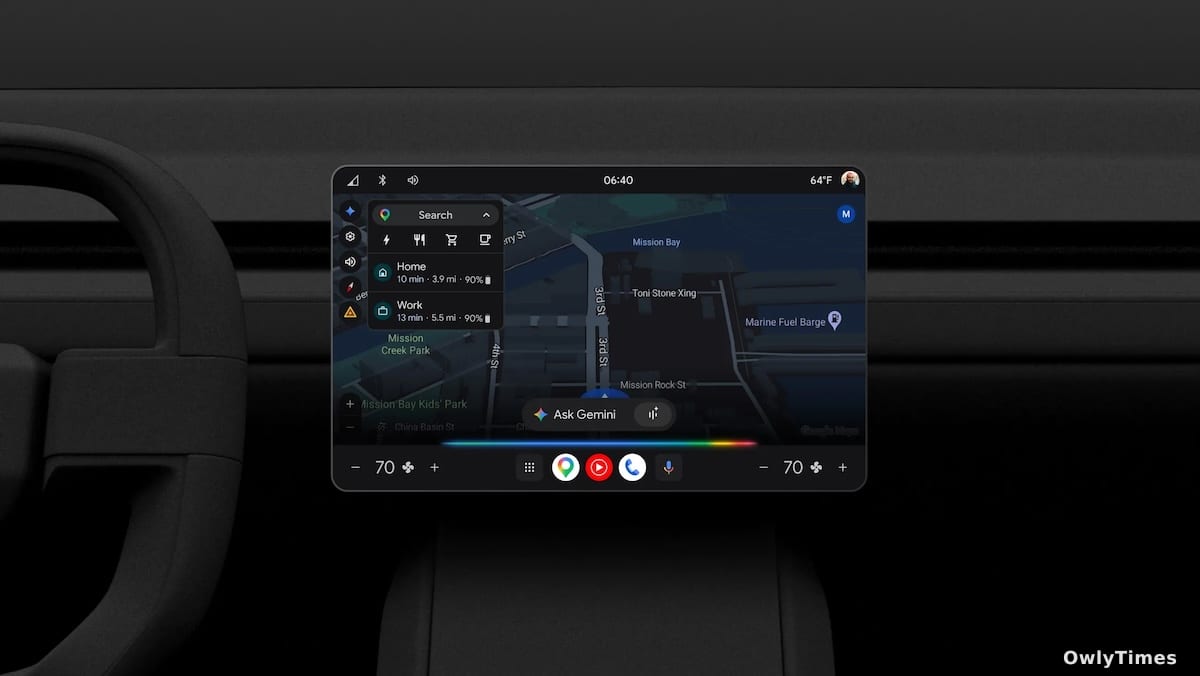

Is your car becoming a backseat driver, or is it finally learning to listen? Google announced on Thursday that it is rolling out Gemini to vehicles with Google built-in, a move that promises to swap the rigid, command-response structure of current digital assistants for something that actually resembles a conversation.
The real story here isn’t that your car is getting a software update—it’s that the vehicle is shifting from a static machine into a data-rich extension of your digital life. Since cars with Google built-in first launched in 2020, we have grown accustomed to basic voice commands for music or navigation. Now, by integrating a model that handles complex, multi-layered requests, the barrier between your browser history and your dashboard is effectively vanishing.
The Scale of the Automotive AI Pivot
The timing of this rollout is deliberate and aggressive. It follows news from General Motors yesterday, which confirmed that Gemini will be integrated into approximately 4 million vehicles from model year 2022 and newer. This massive deployment covers a wide swath of the road, including Cadillac, Chevrolet, Buick, and GMC.
While the GM numbers are staggering, the broader Google announcement suggests this isn’t just a one-off partnership. By pushing Gemini out to the wider ecosystem of cars with Google built-in, the company is standardizing the "smart cabin" experience across brands. If you are signed into your Google account in a compatible vehicle, you will soon see a prompt to upgrade your assistant, turning your dashboard into a cloud-connected terminal.
Beyond Simple Directions
The true test for AI in the car is whether it can handle the chaos of human intent. If you ask for a restaurant with outdoor seating, most current systems will offer a list and stop there. Gemini, however, is designed to chain those queries together. It can pull data from Google Maps to suggest a location and then immediately answer follow-up questions about parking availability or specific menu items, including dietary preferences.
Then there is Gemini Live, currently in beta, which introduces a more open-ended, real-time conversational mode. By tapping the interface or saying, “Hey Google, let’s talk,” drivers can engage in brainstorming or general discussion. It is the kind of feature that sounds helpful on a long commute, but it places a high premium on the model's ability to filter out road noise and prioritize driving safety while "thinking."
What Comes Next for the Connected Dashboard
The tech industry loves to talk about "seamless integration," but in the context of an automobile, that usually means a clunky Bluetooth pairing process. Google’s roadmap here is different: they are aiming to pull your entire life—Gmail, Google Calendar, and Google Home—directly into the vehicle’s operating system.
The next reading of the system's integration capabilities will show whether this massive shift toward conversational AI actually reduces driver distraction or simply adds another layer of digital noise to the cabin. We will be watching to see how the user interface evolves when this deeper connectivity hits the road, as the upcoming TechCrunch event in San Francisco, CA, scheduled for October 13-15, 2026, serves as the next major industry checkpoint for these platform-level changes.