
Is your car becoming a backseat driver, or is it finally learning how to actually listen? We have spent years shouting commands at digital assistants that barely understand the difference between a playlist request and a navigation error, but the latest shift in the dashboard suggests the era of rigid, command-line interactions is finally hitting a dead end.
The real story here isn’t that Google is simply swapping out a piece of software—it’s that they are betting the entire driving experience on the idea that conversational intelligence can solve the "frustration gap" that has plagued infotainment systems since their inception. By replacing Google Assistant with Gemini on vehicles running Android Automotive, the company is moving away from basic triggers toward a model that claims to understand nuance, intent, and even the mechanical limitations of your specific vehicle.
Beyond Simple Voice Commands
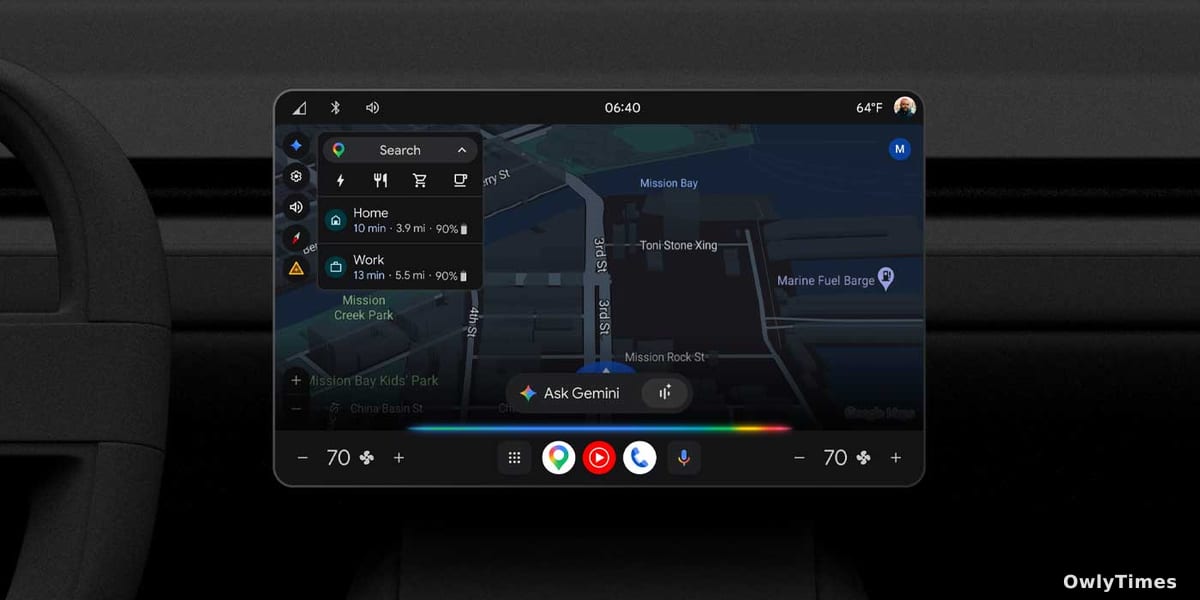
The integration is visually signaled by a multi-colored light bar hovering over the display taskbar, anchored by an “Ask Gemini” pill. While previous assistants treated your car like a static smart speaker, Gemini is designed to pull from Google Maps and owner’s manuals to provide context-aware responses. Instead of just searching for "restaurants," a user can now ask about parking availability or outdoor seating options at a specific destination.
The shift also tackles the tedious nature of vehicle maintenance. Because the system can pull data directly from manufacturer-provided manuals, you can ask how to program a trunk to stop at a specific height to avoid a low garage ceiling. It’s a transition from "search-based" interaction to "problem-solving" utility, turning the dashboard into a searchable database of your car’s physical capabilities.
The Reality of In-Car Intelligence
Despite the marketing polish, the rollout carries significant friction. While Google suggests that most vehicles produced from 2020 onward will eventually receive this software update, the company has been notably vague on the specific timeline, promising only that it will happen in the "coming months." Furthermore, the experience is currently restricted to "eligible users" in the US, leaving a massive global user base waiting for future language and regional support.
There is also the matter of legacy. Google is offering users the choice to stick with the older Google Assistant for now, an implicit acknowledgment that the new system may not be ready for prime time. This mirrors the growing pains seen in the Android Auto version of Gemini, where early adopters have reported performance kinks. For the ordinary driver, this means the difference between a helpful co-pilot and a buggy distraction could come down to which version of the software they opt into during the next upgrade cycle.
Real-Time Dynamics and EV Utility
One of the most practical applications of this shift lies in the management of electric vehicles. Gemini is tasked with interpreting battery status in real-time, allowing drivers to ask about their charge levels upon arrival at a destination rather than performing mental math while navigating. By combining these metrics with environmental data—like understanding that a request for "foggy and freezing" conditions implies a need for heat and defrosting—the system is attempting to bridge the gap between abstract voice commands and physical car controls.
The next reading of the system's performance metrics, particularly the stability of Gemini Live for drivers, will show whether this conversational upgrade is a genuine leap forward or just another layer of complexity added to the modern dashboard.