
Addressing a Persistent Gap: Why Targeted STEM Camps Matter Now More Than Ever
The enduring underrepresentation of women in science, technology, engineering, and mathematics (STEM) isn’t a pipeline problem of ability, but one of access and sustained encouragement. While national conversations often focus on broad initiatives, programs like the Buckeye Women in Science, Engineering and Research (B-WISER) summer camp at The College of Wooster demonstrate the power of targeted intervention. Returning this year from June 15-20, B-WISER isn’t simply offering a fun week of science experiments; it’s strategically addressing a critical juncture in girls’ academic and career trajectories – the middle and high school years – when interest in STEM fields often begins to wane. This isn’t about identifying future scientists, but about creating a space where exploration isn’t burdened by societal expectations or perceived limitations.
Original reporting: the-daily-record.com.
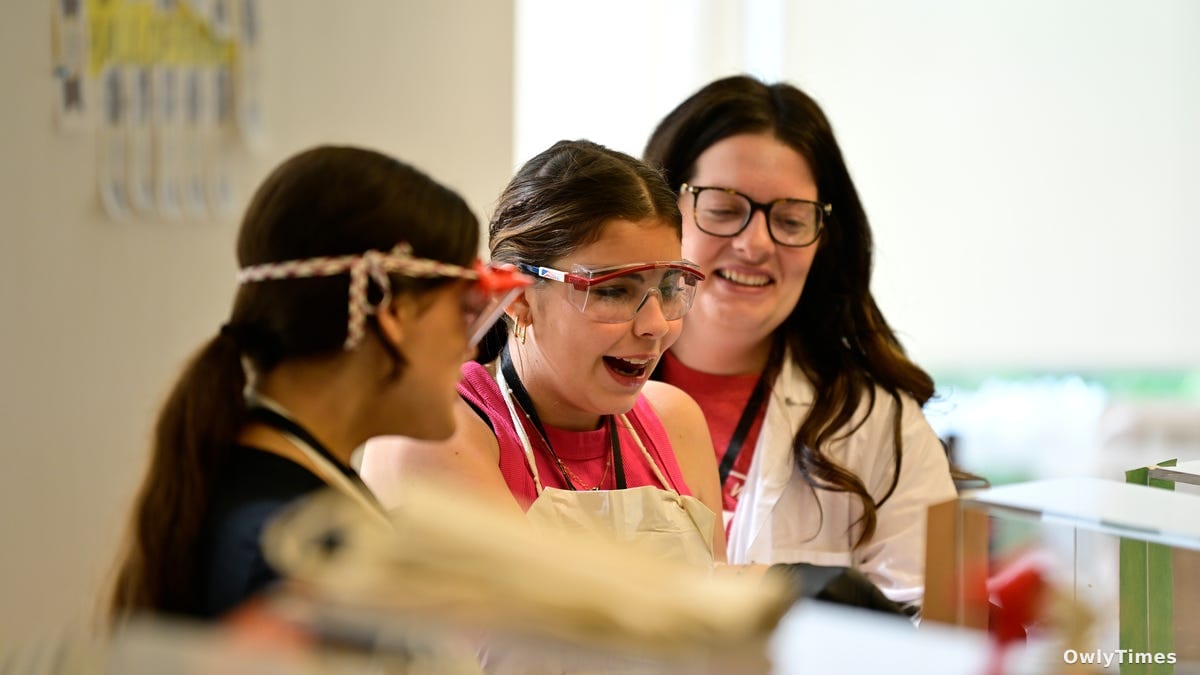
The camp, designed for girls completing grades 7-10, provides an immersive experience, with participants lodging on the College of Wooster campus. This residential component is significant. It moves beyond the limitations of a typical after-school program, fostering a sense of community and allowing for deeper engagement with the material. B-WISER is structured around two programs: one tailored for middle schoolers (7th and 8th grade) and another for high schoolers (9th and 10th grade). The high school curriculum notably includes college-readiness seminars, a practical addition recognizing that nurturing interest must be coupled with guidance on navigating higher education pathways. This is a departure from simply showcasing scientific concepts; it’s about equipping students with the tools to pursue those concepts further.
Founded in 1990 by Lois Cook, former assistant B-WISER camp director, and Ted Williams, a former chemistry professor at The College of Wooster, the camp’s longevity speaks to a consistent need and a successful model. The program’s continued funding from The Martha Holden Jennings Foundation—a regional philanthropic organization focused on educational improvement—highlights the recognition of its value within the educational landscape. What’s particularly interesting is the integration of current Wooster students as volunteer panelists. This peer-to-peer mentorship offers a relatable perspective, demonstrating that STEM isn’t solely the domain of distant professors or historical figures, but a field accessible to those just a few years ahead. This is a subtle but powerful message, countering the often-cited lack of role models for young women in STEM.
However, it’s crucial to understand what B-WISER isn’t. Headlines proclaiming it a “solution” to the gender gap in STEM would be a misrepresentation. The camp serves 60-80 girls annually, a relatively small number given the scale of the problem. While impactful for those who attend, it’s not a systemic fix. The $660 cost of attendance, while offering limited scholarships, also presents a barrier to entry for some families. This raises a critical question: how can successful programs like B-WISER be scaled and made more accessible without compromising their quality or targeted approach? The camp’s reliance on external funding from The Martha Holden Jennings Foundation also introduces a degree of vulnerability; sustained impact requires diversified and secure financial support.
Looking ahead, the most valuable research will focus on the long-term outcomes of B-WISER participants. Are campers more likely to pursue STEM degrees in college? Do they demonstrate greater confidence in their scientific abilities? Tracking these metrics, beyond immediate post-camp surveys, is essential to demonstrating the program’s true value and informing future iterations. More broadly, we should be asking: what elements of the B-WISER model – the immersive environment, the peer mentorship, the college-readiness component – are most effective, and how can those elements be replicated in other contexts? The return of B-WISER is a positive development, but the real story will unfold in the years to come, as we observe whether these early interventions translate into lasting change within the STEM landscape.