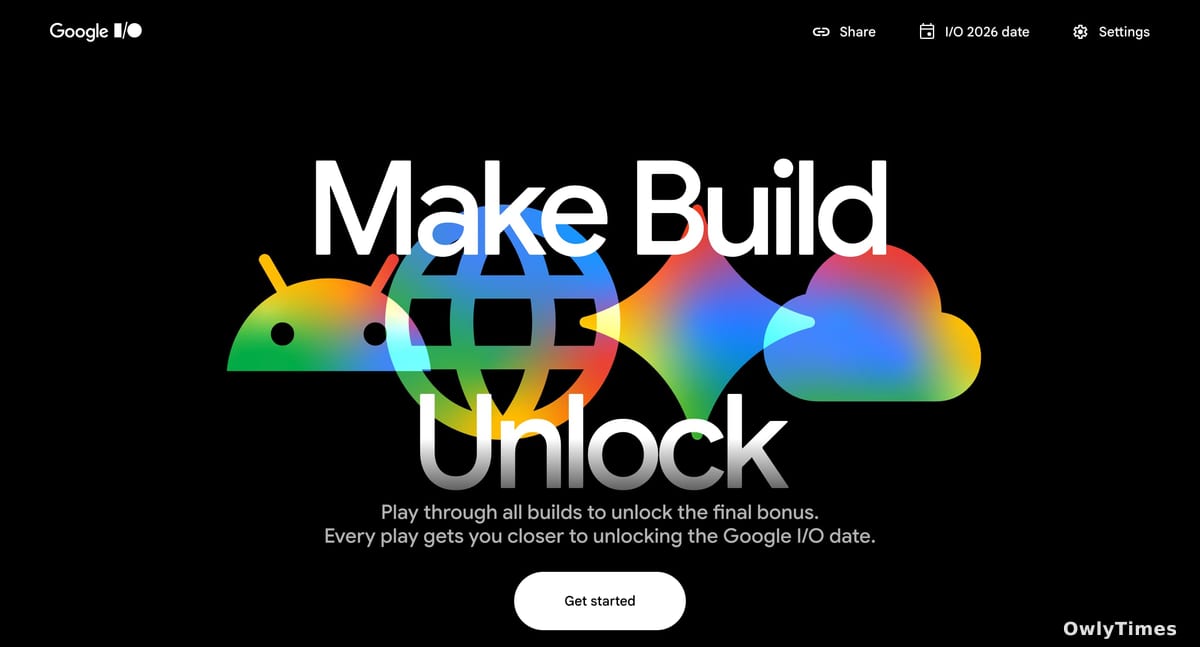

Is Google turning its annual developer conference into a massively multiplayer puzzle game? That’s the question swirling this morning as the tech giant launches its 2026 I/O date reveal, not with a press release or a slick video, but with five browser-based games powered by its latest Gemini 3 AI model. It’s a clever stunt, sure, but the real story here isn’t about a playful marketing campaign – it’s about Google subtly demonstrating the practical, everyday applications of its AI, and doing so in a way that bypasses the usual tech-bro hype cycle. Forget breathless pronouncements about artificial general intelligence; Google is showing, not telling, what its AI can do.
The Gamification of AI Development
The I/O 2026 puzzle requires users to play through all five “builds” – mini-games like “Hole in One” (with a Gemini 3-powered caddy), “Word Wheel,” “Supersonic Bot,” “Stretchy Cat,” and “Nonogram” – to unlock the final date reveal. Each game leverages Gemini 3 in a different way, from automating level design in “Word Wheel” to using microphone input to control gameplay in “Supersonic Bot.” The key is that these aren’t just demos; they’re available to “Remix in AI Studio,” meaning developers can tinker with the underlying code and see how Gemini 3 is working its magic. This isn’t about showcasing a finished product, it’s about inviting participation in the process. The puzzle launched a few days later than last year’s, suggesting a deliberate pacing to build anticipation.
Reporting from 9to5Google informs this analysis.
This approach is a significant departure from the typical tech reveal. We’re accustomed to carefully curated keynotes and polished demos. This feels…messier. More real. It’s a tacit acknowledgement that AI isn’t a magic bullet, but a tool that requires iteration and refinement. The fact that “community play fuels progress” – the date reveal is contingent on enough people completing the puzzles – is also telling. Google isn’t just building AI for developers, it’s building it with them.
Beyond the Buzzwords: Practical AI in Action
Let’s be clear: these aren’t groundbreaking games. “Hole in One” is a simple mini-golf game, and “Stretchy Cat” is…well, exactly what it sounds like. But the point isn’t the gameplay; it’s the underlying technology. Gemini 3 is being used to create dynamic, responsive experiences. In “Word Wheel,” it’s automating the tedious task of level design, ensuring a balanced and enjoyable puzzle. In “Supersonic Bot,” it’s introducing a novel input method – using sound to control a character’s altitude. These are small examples, but they illustrate a crucial point: AI can augment creativity, automate repetitive tasks, and unlock new forms of interaction.
Consider the implications for everyday users. Imagine AI-powered tools that automatically generate personalized learning materials, design custom workout routines, or even create unique bedtime stories for your children. This isn’t about replacing human creativity; it’s about amplifying it. The fact that Level 1 of “Hole in One” features the Android Bot as an obstacle is a playful nod to Google’s own ecosystem, but it also subtly reinforces the idea that AI is becoming integrated into every aspect of our digital lives.
The Remix Potential and Developer Engagement
The availability of these builds in AI Studio is the most important element of this launch. It’s a direct appeal to developers, offering them a sandbox to experiment with Gemini 3 and explore its capabilities. This is a smart move, as developer buy-in is crucial for the success of any AI platform. Google is essentially saying, “Here’s the toolbox, now go build something amazing.” The company is betting that by empowering developers, it can foster a vibrant ecosystem of AI-powered applications.
This contrasts sharply with the walled-garden approach of some of its competitors. While other tech giants are focused on controlling the AI narrative, Google is opening up its platform and inviting collaboration. This is a risky strategy, but it could pay off handsomely if it attracts a critical mass of developers. The fact that a certain number of people need to complete the puzzle before the date reveal is a clever way to incentivize participation and create a sense of community.
So, what happens next? I predict that by this time next year, we’ll see a proliferation of AI-powered tools and applications built on the foundation of Gemini 3, many of which will be directly inspired by the concepts explored in these I/O 2026 puzzle games. The real question isn’t if AI will transform our lives, but how – and Google’s playful, developer-focused approach suggests a future where that transformation is driven by collaboration and creativity, not just corporate pronouncements. Watch for a surge in AI-assisted game development tools in the coming months; this puzzle isn’t just about revealing a date, it’s a signal of things to come.