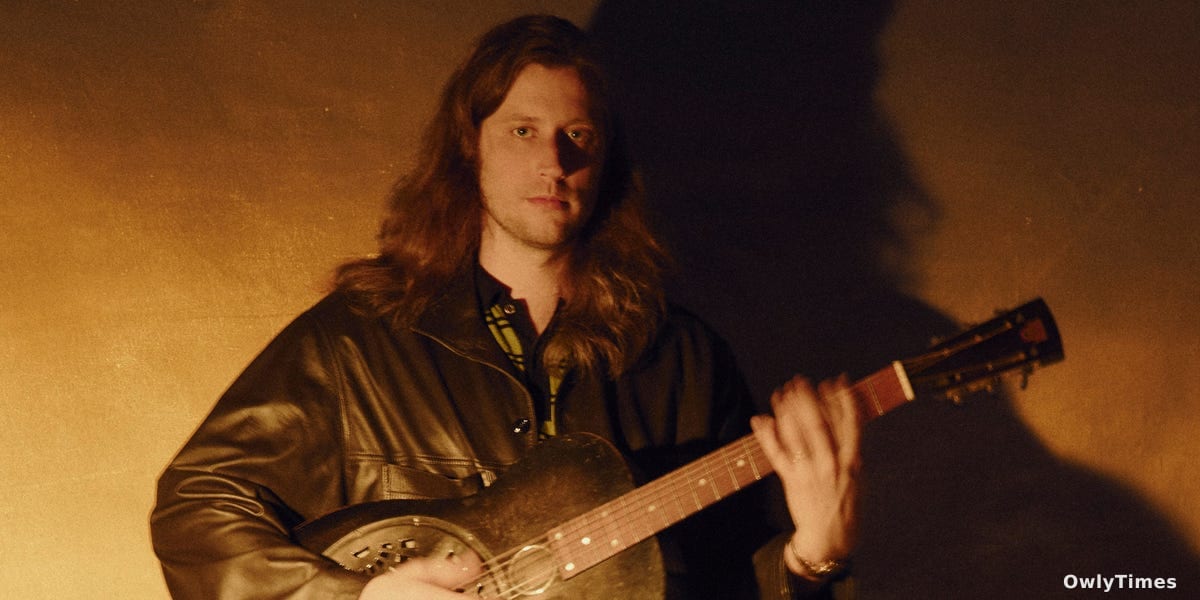

The low thrum of a basement in Linköping, Sweden, circa 1992. Nine-year-old Ludwig Göransson crept downstairs, expecting the quiet hum of his father’s blues guitar. Instead, he found a scene of controlled chaos: his father, a Swedish blues musician and teacher, headbanging to Metallica’s “Enter Sandman.” It was a jarring juxtaposition, a father steeped in improvisation losing himself in the calculated fury of thrash metal. But for young Göransson, it was a revelation. “At the time, I didn’t think that without blues there wouldn’t be Metallica,” he recalls now, a sentiment that encapsulates the core of his groundbreaking work as a film composer. This wasn’t just a kid witnessing a quirky parental indulgence; it was the genesis of an artistic philosophy that would redefine how we hear stories on screen.
Göransson, now 41, isn’t simply writing scores; he’s building sonic universes. His recent work on Ryan Coogler’s Sinners – poised to add to his Oscar collection alongside wins for Black Panther and Oppenheimer – isn’t just a soundtrack, it’s an archaeological dig through the roots of American music. He didn’t just compose for Sinners; he became an anthropologist of sound, partnering with blues legends like Buddy Guy and Brittany Howard alongside modern producers like Lawrence “Boo” Mitchell to excavate the emotional core of the Delta blues. The film’s now-iconic scene, where a blues musician’s performance literally cracks open reality, summoning dancers from across continents and eras, isn’t a special effect – it’s a sonic manifestation of Göransson’s central thesis: that all music is connected. This isn’t about genre blending; it’s about recognizing the shared DNA of every beat, every melody, every rhythm.
The success of Sinners – and Göransson’s career trajectory – arrives at a moment when Hollywood is grappling with authenticity. For decades, film scores often functioned as wallpaper, subtly enhancing emotion without demanding attention. Göransson’s work, however, actively shapes the narrative. He doesn’t just underscore the story; he interrogates it, challenges it, and expands it. This approach, born from a childhood spent absorbing everything from John Williams to Balkan folk music via the early days of Napster, is a direct response to a growing audience hunger for originality. The industry average for film score budgets hovers around $1 million, but Göransson’s projects consistently demand more, reflecting the extensive research, travel, and collaboration required to achieve his signature sound. Oppenheimer, for example, required manipulating a 60-piece orchestra to mimic the unpredictable nature of quantum physics – a level of sonic ambition rarely seen in mainstream cinema.
What sets Göransson apart isn’t just his technical prowess, but his willingness to relinquish control. He doesn’t dictate; he collaborates. He doesn’t impose; he listens. He recalls a formative experience scoring Ryan Coogler’s first short film, Locks, where Coogler was drawn to the raw, tangible quality of Göransson’s guitar-based composition. “He was really excited that I had written the music on my guitar,” Göransson remembers. This emphasis on authenticity extends to his global collaborations, from recording Fula flute players in Africa for Black Panther to his current, highly secretive work on Christopher Nolan’s The Odyssey. He understands that true innovation comes not from imposing a vision, but from creating space for others to lead. This is a radical departure from the traditional composer-as-auteur model, and it’s precisely what makes his work so compelling.
Original reporting: esquire.com.
The anticipation surrounding The Odyssey is already reaching fever pitch, with IMAX tickets selling out months before the first trailer. The secrecy surrounding the film – and its score – is deliberate, a testament to Nolan’s commitment to preserving the element of surprise. But beyond the hype, the real question is whether Göransson can continue to push the boundaries of cinematic sound. He’s already proven that a film score can be a cultural statement, a historical excavation, and a deeply personal expression. But can he maintain that level of innovation while navigating the demands of blockbuster filmmaking? Will studios continue to invest in the kind of sonic experimentation that defines his work, or will they revert to safer, more predictable formulas? The future of film scoring, and perhaps the very way we experience stories on screen, may well depend on the answer.