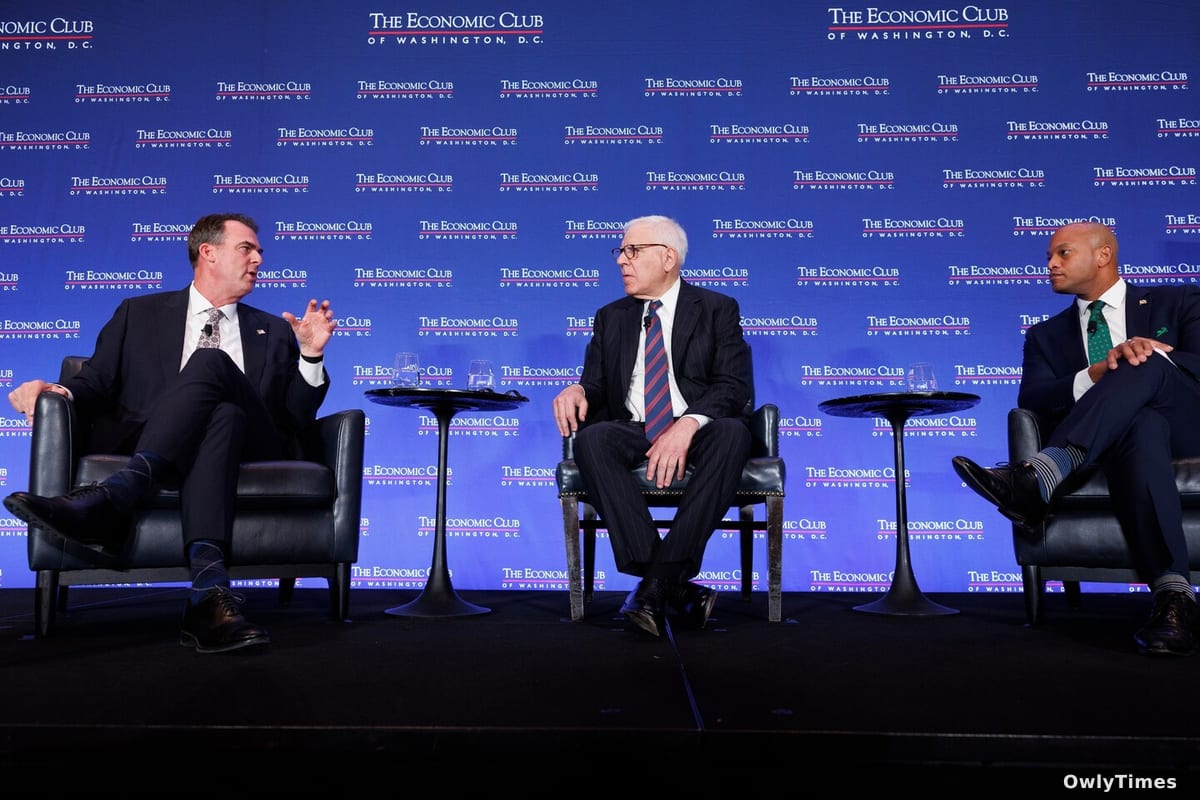

The carefully staged display of bipartisan civility at this week’s [National Governors Association](/tag/national-governors-association) (NGA) meeting isn’t a thaw in the political climate – it’s a strategic maneuver by both parties to subtly box in President Trump ahead of the 2026 midterm elections. The image of Governor Kevin Stitt (R-OK) and Governor Wes Moore (D-MD) sharing a stage, exchanging pleasantries at the Economic Club of Washington on February 18th, isn’t about genuine goodwill; it’s about projecting an image of functional governance precisely because the federal government, under Trump, is increasingly perceived as dysfunctional. This isn’t a return to normalcy, but a calculated attempt to define the terms of the coming electoral battle.
The Governors’ Quiet Rebellion
The NGA gathering, traditionally a non-partisan event, has taken on a new significance in the Trump era. The overt displays of unity – the joint appearances, the emphasis on shared state-level concerns like infrastructure and economic development – are a direct contrast to the combative rhetoric emanating from the White House. This isn’t accidental. Governors, particularly those facing re-election in swing states, recognize that associating themselves too closely with Trump’s increasingly polarizing policies could be politically damaging. By proactively showcasing bipartisanship, they create distance and insulate themselves from the fallout of federal-level gridlock. The fact that Stitt, as NGA chair, is leading this effort is particularly telling; Oklahoma is a reliably Republican state, yet even its governor feels compelled to signal independence.
See the original The Washington Post story for the full account.
Infrastructure as a Wedge Issue
The focus on infrastructure, a recurring theme throughout the NGA meetings, isn’t merely a matter of practical concern. It’s a deliberate attempt to highlight an area where Trump’s administration has consistently underdelivered. Despite repeated promises of a massive infrastructure bill, concrete action has been stalled by partisan infighting and budgetary constraints. Governors, who are directly responsible for maintaining roads, bridges, and public transportation systems, are acutely aware of the consequences of this inaction. By emphasizing the need for federal investment, they subtly pressure Trump to follow through on his pledges – or risk being portrayed as out of touch with the needs of the states. This echoes the dynamic during the Eisenhower administration, where state-level highway construction projects were used to demonstrate the benefits of federal investment and build support for the Interstate Highway System, even amidst congressional resistance.
Who Benefits and Who Loses
The immediate beneficiaries of this bipartisan posture are the governors themselves, particularly those in competitive races. They gain valuable political capital by appearing pragmatic and solutions-oriented. Governor Moore of Maryland, a rising star in the Democratic Party, stands to gain significant national visibility by demonstrating his ability to work across the aisle. Conversely, President Trump and his allies are the primary losers. The governors’ efforts undermine Trump’s narrative of a deeply divided nation and challenge his claim to be the sole voice of the American people. The subtle messaging – “we can govern effectively, even without him” – is a direct threat to Trump’s political authority. The states themselves benefit from increased attention to their needs, but that benefit is contingent on the governors’ ability to translate their bipartisan rhetoric into tangible results.
The Limits of Cordiality
However, the cordiality on display shouldn’t be mistaken for genuine consensus. Beneath the surface, deep ideological divisions remain. The governors are united in their desire to secure federal funding for their states, but they are likely to clash on issues such as environmental regulations, healthcare policy, and immigration. The fact that these contentious issues were largely avoided during the public sessions of the NGA meetings is a testament to the carefully curated nature of the event. The real negotiations, and the inevitable compromises, will take place behind closed doors. The question isn’t whether the governors can maintain this façade of unity indefinitely, but whether they can leverage it to achieve concrete policy gains.
The political chess move to watch next is whether the governors will attempt to formalize their bipartisan efforts into a unified lobbying force in Washington. A coordinated campaign to pressure Congress and the White House on key issues – particularly infrastructure – would signal a significant escalation in their challenge to President Trump’s authority and a clear indication that they intend to play a more assertive role in shaping the national agenda. Will they coalesce around a specific legislative proposal, and if so, will they be able to attract enough support from both parties to overcome Trump’s opposition? That will reveal the true extent of their ambition and the potential for a genuine shift in the balance of power.





