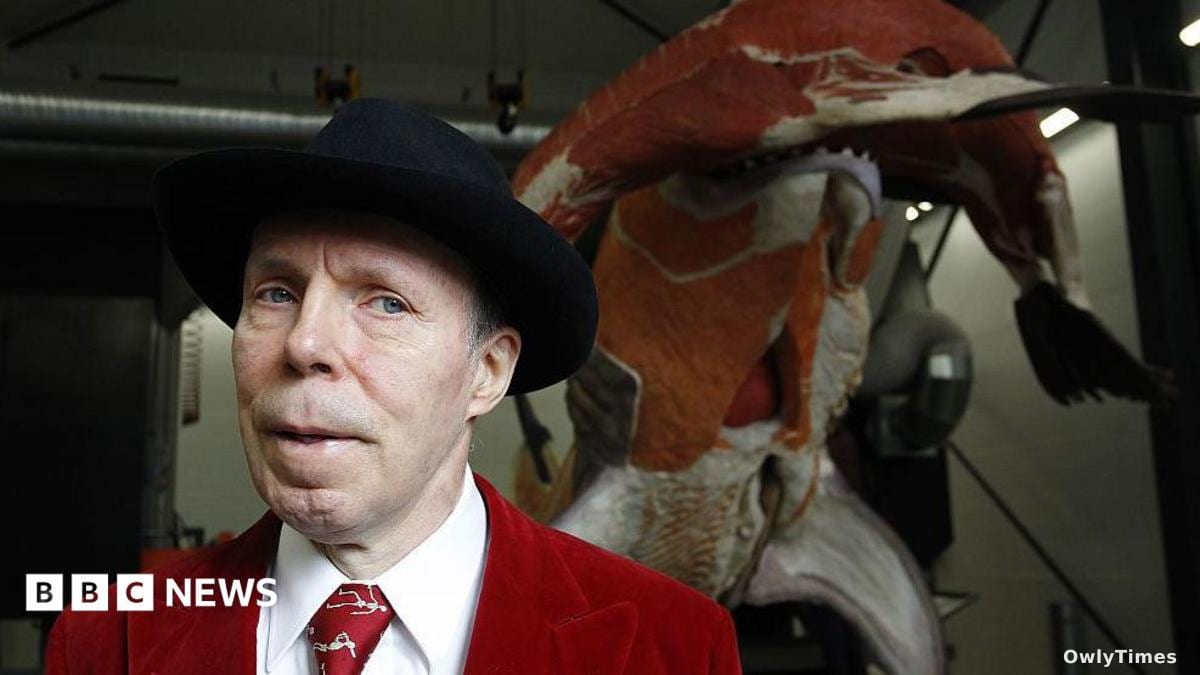

If technology is meant to serve humanity, what happens when the medium of that technology is humanity itself? The death of Gunther von Hagens at age 81 forces us to confront the uncomfortable intersection of medical innovation and public spectacle. While the headlines focus on the passing of the man dubbed "Dr. Death," the real story here isn't just the loss of a polarizing figure—it’s the enduring legacy of a man who successfully turned the human anatomy into a permanent, commercialized data set.
From Political Prisoner to Pioneer
Born Gunther Gerhard Liebchen in January 1945 in what is now Poland, von Hagens’ life was defined by a defiance of boundaries, both physical and political. According to The Guardian, he was imprisoned in 1969 for attempting to flee socialist East Germany, eventually being ransomed to the West for 40,000 deutschmarks in 1970. It was in the relative freedom of West Germany that he developed plastination in 1977.
The technique is a marvel of biological engineering: by extracting fluids and fats from a corpse and forcing polymers, resins, and silicon rubbers into the tissue, von Hagens effectively turned biology into hardware. As he explained to The Guardian, his breakthrough came from a simple realization that plastic should be poured into the body, rather than around it. This process granted the specimens a level of rigidity that allowed for the "lifelike" poses—playing chess or exercising—that became the hallmark of his "Body Worlds" exhibitions.
The Scale of the Spectacle
The reach of von Hagens’ work is staggering, though reports on the exact scale of his impact vary slightly. The BBC reports that more than 58 million people have viewed his exhibitions, while The Guardian cites a figure of more than 50 million. Regardless of the exact tally, the commercialization of the deceased became a global phenomenon after his first exhibition debuted in Japan in 1995, eventually reaching American soil in Los Angeles in 2004, according to Euronews.
However, this "democratization of anatomy" was never without friction. Both the BBC and Euronews highlight the recurring objections from religious groups and critics who labeled his work voyeuristic. The Guardian adds a darker layer to this history, noting a 2004 Der Spiegel report that alleged his facility in Dalian, China, had accepted "ownerless bodies" from police, including some that bore bullet holes—a claim that prompted a reported change in his procurement policies.
A Final Technical Iteration
The circumstances of his death align with his lifelong commitment to his craft. The Guardian reports he died on July 24 following a cerebral haemorrhage, after living with Parkinson’s disease since 2008. Both the BBC and Euronews confirm the family’s intention to honor his final request: that his own body undergo the very process he pioneered.
While we wait to see if his remains will be displayed in a "welcoming pose" or sliced for research, the immediate future of his work lies in the hands of his family and the Institute for Plastination. The next signal to watch for is the announcement from the Plastinarium in Guben regarding the specific location and nature of his final display, a decision that remains undetermined. In the digital age, we often worry about our data outliving us; von Hagens proved that with enough resin and a disregard for taboo, the hardware itself can do the same.