
If you think a massive food safety recall is just a matter of "bad lettuce," you’re looking at the pixels instead of the screen. The real story here isn't the specific parasite or the botched lab test—it’s the collision of a fragile, industrial-scale food supply chain with a political influence machine that makes accountability look like an optional feature rather than a core requirement.
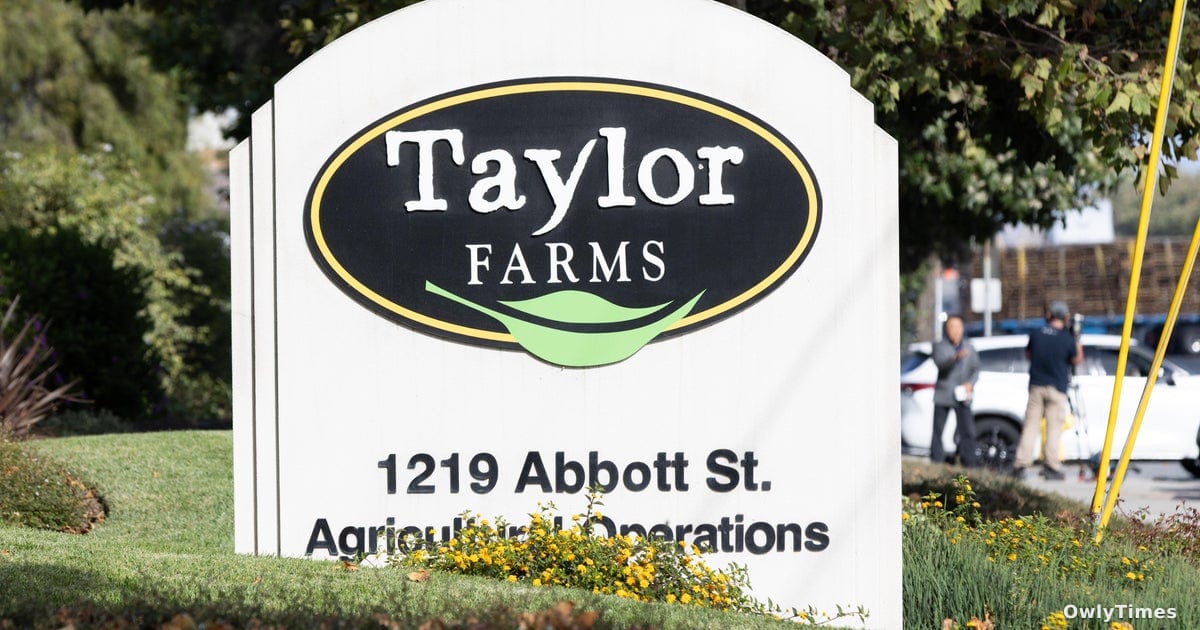
The current outbreak of cyclosporiasis, which has sickened nearly 7,000 people according to NBC News, has centered on Taylor Farms, a produce giant that functions much like a massive software platform: it’s the invisible infrastructure powering the salad kits and shredded lettuce at titans like Walmart, Costco, Target, Whole Foods, Taco Bell, and McDonald’s. Much like a cloud provider that goes down and takes half the internet with it, when a Taylor Farms facility falters, the impact ripples across the entire U.S. dining landscape.
The chaos reached a fever pitch last weekend when the Food and Drug Administration (FDA) announced a positive test result for Cyclospora in Taylor Farms’ iceberg lettuce, only to retract it as a "false positive" a day later. While CBS News reports that the company claimed the FDA apologized for the error, the Department of Health and Human Services (HHS) later refuted this, stating the agency "simply sent Taylor Farms the facts." Whether or not an apology was issued, NBC News notes that the scientific reality of testing for Cyclospora is notoriously difficult, as the parasite doesn't grow well in traditional cultures, forcing labs to rely on complex amplification techniques that are prone to these kinds of "laboratory events."
Beneath the technical friction, however, is a deeper trend of corporate lobbying. WIRED highlights that Taylor Farms has invested heavily in political influence, donating over $2 million to conservative political groups in 2025 alone, including $1 million to the Trump-aligned super PAC MAGA Inc. This spending coincides with the company hiring lobbyists from Sidley Austin to navigate food safety regulations. As food policy expert Marion Nestle observed to WIRED, these financial resources are often deployed to push back against the very regulations that make the food industry safer, because, quite simply, compliance is expensive and difficult.
The track record here suggests this isn't an isolated bug, but a recurring system failure. Taylor Farms has faced previous scrutiny, including a 2013 Cyclospora outbreak and a 2024 E. coli contamination tied to McDonald's Quarter Pounders that resulted in one death. WIRED reports that federal inspections have uncovered significant lapses, such as dirty equipment and poor hygiene, while the Department of Labor recently fined a New Jersey facility $1.1 million following a fatal accident involving an industrial blancher.
For the average consumer, this means the "fresh" produce in your fridge is subject to the same volatility as a beta-test software rollout. The immediate trigger to watch is the ongoing federal investigation; despite the retracted lab result, the FDA maintains that their broader "traceback investigation" still points to central Mexico, and the voluntary recall remains in effect. We are witnessing a stress test of our regulatory oversight mechanisms, and if history is any guide, the next major update won't come from a press release, but from the next round of inspection filings.