
Is it possible for the invisible machinery of food safety to break down, leaving the average consumer to play Russian roulette with their salad? The real story here isn’t the technical hiccup of a laboratory false positive—it’s the unprecedented intrusion of corporate lobbying into the delicate, evidence-based process of public health regulation.
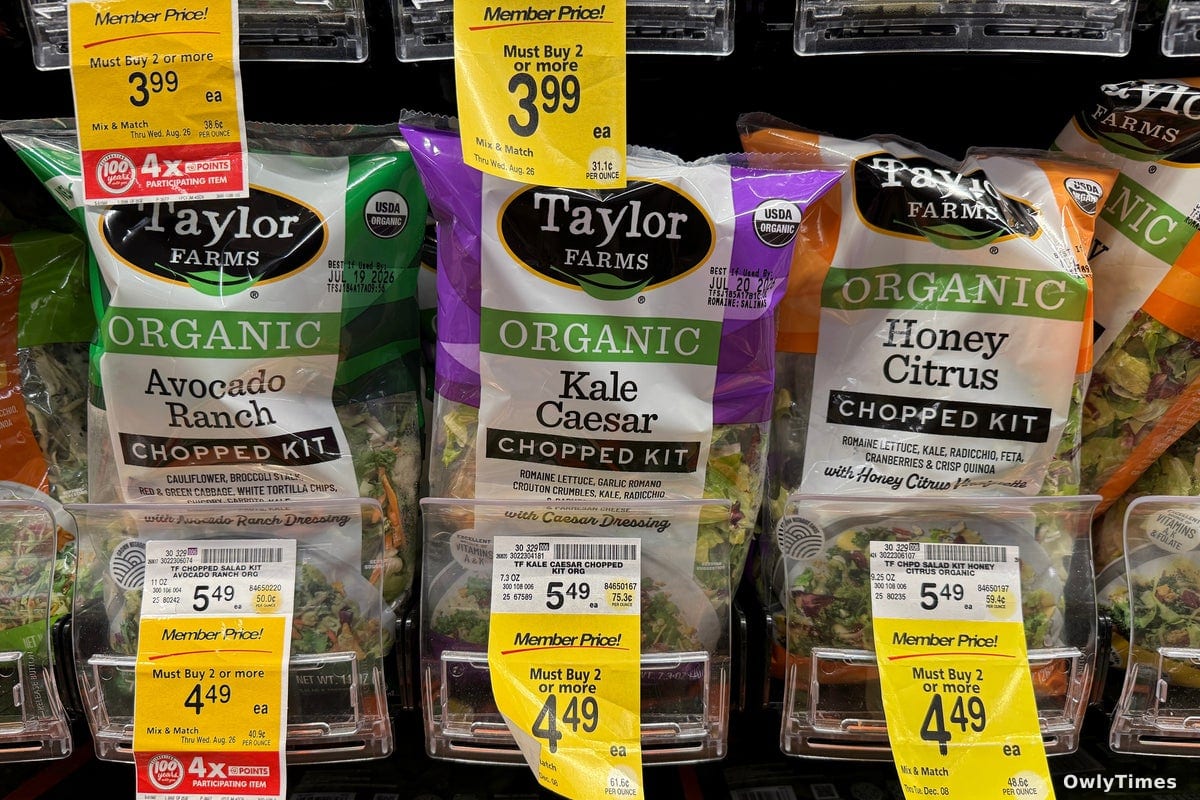
As a massive outbreak of cyclosporiasis—a parasitic infection causing severe gastrointestinal distress—continues to sweep across the U.S., the response has devolved into a chaotic tug-of-war between federal regulators and a major industry player. According to The Independent and The Guardian, Taylor Farms bypassed standard protocols by contacting the White House directly to request a delay in a recall announcement. This move, which involved a lobbyist-arranged call, reportedly occurred while the Food and Drug Administration (FDA) was zeroing in on the company’s central Mexico facility as the potential source of the contamination.
Former FDA Commissioner Scott Gottlieb slammed the maneuver on CBS’s Face the Nation, noting that such direct appeals to the White House are "not standard operating procedure." As The Guardian notes, Gottlieb emphasized that during his tenure, he never entertained White House interference in outbreak investigations. While Taylor Farms argued that the government lacked sufficient evidence to link their products to the illness, an HHS spokesperson told the Wall Street Journal—as cited by The Independent—that the FDA had provided the company with "substantial evidence."
The technical side of this mess is equally murky. Labs use "amplification" techniques—a process that creates copies of genetic material to make pathogens easier to detect—but these aren't foolproof. As NBC News reports, the FDA issued a notice regarding a positive test for the parasite, only to walk it back a day later, labeling it a "false positive" caused by erroneous amplification. This triggered a bizarre public spat: Taylor Farms claimed the FDA apologized for the mistake, a point the Department of Health and Human Services explicitly denied, stating they merely shared the facts of the investigation.
For the ordinary person in the grocery aisle, this "he-said-she-said" dynamic is more than just professional theater; it creates a dangerous fog of uncertainty. Since May 1, the CDC has recorded 4,173 confirmed cases and an additional 7,400 suspected cases of the parasite, with The Independent reporting that Michigan alone has seen over 8,000 cases. NBC News notes that while Donald W. Schaffner of Rutgers University believes the recall was the "right thing" for the company to do, he warns that the confusing messaging likely undermines consumer trust in scientific testing.
The situation remains volatile, with Taylor Farms having temporarily suspended production at its central Mexico facility as of July 18, 2026. While political figures like HHS Secretary Robert F. Kennedy Jr. have claimed the outbreak is under control, experts like Gottlieb remain skeptical, noting that the reservoir for this parasite is human fecal matter and the exact point of contamination remains a mystery. Expect the next phase of this drama to be dictated by the mounting death of public confidence; the signal to watch is the outcome of the independent, top-to-bottom safety review that Taylor Farms claims it has commissioned to address the fallout.