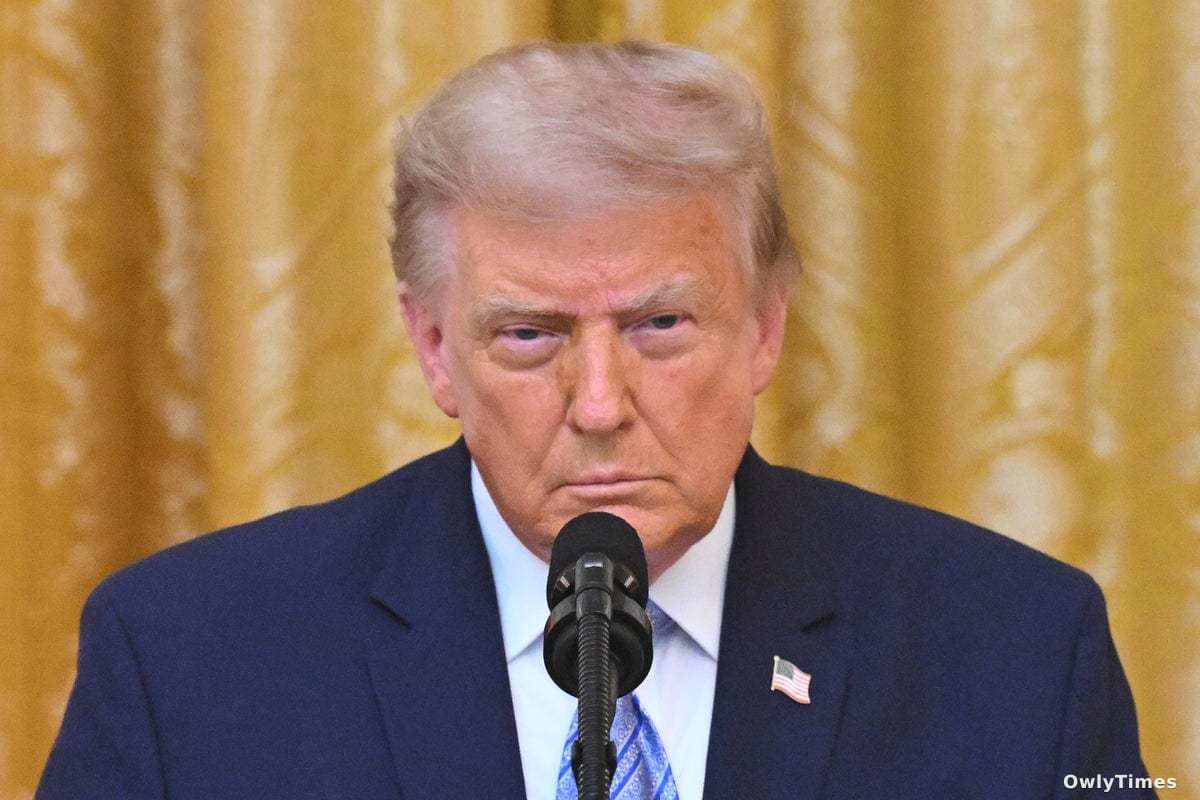

A staggering $300 billion in cross-border commerce is hanging in the balance after the White House announced a sweeping economic penalty on America's second-largest trading partner. President Donald Trump signed three proclamations on Monday, July 20, 2026, to impose a 50% tariff on a vast array of Canadian imports, escalating a tense bilateral trade dispute. According to CBS News, these steep duties are scheduled to take effect on August 19, 2026, marking a major escalation that ignores protections previously established under regional free trade agreements.
A Shift to Section 338 and the Legal Battleground
To understand how we arrived at this flashpoint, we must follow the money. The Trump administration is bypassing traditional trade remedies to deploy Section 338 of the Tariff Act of 1930, a powerful but historically dormant statutory tool. As reported by CNBC, this specific provision allows the president to impose tariffs of up to 50% on countries deemed to be discriminating against U.S. commerce, but it has gone virtually unused for decades, with no public record of its application since 1949.
This legal pivot follows a major setback for the administration's broader trade agenda. In February 2026, the Supreme Court ruled in a 6-3 decision that the president had illegally used emergency executive powers to impose previous global tariffs. That judicial defeat has already forced the U.S. government to pay back $81 billion in collected tariffs so far this fiscal year, as noted by The Guardian.
Dissecting the Retaliatory Loop and Affected Sectors
The White House justifies the new levies as a necessary countermeasure to Canadian trade policies that have allegedly burdened American businesses. U.S. Trade Representative Jamieson Greer stated that the action aims to hold Canada accountable for its "continued discrimination" against American motor vehicles, dairy, and alcohol. Specifically, Trump's proclamation highlights a 25% tariff Canada maintained on certain U.S. motor vehicles starting in April 2025, alongside a widespread boycott where all but two Canadian provinces and territories halted the retailing of American alcoholic beverages.
In response, the newly targeted Canadian imports span a wide variety of consumer and industrial goods, including wine, hockey equipment, cement, honey, down feathers, and cowhides. However, to prevent immediate domestic supply shocks, the White House confirmed that the 50% tariffs will exclude crucial energy products, potash, fish, and critical minerals. The Independent reports that the tariffs also include goods previously protected from import taxes under the United States-Mexico-Canada Agreement (USMCA), which the U.S. opted not to renew earlier this month.
Bilateral Blowback and the Threat of Escalation
The Canadian government has quickly pushed back against the administration's economic narrative, setting up a potential trade war. Canadian Prime Minister Mark Carney stated that his country's trade actions last year merely matched U.S. tariffs that violated the USMCA. Al Jazeera reports that Carney characterized the new U.S. levies as a "direct violation" of the trade pact, though he emphasized that Canada stands ready to engage in intensive negotiations during the 30-day grace period.
Domestic provincial leaders are taking a more combative stance, with Ontario Premier Doug Ford declaring on social media that Canada should respond "tariff for tariff, dollar for dollar." Meanwhile, the private sector is bracing for severe disruptions on both sides of the border. Chris Swonger, CEO of the Distilled Spirits Council of the United States, warned that the escalation deepens trade tensions and threatens hospitality businesses that are already facing financial hardships due to previous retaliatory measures.
The Cost of the Nuclear Option on Consumer Spending
For everyday consumers and investors, the activation of Section 338—what Scott Lincicome of the Cato Institute described as the "nuclear option"—threatens to reignite domestic inflationary pressures. Because tariffs are import taxes paid by domestic importing companies, these added costs are routinely passed directly to consumers through higher retail prices. Historically, aggressive trade barriers have triggered immediate market volatility; when the administration introduced its "Liberation Day" tariffs in April 2025, the resulting fears of inflation and recession sparked a financial market meltdown.
What this means for your wallet is a looming increase in the cost of everyday goods. If the 30-day negotiation window passes without a diplomatic resolution before the August 19, 2026 deadline, consumers will see immediate price hikes on Canadian imports ranging from cheese and wine to sporting goods. Investors should prepare for heightened market volatility as supply chains rewrite themselves, and watch closely to see if Canada executes its threatened "dollar-for-dollar" retaliation.