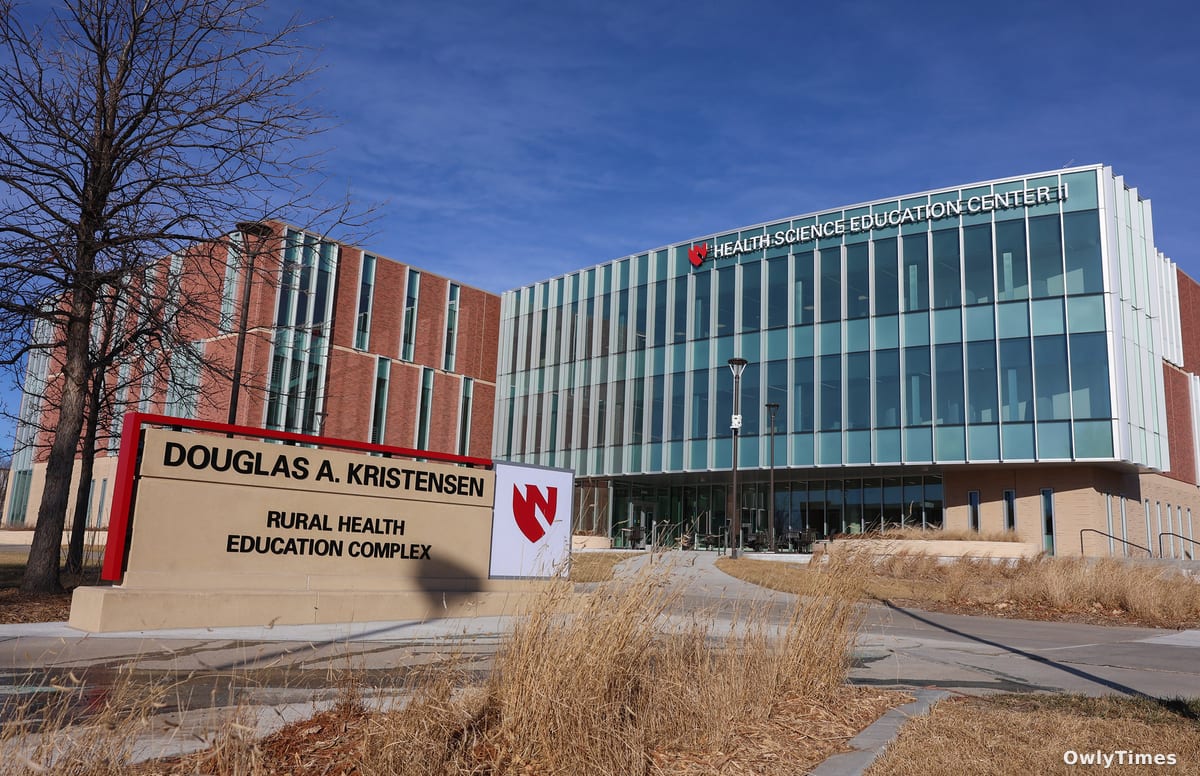

The persistent challenge of healthcare access in rural America isn’t simply a matter of distance; it’s a systemic issue of workforce scarcity. While national conversations often focus on urban hospital systems and specialized care, a quiet crisis unfolds in Nebraska and states like it, where communities struggle to attract and retain physicians, nurses, and pharmacists. The recent $5 million commitment from Carey and Brian Hamilton to the University of Nebraska at Kearney (UNK) isn’t just a philanthropic gesture – it’s a strategically targeted intervention aimed at bolstering that critical pipeline, and a signal of how private investment is being increasingly relied upon to address public health infrastructure gaps. The naming of the atrium in the new Health Science Education Center II in their honor acknowledges this commitment, but the true impact lies in the sustained funding it provides.
The headline figures – $5 million, a new atrium, expanded programs – often overshadow the nuanced way this funding will operate. The Hamiltons’ gift isn’t earmarked for bricks and mortar, though the atrium serves as a visible symbol. Instead, it establishes the UNK Endowed Fund for Rural Health Initiatives, a perpetually replenishing resource designed to support both existing and future programs focused on rural healthcare. This is a crucial distinction. Many university fundraising campaigns focus on capital projects, offering a one-time boost. An endowment, however, provides ongoing, discretionary funding, allowing UNK to adapt to evolving needs and emerging challenges in rural health. A significant portion of this fund will directly benefit the Kearney Health Opportunities Program (KHOP), a cooperative venture with the University of Nebraska Medical Center (UNMC) that offers full-tuition scholarships to rural Nebraska students who commit to practicing healthcare in underserved areas. Currently, KHOP students receive conditional admission to UNMC programs, a powerful incentive for those hesitant about the financial burden of medical education.
Source material: chadronradio.com.
The opening of the Health Science Education Center II in January, alongside the existing Health Science Education Center I, represents a substantial expansion of UNMC’s presence in Kearney. This isn’t simply about adding classrooms; it’s about bringing medicine, pharmacy, and public health programs – previously unavailable in the region – directly to students who are more likely to stay and practice in rural Nebraska. UNMC’s enrollment in Kearney is projected to reach 600 students at capacity, a figure that, while significant, must be viewed in the context of the state’s overall healthcare needs. Nebraska consistently ranks among the states with the highest percentage of rural population, and the demand for healthcare professionals in these areas far outstrips the current supply. The Hamiltons’ investment, coupled with UNK and UNMC’s expansion, is a direct response to this imbalance. Chancellor Neal Schnoor emphasized the couple’s “vision and energy” in inspiring fundraising progress, highlighting the broader impact of their leadership beyond the financial contribution.
However, it’s important to acknowledge the limitations of relying solely on educational initiatives to solve a complex problem. While increasing the number of healthcare professionals is essential, it doesn’t address the systemic issues that drive them away from rural practice – lower salaries, limited professional development opportunities, and the challenges of practicing in resource-constrained environments. The Hamiltons’ gift, while substantial, represents a fraction of the overall investment needed to address these challenges comprehensively. Furthermore, the success of KHOP and similar programs hinges on the continued commitment of students to fulfill their service obligations. Tracking the long-term retention rates of KHOP graduates in rural practice will be critical to assessing the program’s effectiveness. The University of Nebraska Foundation, led by Brian Hastings, recognizes the Hamiltons’ support as vital to “growing Nebraska’s health workforce pipeline,” but pipeline growth alone isn’t a guarantee of equitable access.
Looking ahead, the next crucial step is to evaluate the impact of the expanded UNMC programs in Kearney on actual healthcare access metrics in surrounding rural communities. Will the increased number of graduates translate into a measurable reduction in provider shortages? Will the quality of care improve? And perhaps most importantly, will these programs attract a diverse pool of students who reflect the demographics of the communities they serve? The dedication of the Douglas A. Kristensen Rural Health Education Complex on May 14th will be a moment for celebration, but it should also serve as a call to action – a reminder that sustained investment, coupled with a commitment to addressing the systemic challenges of rural healthcare, is essential to ensuring that all Nebraskans have access to the care they need. The question now is whether this momentum will inspire further investment, both public and private, to build a truly sustainable rural healthcare system.





