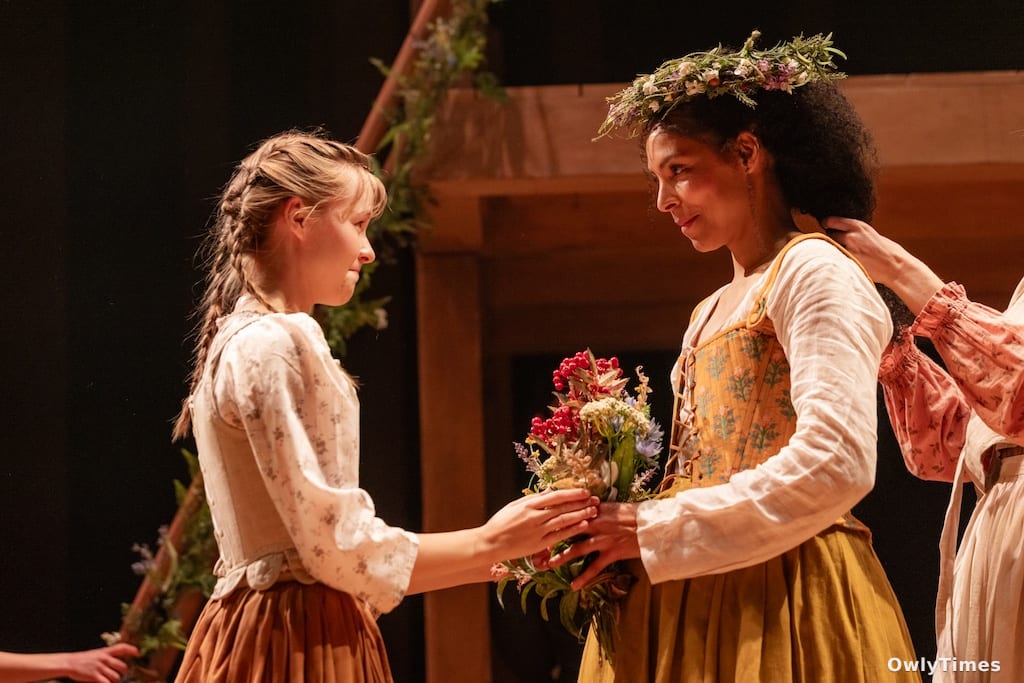

The scent of lilacs hung heavy in the air outside Harman Hall last week, a deceptive sweetness considering the gut-wrenching story unfolding within. I wasn’t there for a lighthearted escape; I was there for Hamnet, the Royal Shakespeare Company’s adaptation of Maggie O’Farrell’s novel, and it’s a production that refuses to offer easy comfort. It’s a play about grief, about the quiet devastation of losing a child, and about the strange, almost unbearable alchemy that can turn personal tragedy into enduring art. But beyond the headlines about a critically acclaimed play making its U.S. premiere, Hamnet speaks to a broader cultural moment – a reckoning with loss, a renewed interest in the interior lives of women, and a questioning of the narratives we build around genius.
This spring’s theatrical landscape, as a whole, feels similarly preoccupied with weighty themes, even amidst the expected bursts of family-friendly fare. While Disney’s Beauty and the Beast continues its run at the National Theatre (tickets starting at $45+), offering a familiar dose of enchantment, and Arena Stage presents a revival of Inherit the Wind ($73-118), tackling the enduring conflict between science and faith, there’s a noticeable shift towards productions that aren’t afraid to grapple with complexity. The sheer volume of options – from the puppet shows at The Puppet Co. ($8-$16) to the musical spectacle of The Wiz ($59-218) – is impressive, but it’s the willingness to explore darker, more challenging material that feels particularly resonant right now.
The contrast is stark. You can take your toddler to see Cinderella at The Puppet Co. through April 19, a classic tale of hope and transformation, or you can confront the raw, unflinching portrayal of parental grief in Hamnet (through April 12). You can lose yourself in the spectacle of Beauty and the Beast, or wrestle with the historical and philosophical questions raised by Inherit the Wind (through April 5). This isn’t simply a matter of catering to different audiences; it’s a reflection of a society grappling with its own anxieties and uncertainties. We crave escapism, yes, but we also crave stories that acknowledge the messiness and pain of life. The success of productions like Hamnet – which has been selling well despite its emotionally demanding subject matter – suggests that audiences are hungry for authenticity, even when it’s uncomfortable.
Based on the original kidfriendlydc.com report.
And it’s not just drama. Even seemingly lighter fare is carrying a heavier weight. Folger Shakespeare Theatre’s production of As You Like It (through April 19) isn’t just a charming pastoral comedy; it’s explicitly framed as a “love note to DC,” imbuing the Forest of Arden with the spirit and resilience of the District. This deliberate grounding in local identity, a trend increasingly common in regional theatre, speaks to a desire for art that feels relevant and connected to the community. Similarly, the upcoming production of The Great Gatsby at the National Theatre (May 12-24) arrives at a moment when the American Dream itself feels increasingly precarious, prompting a re-evaluation of the novel’s themes of wealth, class, and disillusionment. The fact that a musical adaptation of The Book of Mormon ($89-380+) continues to draw crowds, despite its intentionally provocative satire, suggests a public appetite for challenging conventional norms.
But the spring entertainment calendar isn’t solely focused on introspection. There’s a robust offering of family-friendly shows, from Imagination Stage’s Good Morning, Good Night ($25) for the very young to Dog Man The Musical ($41.90) and PAW Patrol Live! ($58+) for slightly older children. And, of course, sports are back in season, with the Washington Capitals, Washington Wizards, and DC United all offering opportunities for live action. The Washington Spirit ($25+) are also kicking off their season, providing a vital platform for women’s soccer. This breadth of options is crucial, offering something for everyone and ensuring that theatre and live entertainment remain accessible to a wide range of audiences. However, the pricing disparities are glaring. While free events like Saturday Morning Live!: Adventures in Time and concerts by 123 Andrés at the National Theatre offer crucial access points, the cost of attending many productions – particularly those at the National Theatre – can be prohibitive for many families.
The question now isn’t just what we’re seeing on stage, but who gets to see it. As regional theatres continue to grapple with issues of equity and inclusion, will they prioritize affordability and accessibility alongside artistic excellence? Will the trend towards more challenging and emotionally resonant work continue, or will audiences ultimately gravitate towards safer, more escapist fare? And, perhaps most importantly, will the success of productions like Hamnet inspire other theatres to take risks and tell stories that truly matter, even when they’re difficult to tell? The spring season is a microcosm of the larger cultural conversation, and the answers to these questions will shape the future of live entertainment for years to come.