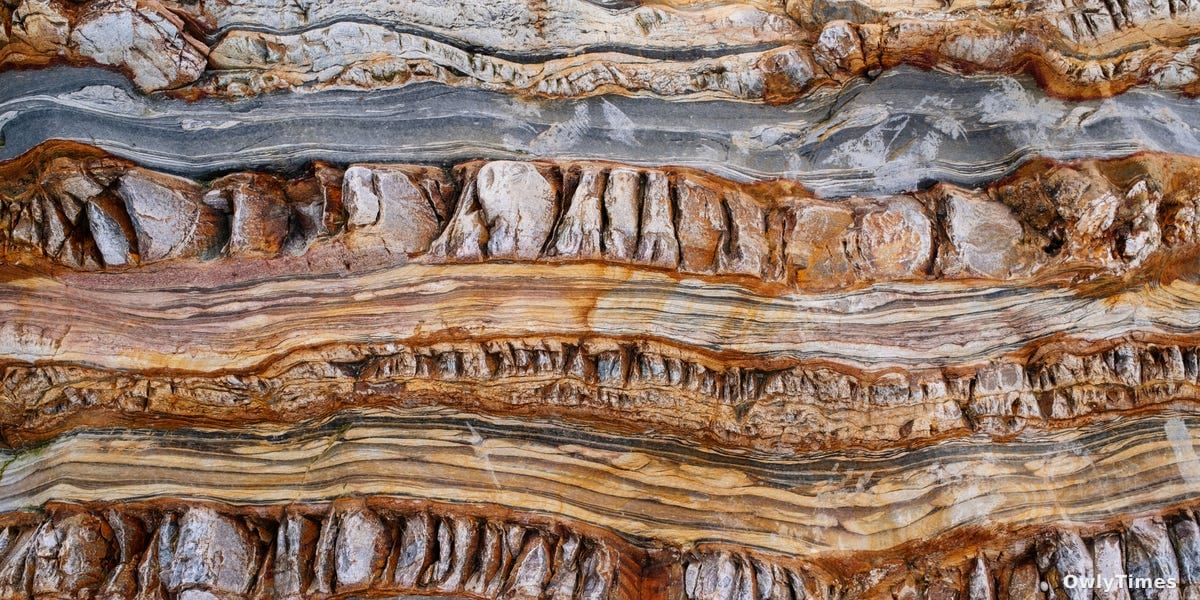

The story of life on Earth isn’t just written in fossils; it’s etched in stone. But what if entire chapters of that story were simply…missing? That’s the puzzle presented by the “Great Unconformity,” a globally significant gap in the geological record, and recent research suggests the cause isn’t what many scientists previously believed. The implications extend beyond simply redrawing geological timelines; they challenge our understanding of the environmental conditions that may have fostered the explosion of life as we know it. While headlines proclaim a definitive answer to this century-and-a-half-old mystery, the new findings, published in Proceedings of the National Academy of Sciences (PNAS), offer a refined understanding, not a complete closure, of this complex event.
A Billion Years Vanish: Defining the Great Unconformity
For over 150 years, geologists have puzzled over the Great Unconformity, a striking boundary found across North America – most famously in the Grand Canyon – and increasingly recognized worldwide. This isn’t a simple missing layer of sediment; it represents roughly one billion years of Earth’s history that have been eroded away, leaving a stark contrast between ancient Precambrian rocks and the much younger Cambrian layers above. The 4.6-billion-year history of our planet is typically understood through the layers of rock beneath our feet, but this massive gap creates a significant challenge for reconstructing the planet’s past. Liang Duan of Northwest University, lead author of the new study, explains the significance: “The Great Unconformity…represents a globally important interval of continental exposure and erosion that is notable also for the first appearance of all major animal phyla on Earth.” This timing is crucial, as the Cambrian period saw a dramatic diversification of life, often referred to as the Cambrian Explosion.
See the original popularmechanics.com story for the full account.
Shifting the Blame: Columbia, Not Snowball Earth
Previous explanations for the Great Unconformity centered around two major events: the “Snowball Earth” glaciations, periods of intense global cooling around 700 million years ago, and the assembly of the supercontinent Rodinia around one billion years ago. The idea was that either massive glacial erosion or the uplift and weathering of a vast landmass could account for the missing rock. However, the new research, conducted by an international team analyzing rocks from five sites in North China, points to an earlier culprit: the formation and subsequent breakup of Earth’s first supercontinent, Columbia, which existed approximately two billion to 1.8 billion years ago. By analyzing radioactive elements within the older rocks below the unconformity, the team established a timeline showing that the bulk of the erosion occurred before either Snowball Earth or Rodinia. While these later events may have contributed to some erosion, they weren’t the primary drivers of this billion-year gap.
The Precision of Paleochronology: How They Figured It Out
The team’s conclusion wasn’t based on simply observing the missing rock. They employed a technique called thermochronology, which analyzes the decay of radioactive isotopes within minerals. These isotopes act like internal clocks, recording when rocks cooled down after being buried or uplifted. By carefully measuring the ratios of these isotopes, scientists can determine how long ago a rock passed through a specific temperature range, effectively building a timeline of its geological history. This data, combined with geochemical indicators of weathering, allowed Duan and his colleagues to pinpoint the timing of the major erosion event. This method provides a far more precise understanding of the timing than relying solely on the relative ages of rock layers. The study’s strength lies in its multi-faceted approach, combining radiometric dating with geochemical analysis to build a robust and compelling case.
Complicating the Cambrian Explosion Narrative
This revised timeline has significant implications for our understanding of the Cambrian Explosion. A long-held hypothesis suggested that the erosion associated with the Great Unconformity released vast amounts of nutrients into the oceans, providing the necessary building blocks for the rapid evolution of complex life. If the majority of that erosion occurred much earlier, during the Columbia supercontinent cycle, it throws this narrative into question. The period between 1.8 and 0.8 billion years ago, known as the “Boring Billion,” was previously considered a relatively stable and uneventful time in Earth’s history. The new data suggest that this period was, in fact, marked by significant geological activity and erosion, potentially reshaping the planet’s surface and influencing ocean chemistry long before the Cambrian period. This doesn’t negate the possibility of a link between erosion and the Cambrian Explosion, but it shifts the focus to a much earlier and previously underestimated geological event.
What’s Next for Unconformity Research?
The findings from Duan’s team are a significant step forward, but they don’t represent the final word on the Great Unconformity. A key next step is to expand this research to other locations around the world, particularly in North America where the unconformity is most prominent. Comparing data from different regions will help determine whether the Columbia supercontinent cycle was the dominant driver of erosion globally, or if regional variations exist. Furthermore, researchers need to investigate the specific environmental consequences of this early erosion event. What was the impact on ocean chemistry, atmospheric composition, and the early evolution of life? Were there precursors to the Cambrian Explosion occurring during the Boring Billion that we haven’t yet recognized? As we continue to unravel the mysteries of the Great Unconformity, we’ll gain a deeper understanding not only of Earth’s geological past, but also of the conditions that allowed life to flourish on our planet. The question now isn’t simply when a billion years of rock disappeared, but how that disappearance shaped the world we inhabit today.