
The $188,000 Investment in “Timelessness”: What HBS Signals About the Future of Elite Education
$188,000. That’s the current cost of tuition for a single year at Harvard Business School (HBS), a figure that represents a 3.8% increase over the 2023 rate. While sticker shock is a common reaction, the continued price escalation isn’t simply about inflation; it’s a calculated investment in a brand increasingly defined by its perceived “timelessness” – a quality HBS itself highlights as its defining characteristic. Follow the money, and a clear picture emerges: the school isn’t just selling an MBA, it’s selling access to a network and a methodology positioned as immune to disruption, even as the business world undergoes radical transformation.
This piece references the poetsandquants.com report.
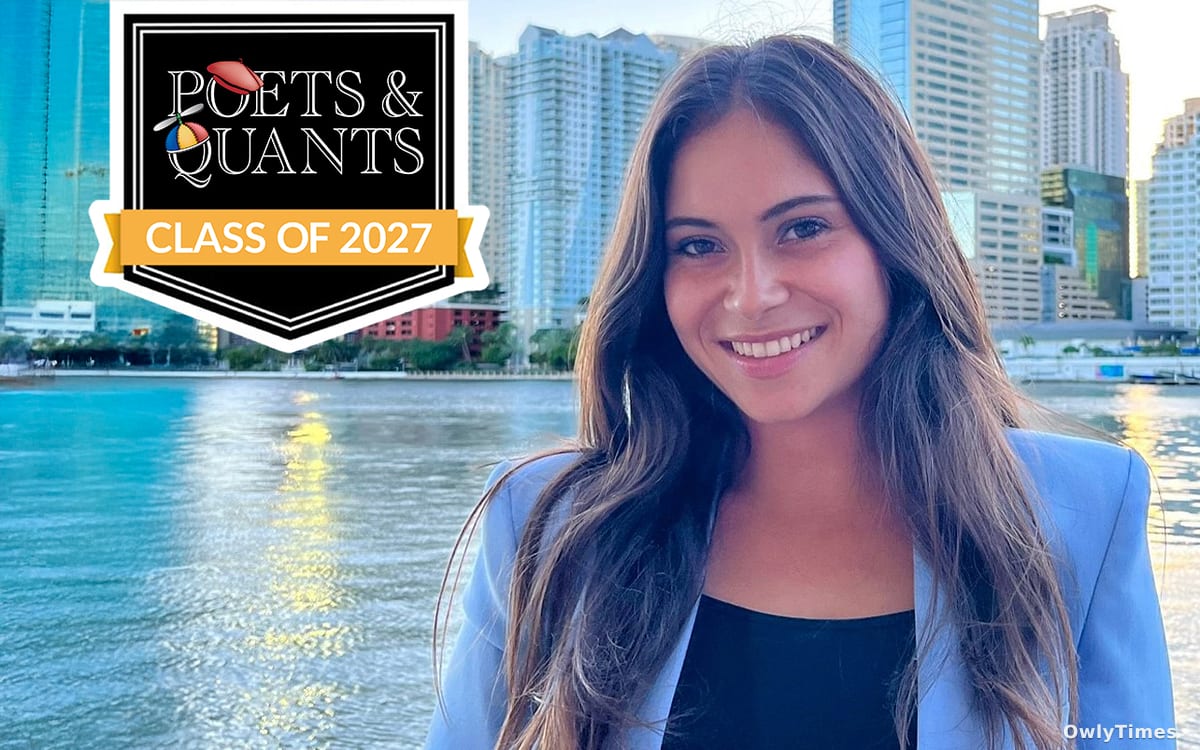
The recent profile of a first-year HBS student, originally from Madrid, Spain, and a former Senior Business Analyst at McKinsey & Company, exemplifies this strategy. Their journey – from UCLA to McKinsey to HBS – is a well-trodden path for the school’s incoming class, and one that reinforces the institution’s role as a gatekeeper to global leadership. The student’s emphasis on the “FIELD” capstone program, a hands-on consulting project in a foreign country, isn’t merely about practical application. It’s about validating the HBS model – the case method, the network, the prestige – in a real-world setting, and exporting it globally. This is particularly noteworthy given the increasing scrutiny of traditional consulting models and the rise of specialized, tech-driven solutions.
The appeal of the case method itself, described by the student as a way to “put yourself in the shoes of the case protagonists,” is a core component of this value proposition. In a world saturated with data, HBS is doubling down on qualitative analysis and the development of “critical thinking.” This isn’t a rejection of data, but a framing of it: data informs the case, but the human element – judgment, intuition, leadership – is what ultimately resolves it. This approach is reflected in the student’s prior accomplishment at McKinsey: developing a new-joiner training program, “how to be a Baller BA,” and codifying the learnings into a company-wide Op-Ed distributed to 40,000 colleagues in early 2025. The success of this program, piloted across 25 North American offices and then expanded internationally, demonstrates the value McKinsey places on internal knowledge transfer and the development of a consistent, firm-wide culture – a culture HBS actively cultivates in its students.
However, the emphasis on “timelessness” also reveals a tension. The student’s description of the HBS recruitment process – a “personal and authentic experience” connecting them with alumni – stands in contrast to the increasingly standardized and data-driven application processes at other top business schools. While HBS touts its commitment to authenticity, the sheer volume of applicants (acceptance rates hover around 12%) necessitates a degree of filtering and categorization. The school’s focus on identifying candidates who have a clear vision of the “person and leader they want to become” suggests a preference for those who already align with the HBS mold, rather than those who might challenge it. This raises the question: is HBS truly fostering transformative leadership, or simply reinforcing existing power structures?
The student’s acknowledgement of the need to “prioritize” experiences at HBS – recognizing the impossibility of participating in everything – is perhaps the most telling insight. The sheer abundance of opportunities, from clubs to courses to networking events, creates a paradox of choice. This abundance is a feature, not a bug; it reinforces the perception of HBS as a uniquely enriching environment, but it also demands a level of self-awareness and strategic decision-making that not all students possess. The ability to navigate this complexity, to discern signal from noise, is itself a valuable skill – one that HBS explicitly aims to cultivate.
What this means for your wallet – and your career – is that the ROI on an HBS MBA isn’t simply about the immediate salary bump (though that remains substantial). It’s about access to a network that extends far beyond Cambridge, a methodology that emphasizes critical thinking and leadership, and a brand that signals competence and ambition. But prospective applicants should ask themselves: is the “timelessness” HBS offers a genuine advantage in a rapidly changing world, or a comforting illusion? And, crucially, are they willing to pay nearly $200,000 a year to find out?





