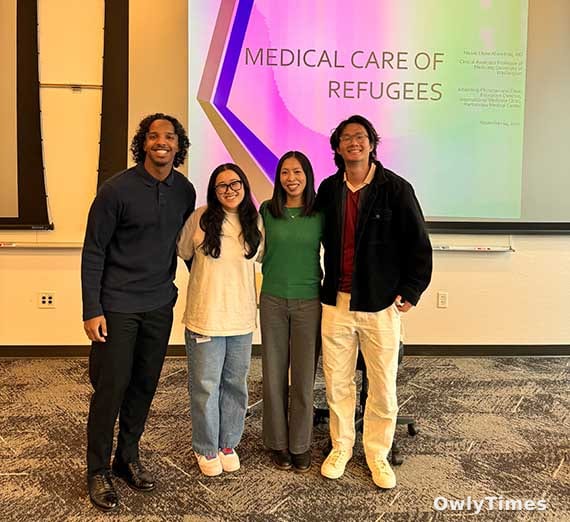

The persistent challenge of healthcare access for immigrant communities isn’t simply a matter of insurance or affordability; it’s fundamentally a communication problem. While headlines often focus on policy debates surrounding healthcare reform, a quieter, yet equally vital, effort is underway in Spokane, Washington, where medical students are tackling the issue at its most basic level: ensuring patients can accurately convey their medical histories, regardless of language. This isn’t about grand legislative solutions, but about a pragmatic, student-driven initiative – the Clinical Refugee Navigators (CRN) – that’s revealing how deeply trust and clear communication underpin effective medical care.
Founded in 2010 by students at the University of Washington School of Medicine (UWSOM), CRN began as a response to the clear need for culturally sensitive and linguistically appropriate healthcare support for newly arrived immigrants and refugees. Recently, the group hosted a “Patient Passport Day” in collaboration with Refugee and Immigrant Connections Spokane (RICS) and Gonzaga University nursing students, offering a tangible solution to a complex problem. The event centered around creating “patient passports” – documented medical histories patients can present to providers when a qualified interpreter isn’t immediately available. This isn’t a replacement for professional translation, emphasized organizers, but a crucial stopgap measure to prevent misunderstandings and ensure continuity of care. Fifty patients, including children, participated this year, with records compiled in Spanish and Russian/Ukrainian, building on a resource now available in 15 languages.
The impetus behind CRN, and particularly this year’s Patient Passport Day, is deeply personal for Zakriye Mohamed, a second-year UWSOM student and one of the event’s leaders. Mohamed’s own mother fled the civil war in Somalia, and he grew up witnessing firsthand the anxieties and distrust that can accompany navigating a new healthcare system in a foreign country. “Because my mother is a refugee, I know the experience firsthand. There's a lot of distrust for the medical community,” he explained. This experience wasn’t simply a childhood observation; it fundamentally shaped his career aspirations. He recounted a high school field trip to UWSOM as the moment medicine “seemed real” for him, transforming a previously unattainable goal into a viable path.
This piece references the gonzaga.edu report.
The success of Patient Passport Day isn’t solely about the documents created, but about the process itself. Luis Castillo, assistant director of RICS, described the patient passport as a “health record blueprint,” but also highlighted the event’s role in fostering trust. Molly Parker, an assistant professor of nursing at Gonzaga University, noted that her students, assisting with interviews and transcription, felt empowered by the direct impact of their work. They weren’t simply observing healthcare; they were actively removing barriers and gaining a deeper understanding of the challenges faced by refugee communities. This hands-on experience, Parker said, provided a level of insight not typically found in traditional classroom settings. The collaborative nature of the event – pairing UWSOM medical students with GU nursing students and RICS translators – is a model for interprofessional education, demonstrating how different disciplines can synergistically address complex social determinants of health.
However, it’s crucial to avoid portraying Patient Passport Day as a complete solution. The initiative addresses a symptom, not the root cause, of healthcare disparities. While a patient passport can facilitate communication in the absence of an interpreter, it cannot replace the nuance and accuracy of a professional translation, particularly when dealing with complex medical conditions. Furthermore, the reliance on volunteer student labor, while commendable, raises questions about sustainability and scalability. Can this model be replicated in other communities facing similar challenges, and can it be maintained over the long term without consistent funding and institutional support? The event also inherently relies on patients being able to access the event itself, meaning those with limited mobility or transportation face continued barriers.
Looking ahead, the next steps for CRN and its partners involve expanding the availability of patient passports in more languages and exploring digital solutions to enhance accessibility. Mohamed, who intends to pursue a career in global medicine, sees this work as foundational to his future practice. He’s participating in the Global Health Pathway and plans an overseas rotation during his fourth year, driven by a desire to “bridge the gap” in healthcare access worldwide. But perhaps the most important question emerging from this initiative isn’t about technological advancements or logistical improvements, but about how medical education can better prepare future physicians to address the social and cultural complexities of patient care. Will medical schools prioritize training in cultural humility and linguistic competence, recognizing that effective healthcare extends far beyond clinical expertise? The ongoing success of programs like CRN suggests that the answer should be a resounding yes.





