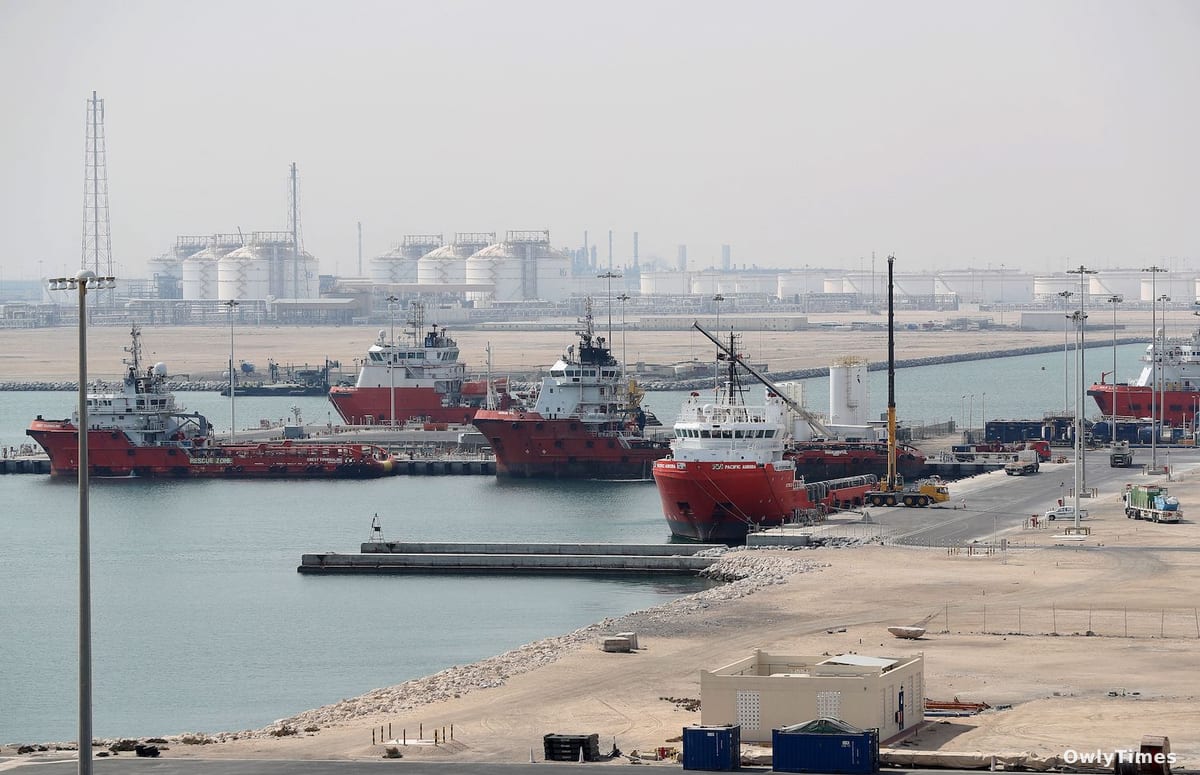

43 percent: That is the share of global helium production accounted for by the United States in 2025, according to the U.S. Geological Survey. While Washington has long positioned itself as the world’s helium powerhouse, the ongoing closure of the Strait of Hormuz has exposed a structural fragility in the global supply chain that domestic production alone cannot easily buffer. Follow the money through the semiconductor and medical technology sectors, and it becomes clear that the recent 14 percent slash in annual helium exports from Qatar—triggered by the attack on the Ras Laffan facility—is not merely a localized energy disruption; it is an industrial bottleneck that threatens the foundation of modern high-tech manufacturing.
The Perishable Bottleneck
Helium is not your typical commodity; it is a "perishable" input that defies standard storage solutions. Nicholas Snyder, CEO of North American Helium, notes that the gas must be shipped as a liquid at 4 degrees Kelvin. This physical constraint means that the global market cannot simply "stock up" during periods of calm. When QatarEnergy declared force majeure at the world’s largest LNG plant following the attack on Ras Laffan, the resulting supply shock was immediate. Because most of Qatar’s helium exports must transit the Strait of Hormuz—a maritime chokepoint currently strangled by overlapping U.S. and Iranian blockades—the industry is facing a logistical gridlock that no amount of domestic U.S. production can immediately offset.
The End of the Strategic Safety Net
The vulnerability is compounded by a policy shift that spans decades. The U.S. government once treated helium as a critical strategic asset, establishing a federal reserve near Amarillo, Texas, in 1925 and expanding it in 1960 for Cold War defense applications. However, the 1996 mandate to privatize this reserve, finalized in 2024, has left the nation without a meaningful buffer against the current crisis. Patrick Wilson, founding principal of the Semiconductor & Innovation Group, notes that the high cost of maintaining specialized storage tanks led to a "big storm of governments getting out of the business." Today, the system is purely commercial, lacking the public instruments once designed to insure against national or global disruption.
High-Tech Consequences
The downstream effects of this scarcity are hitting the sectors that drive the global economy: semiconductors, fiber optics, and MRI technology. Helium is essential for cooling the magnets used to stabilize silicon wafers and for purging contaminants during the chipmaking process. As David Pan, AI industry practice lead at Moody’s, observed, the modern AI economy is tethered to a fragile supply chain where GPUs depend on Qatari helium and narrow maritime exits. With a 2024 report by IDTechEx predicting a fivefold increase in semiconductor-related helium demand over the next decade, the current volatility is likely a preview of a much larger supply-demand mismatch.
What This Means for Your Wallet
Even if the current cease-fire holds and maritime traffic eventually resumes, the path to market stabilization is measured in months, not days. Bettina Weiss, chief of staff at SEMI, estimates that even if the Strait of Hormuz were to reopen today, it would take four to six months for supply chains to normalize. For the average consumer, this means that the upward pressure on the cost of microelectronics—and by extension, the finished goods that rely on them—is likely to persist. Investors should watch the normalization of shipping times through the Strait of Hormuz as the primary signal; until the "perishable" supply reaches global manufacturers at scale, the increased input costs for chipmakers will continue to exert a snowball effect on broader consumer electronics pricing.