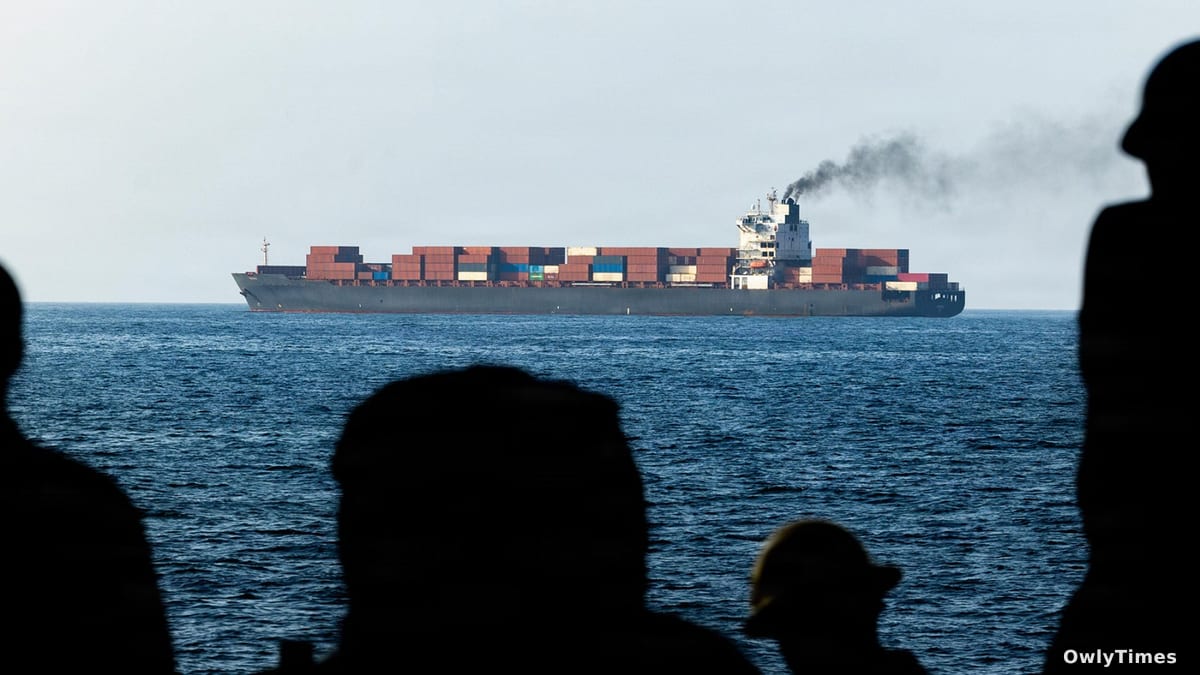

The closure of the Strait of Hormuz—a vital artery through which roughly 20 percent of the world’s oil and liquid natural gas (LNG) passes—has triggered a global energy shock that forces a fundamental question: can energy security be achieved through domestic production rather than fragile international supply chains? For nearly two months, the blockage has choked the flow of fuel, with over 80 percent of those transit volumes typically destined for Asian markets. While the immediate economic fallout is clear, the long-term scientific and policy implications are only now beginning to take shape.
In the United States, the price volatility has been stark. The cost of a gallon of gasoline has climbed by over a dollar since the strait closed, while diesel prices have surged by nearly 50 percent. In Europe, the impact is manifesting as a 10 percent increase in gas prices, coupled with a looming jet fuel shortage. While headlines often frame these spikes as temporary supply-chain disruptions, the underlying reality is a systemic vulnerability for any nation that relies on imports to power its economy.
Mark Z. Jacobson, a professor of civil and environmental engineering at Stanford University, argues that the current crisis acts as a catalyst for a transition that is as much about national security as it is about environmental health. "The fact that countries must import fossil fuels from faraway regions subjects them to uncertainties," Jacobson notes. He contends that every country possesses the latent potential to supply its own electricity and heat through wind, solar, geothermal, and hydroelectric sources, effectively decoupling their national stability from the volatility of maritime chokepoints.
However, the transition is not happening at a uniform pace. The government of South Korea has committed to reaching 100 gigawatts of renewable energy by 2030, with its energy minister describing the conflict in Iran as a "significant turning point" for the nation’s energy policy. Conversely, the situation in Europe is more complex. Federica Genovese, a professor of political science and international relations at the University of Oxford, cautions that while the European Union is framing the energy transition as a mechanism for economic resilience, domestic political divides remain a significant hurdle.
The study of this transition reveals a vital distinction: what experts advocate as a logical shift toward efficiency often clashes with existing political priorities. For instance, while Germany is actively pursuing renewables, the state is simultaneously prioritizing immediate, short-term measures to reduce gasoline prices. Genovese points out that Italy, which remains highly exposed to natural gas disruptions, faces a political landscape where far-right factions are currently resisting the push for a rapid transition.
Limitations to consider include the uneven baseline of energy resilience across different regions. Europe is arguably more insulated from this current shock than it was in 2022, not necessarily because of new infrastructure, but because of the "bitter pill" of previous energy shocks that forced a reduction in reliance on fossil fuel imports. Relying on past crises to drive current policy change assumes a level of political consistency that is rarely guaranteed, particularly when consumer prices are rising in the present.
The next steps for this energy shift will be measured by the adoption of domestic technology. While the U.S. federal government has shown little interest in scaling back fossil fuel reliance, the rising consumer interest in electric vehicles and solar power suggests that the transition may be driven from the bottom up. The next reading of global solar export data and lithium battery production capacity will indicate whether nations are truly decoupling from the Strait of Hormuz or simply weathering the storm until the next supply disruption occurs.