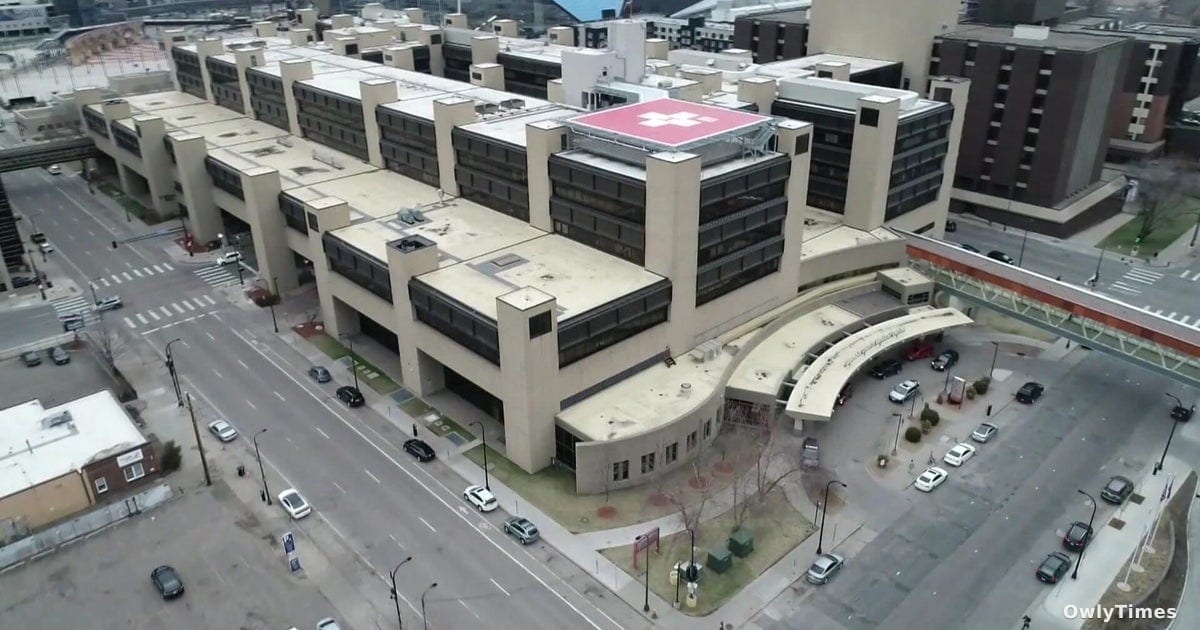

The Fragile Safety Net: Hennepin Healthcare’s Crisis Reveals Deeper Systemic Strain
The escalating financial crisis at Hennepin Healthcare in Minneapolis isn’t simply a local budget problem; it’s a stark warning signal about the precarious state of healthcare access for vulnerable populations across Minnesota, and a consequence of policy decisions reaching back years. While headlines focus on a potential June closure date and a proposed sales tax extension, the core issue is a systemic mismatch between the services provided by “safety net” hospitals like Hennepin and the funding available to sustain them. The urgency voiced by physicians and nurses this week isn’t about saving a single hospital, but about preventing a collapse in care for those who have nowhere else to turn.
See the original CBS News story for the full account.
Hennepin Healthcare’s Role and Recent Cuts
Hennepin Healthcare, home to Minnesota’s first and busiest level-one trauma center, is uniquely positioned as a provider of last resort. Data presented by the hospital itself reveals that 40% of patients receiving trauma or specialized care between 2020 and 2024 originated outside Hennepin County. This demonstrates a regional reliance on its services, a reliance that extends far beyond the Minneapolis city limits. Yet, despite this broad service area, the hospital is facing a projected operating loss of $40 to $50 million this fiscal year, a figure that doesn’t even account for the impending impact of changes to Medicaid funding. Already, the hospital has responded by cutting five departments and reducing its bed capacity by 100, a reduction that directly impacts its ability to meet existing demand. Dr. Nicole Lund, an emergency medicine resident, succinctly captured the stakes: “When we protect Hennepin, we protect the health and dignity of our entire community.”
The Medicaid Factor and Political Blame
The looming Medicaid changes, frequently referred to as stemming from the “one big, beautiful bill,” are a central component of the financial pressure. Representative Zack Stephenson, the House DFL leader, directly attributed these pressures to actions taken during the Trump administration, stating that cuts to Medicaid have created financial strain for Allina, Fairview, North Memorial, and Hennepin Healthcare. While the narrative places blame on federal policy, it’s crucial to understand that Medicaid funding structures are complex and involve both federal and state contributions. The current situation isn’t simply a result of past federal decisions; it reflects ongoing state-level choices about how to prioritize and allocate healthcare resources. The framing of the issue as solely a consequence of the previous administration, while politically convenient, obscures the shared responsibility for addressing the funding shortfall.
A Sales Tax Proposal and Republican Hesitation
The most prominent proposed solution – extending and increasing a sales tax originally intended for Target Field construction – highlights the unconventional measures being considered. Increasing the tax from 0.15% to 1% could generate significant revenue for Hennepin County, but the proposal requires legislative approval and, crucially, bipartisan support. Currently, that support is not guaranteed. GOP House Speaker Lisa Demuth indicated her caucus is “not really at a point yet” to authorize the extension, emphasizing the need for “internal changes” within Hennepin Healthcare itself. This stance reveals a tension between providing emergency funding and demanding institutional reform, a common dynamic in healthcare debates. The implication is that simply throwing money at the problem won’t suffice, and that Hennepin Healthcare must demonstrate a commitment to cost-cutting and efficiency improvements.
Limitations to Consider and the Broader Context
It’s important to acknowledge the limitations of the available information. The focus on Hennepin Healthcare, while justified given its critical role, risks overshadowing the financial challenges faced by other hospitals across the state. Representative Stephenson’s statement that “everyone across the state should realize…the closure of HCMC would be catastrophic” is a powerful claim, but it doesn’t negate the fact that other facilities are also struggling. Furthermore, the proposed sales tax extension is a temporary fix, not a sustainable long-term solution. Relying on a dedicated tax stream tied to a specific project (Target Field) to fund essential healthcare services is inherently unstable. The underlying issue – inadequate and inequitable healthcare funding – remains unaddressed.
What Happens If the Sales Tax Fails?
The immediate question facing Minnesota lawmakers is whether they will approve the sales tax extension. But the more critical, longer-term question is this: if the sales tax fails, or proves insufficient, what alternative mechanisms will be put in place to ensure access to specialized trauma and safety net care for all Minnesotans? Will the state explore broader Medicaid expansion, increased state funding for public hospitals, or innovative payment models that incentivize preventative care and reduce reliance on emergency services? The fate of Hennepin Healthcare is a bellwether, and the decisions made in the coming weeks will determine not only the future of one hospital, but the future of healthcare access for the state’s most vulnerable residents.





