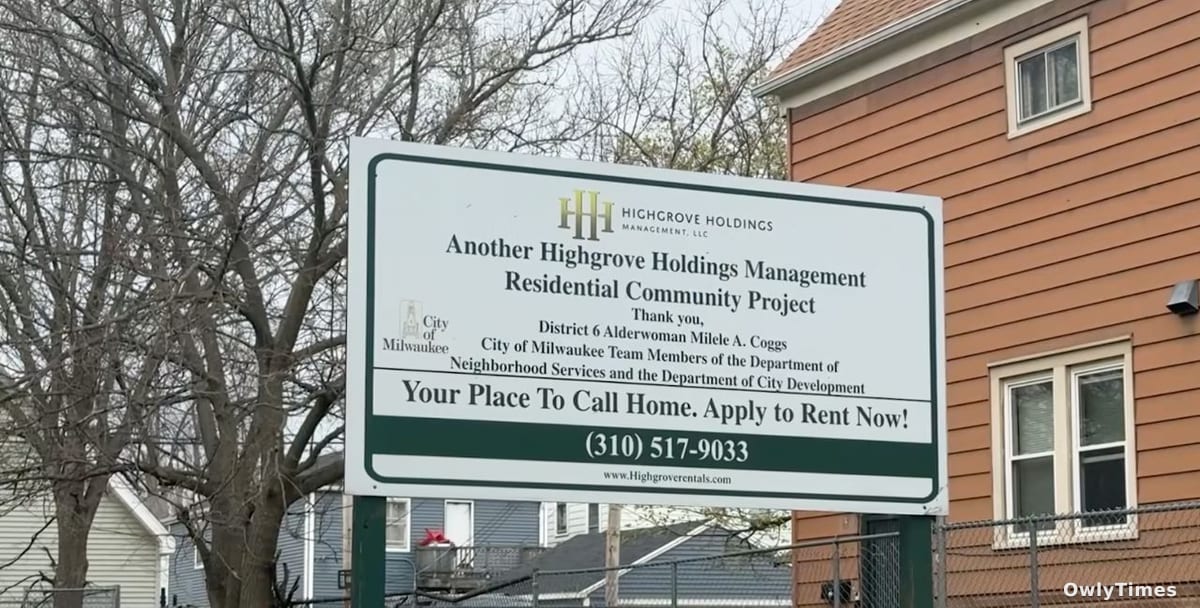

On March 26, the Milwaukee City Attorney initiated legal action against Highgrove Holdings, seeking a court order to declare the firm’s properties a public nuisance. The litigation, which targets both Highgrove and its related LLCs, centers on a cluster of financial and operational failures, specifically citing unpaid taxes, building code violations, and a systemic lack of response to tenant grievances. For a firm that staked its market identity on a decade-long presence in the region, the case represents a critical test of its operational viability.
A Decade of Investment Under Legal Scrutiny
David Tomblin, president of Highgrove Holdings, maintains that the company remains deeply tethered to the local market. He points to the firm's history of capital deployment in the city since 2012 and the strategic decision to relocate the company’s headquarters to Milwaukee in 2022 as evidence of long-term commitment. However, the legal allegations suggest a widening gap between this stated corporate strategy and the day-to-day reality of property management.
Follow the money in this dispute, and you find a narrative of operational friction. Tomblin identifies the disruption caused by the COVID-19 pandemic as a primary driver of the company’s current struggles, noting that three contractors responsible for 20 units went insolvent. This external shock, according to Tomblin, left a vacuum in maintenance capacity that has contributed to the current backlog of code violations and resident complaints.
Contradictory Accounts of Resident Support
The conflict is most visible in the living conditions of residents like Samantha Gamble and her son, Ishon Arnold. The duo reports having contacted Highgrove Management at least a dozen times regarding critical infrastructure failures, including a leaking, collapsed roof at their North Side residence. While Tomblin asserts that the company is actively working to relocate the family and fund temporary hotel stays, the account provided by Kevin Solomon, Senior Organizer at the nonprofit Common Ground, contradicts this. Solomon claims his organization and Tenants United are currently financing the family’s hotel stay, with plans to invoice Highgrove Holdings for the costs.
This divergence in the narrative creates a significant reputational risk for Highgrove. Tomblin maintains that the company is "resident-oriented," citing a 24-hour on-call policy for maintenance and a moratorium on evictions that he states has been in place since September 2024. Conversely, the public nuisance filing suggests that city officials view these measures as insufficient to meet the baseline standards for habitability.
The Path to Financial Resolution
Tomblin has signaled that a path toward stabilization is already in motion. He stated that a new financing fund is expected to address the outstanding issues cited in the lawsuit, with plans to resolve the legal challenges in court by the end of this year. The company’s ability to secure and deploy this capital will be the primary indicator of its future in Milwaukee.
For current and prospective residents, the next reading of the firm’s court filings and the progress on property repairs will determine whether Highgrove Holdings can successfully pivot from its current legal exposure. Until the promised capital is deployed and the backlog of code violations is remediated, the discrepancy between the firm’s stated commitment and the physical state of its assets remains a measurable signal of volatility for anyone tied to the company’s portfolio.





