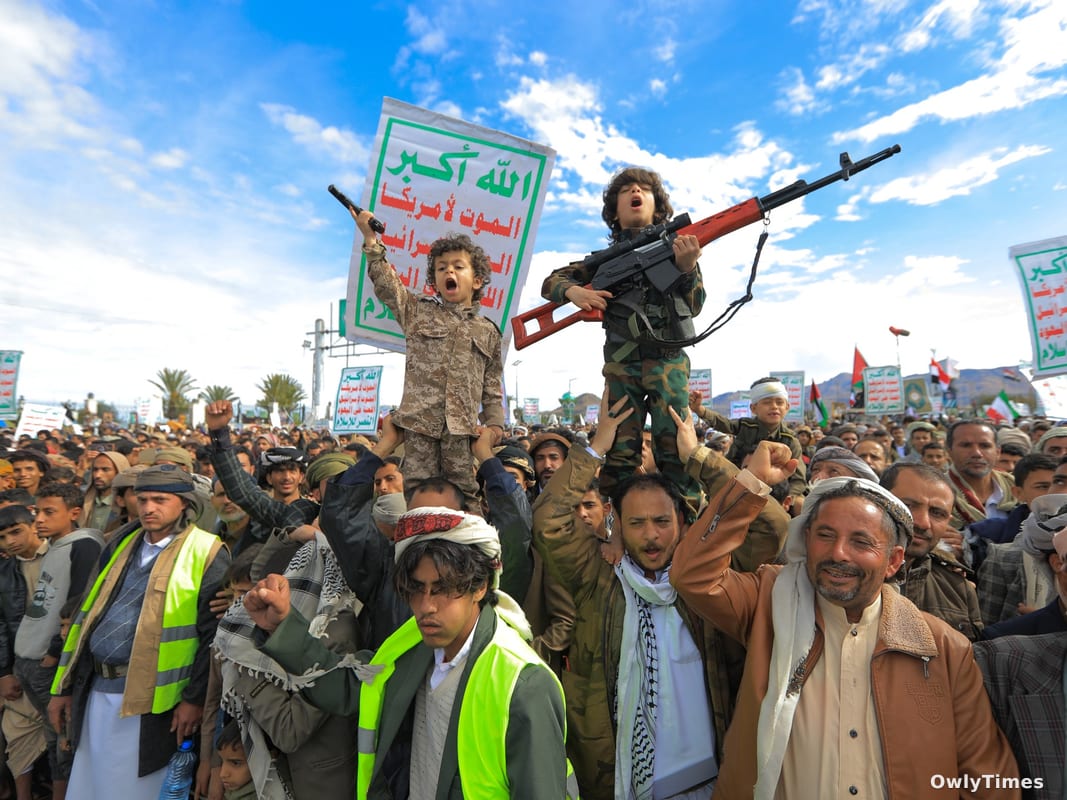

Are We Overestimating Iran's Control Over the Houthis?
Everyone’s focused on the escalating tensions between Iran and the West, and rightly so. But the narrative often paints Iran’s proxies – Hezbollah in Lebanon, Iraqi militias, and the Houthis in Yemen – as mere extensions of Tehran’s will, robotic arms executing its every command. The recent, measured entry of the Houthis into the regional conflict following their March 28th attack on Israel throws a wrench into that simplistic picture. The real story here isn't just Iran flexing its regional muscle; it's the complex, and surprisingly independent, calculations of a group that owes Iran a great deal, but isn’t necessarily willing to be a puppet.
This piece references the Al Jazeera report.
Why a Month on the Sidelines Matters
For a month, while rockets rained down on Iran and tensions spiked across the Middle East, the Houthis remained conspicuously quiet regarding direct attacks. This wasn't mere hesitation; a recent United Nations experts report highlights a deliberate strategy. The Houthis, having benefited immensely from Iranian support – including tactical and technical training and advanced weaponry that transformed them from a local group into a formidable military force – are now weighing their options with a keen eye on their own internal stability and regional power dynamics. They’re not simply reacting to Iranian directives; they’re factoring in the potential costs and benefits for their own project in Yemen.
The Unequal Partnership: Iran's Support, Houthi Autonomy
The relationship between Iran and the Houthis is best described as an unequal partnership. Tehran provides crucial support, expertise, and political cover within the “Axis of Resistance,” but the Houthis retain a significant degree of autonomy. As the UN report detailed, this allows them to leverage regional escalation to serve their domestic goals – namely, maintaining their position as the de facto authority in northwestern Yemen, controlling the capital Sanaa, and ultimately shaping the future of the country. This isn’t to diminish Iran’s influence; it’s to acknowledge that the Houthis aren’t simply mirroring Hezbollah’s actions, but operating within a framework that prioritizes their own Yemeni agenda.
Saudi Arabia and the Red Sea: The Real Constraints
The Houthis’ delayed entry into the war, and their continued restraint regarding attacks on Red Sea shipping, are directly tied to two key considerations. First, they’re acutely aware of Saudi Arabia’s reaction. The Yemeni government, bolstered by recent Saudi backing and a consolidation of forces across southern and eastern Yemen, is showing surprising strength. Any miscalculation by the Houthis could provide the Yemeni government with an opportunity to advance, potentially jeopardizing their control. Second, and perhaps more significantly, they understand the economic leverage they hold through the Red Sea.
The Energy Market Shift and the Temptation of Disruption
The recent shift in the energy market, with Saudi Arabia increasingly reliant on its Red Sea port of Yanbu to export crude oil (exports have surged to approximately 4 million barrels per day), only amplifies the Houthis’ strategic importance. Disrupting that shipping would be a powerful signal, demonstrating their ability to inflict economic pain and raise the cost of the conflict. This aligns perfectly with Iran’s interests, as it seeks to pressure the US and Israel by shifting the battlefield beyond its own borders, particularly given the difficulties Iran has faced in protecting shipping through the Strait of Hormuz.
Calculated Escalation, Not All-Out War
The Houthis aren’t necessarily seeking a full-scale maritime war. They’ve already demonstrated, in previous conflicts, that they can disrupt shipping in the Red Sea and Bab al-Mandeb Strait, forcing companies to reroute and prompting costly Western security measures – all without triggering a devastating response. Their current strategy appears to be one of calculated escalation: declaring their involvement, maintaining a visible readiness, and keeping the threat of Red Sea disruption alive, ready to be deployed at the most opportune moment.
The Prediction: Watch for Targeted Economic Pressure
The next phase won't be a sudden, all-out assault on Red Sea shipping. Instead, expect a series of targeted actions designed to maximize economic pressure while minimizing direct military confrontation. The Houthis, likely in coordination with Iran, will likely focus on disrupting specific shipments or targeting vessels associated with countries perceived as adversaries. This will be a slow burn, a constant low-level threat designed to keep insurance rates high, shipping routes uncertain, and the pressure on Western powers mounting. The question isn't if the Houthis will use their leverage, but when and how precisely they will calibrate their actions to achieve their goals in Yemen and amplify Iran’s regional influence.