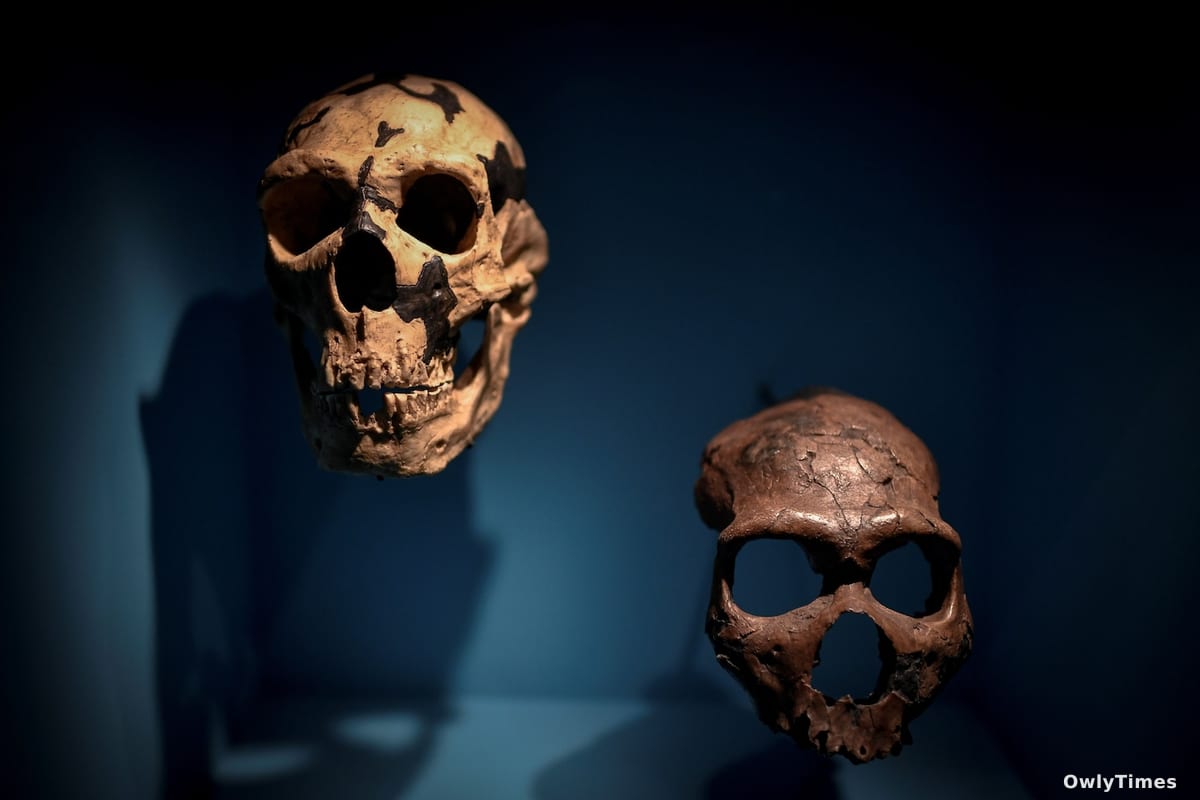

The Asymmetry of Ancient Encounters: Why Neanderthal Fathers Matter More Than We Thought
For decades, the narrative of human evolution has been one of replacement – Homo sapiens steadily outcompeting other hominin species like the Neanderthals. But the story isn’t so simple. Since 2010, genetic evidence has revealed a far more nuanced history, one of interbreeding and gene flow. Now, a clearer picture is emerging of how that interbreeding occurred, and it reveals a striking asymmetry: while both species clearly produced viable offspring, the pattern overwhelmingly favored Neanderthal fathers and Homo sapiens mothers. This isn’t just a historical curiosity; understanding this bias offers crucial insights into the biological compatibility – and potential incompatibilities – that shaped our species. The initial discovery of Neanderthal DNA in modern human genomes was revolutionary, but the recent focus on the directionality of these encounters is reshaping our understanding of what it meant to be “human” tens of thousands of years ago.
This article draws on reporting from The Washington Post.
Decoding the Genetic Imbalance
The core finding, stemming from analyses of ancient genomes, demonstrates a clear preference for this specific parental combination. Researchers haven’t identified why this pattern emerged, but the data itself is compelling. It’s not that pairings of Homo sapiens fathers and Neanderthal mothers never occurred – they undoubtedly did. However, these pairings were significantly rarer, and their genetic contributions to present-day populations are far less pronounced. To put this in perspective, the genetic legacy of Neanderthal ancestry in modern humans ranges from roughly 1-4% depending on geographic origin, but the distribution of that ancestry is unevenly inherited, leaning heavily towards paternal contributions. This isn’t simply a matter of more Neanderthal fathers being available; the biological mechanisms at play likely involved factors affecting fertility, embryonic development, or offspring survival. It’s a subtle but critical distinction: we aren’t just seeing evidence of interbreeding, but evidence of a biased interbreeding process.
Beyond “Archaic Introgression”: What Successful Hybridization Tells Us
The term “archaic introgression” – the incorporation of genes from one species into the gene pool of another – often feels abstract. But this new data grounds that concept in the realities of reproductive biology. Successful hybridization, even between closely related species, is rarely straightforward. Genetic incompatibilities can lead to reduced fertility, developmental abnormalities, or decreased fitness in hybrid offspring. The fact that Neanderthal-fathered offspring were relatively common suggests a degree of compatibility between Neanderthal genes and the Homo sapiens maternal environment. Conversely, the relative scarcity of Homo sapiens-fathered offspring hints at potential challenges in the reverse scenario. Dr. Kay Prüfer, a leading researcher at the Max Planck Institute for Evolutionary Anthropology and involved in early genome sequencing efforts, has noted that this pattern suggests “some sort of reproductive barrier” existed, though the exact nature of that barrier remains elusive. This isn’t to say these pairings were impossible, only that they were less likely to result in viable, reproducing offspring.
Limitations to Consider: Ancient DNA’s Inherent Challenges
While the evidence is growing, it’s crucial to acknowledge the limitations inherent in studying ancient DNA. The vast majority of ancient genomes available are fragmented and incomplete, recovered from skeletal remains often exposed to environmental degradation. This means that analyses rely on statistical inferences and extrapolations, and the picture could shift as more complete genomes become available. Furthermore, the geographic distribution of samples is uneven, with a bias towards Europe and Asia. We know far less about interactions between Homo sapiens and Neanderthals in Africa, for example, where the archaeological record is less extensive and preservation of ancient DNA is more challenging. The current findings also don’t address the reasons behind the observed asymmetry. Were there behavioral factors – mate choice preferences, for instance – that contributed to the pattern? Or were the barriers purely biological? Distinguishing between these possibilities requires further investigation.
The Future of Understanding Our Complex Ancestry
The next crucial step is to identify the specific genes responsible for any observed reproductive incompatibilities. Researchers are now focusing on regions of the genome where Neanderthal and Homo sapiens genes differ significantly, looking for evidence of selection against certain Neanderthal alleles in modern human populations. This could reveal which genes posed challenges to hybrid development or survival. Simultaneously, more comprehensive analyses of ancient genomes from diverse geographic locations are needed to refine our understanding of the global patterns of interbreeding. Perhaps most importantly, future research should explore the functional consequences of carrying Neanderthal DNA – how do these archaic genes affect our immune systems, our susceptibility to disease, or even our cognitive abilities? The story of human evolution isn’t a linear progression, but a complex tapestry woven from encounters, exchanges, and adaptations. And as we unravel the details of these ancient interactions, we’ll gain a deeper understanding not only of where we came from, but of what it truly means to be human – and what vulnerabilities our complex ancestry might hold. Will future studies reveal specific genetic conflicts that continue to impact human health today? That’s the question researchers are now racing to answer.





