
The Unexpected Role of Attraction in Our Ancient Past
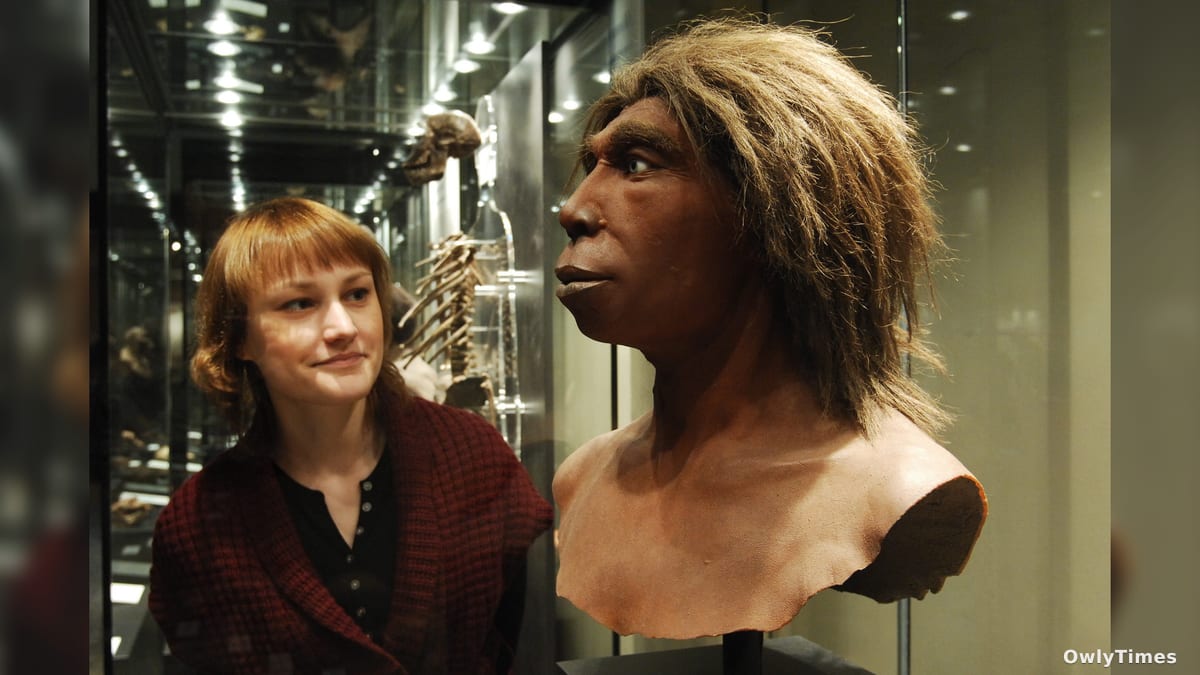
For decades, the story of Neanderthal and Homo sapiens interaction has been told through the lens of genetic compatibility – which genes worked, which didn’t, and how natural selection pruned the resulting hybrid genomes. But a new study, published February 26th in Science, suggests a far more nuanced, and surprisingly romantic, explanation for the patchy inheritance of Neanderthal DNA in modern humans. Researchers, led by Alexander Platt at the University of Pennsylvania, aren’t dismissing the role of natural selection entirely, but are proposing that ancient mate preferences played a significant, and previously underestimated, role in shaping our genetic makeup. This isn’t simply about survival of the fittest; it’s about who our ancestors chose to connect with.
See the original Live Science story for the full account.
The puzzle began with “Neanderthal deserts” – regions of the modern human genome conspicuously lacking Neanderthal ancestry. Given that most non-African populations carry roughly 2% Neanderthal DNA, a legacy of interbreeding that occurred after Homo sapiens migrated out of Africa around 600,000 years ago, these gaps were perplexing. Initial assumptions centered on genetic incompatibility. The idea was that Neanderthal genes, diverging from our own for hundreds of thousands of years, would inevitably contain combinations detrimental to Homo sapiens health, and thus be systematically removed by natural selection. However, this explanation didn’t fully account for the specific pattern observed: the most pronounced deserts were located on the X chromosome. If incompatibility was the driving force, we’d expect to see a more even distribution of these “toxic” genes across all chromosomes.
To investigate, Platt and his team took a different approach, focusing on the genomes of 73 women from three modern-day African populations – the !Xoo, Ju|'hoansi, and Khoisan – who have no detectable Neanderthal ancestry. This provided a crucial baseline for comparison. They then analyzed Neanderthal genomes, specifically examining the X chromosome. What they found was striking: the Neanderthal X chromosomes contained significantly more modern human DNA than other Neanderthal chromosomes. This isn’t evidence of incompatibility, but rather, suggests a consistent pattern of gene flow from modern humans into the Neanderthal lineage, specifically through the X chromosome. The researchers propose this pattern is best explained by a preference for pairings between Neanderthal males and Homo sapiens females.
The logic is rooted in the biology of sex chromosomes. Females carry two X chromosomes, while males have only one. A mating preference for Neanderthal men would mean that fewer Neanderthal X chromosomes would be passed on to subsequent generations of Homo sapiens, resulting in the observed “deserts.” This isn’t to say Neanderthal genes were inherently harmful, but that the dynamics of mate choice actively reduced their representation in the modern human gene pool. It’s a subtle but critical distinction. While headlines might suggest Neanderthal genes were “toxic,” the study actually demonstrates a complex interplay between genetic factors and behavioral preferences. The average Neanderthal DNA percentage in non-African populations, around 2%, already indicates successful interbreeding occurred, just not evenly across the genome.
However, the reasons why this preference existed remain a mystery. Platt himself admits, “I have no idea whose preference is being expressed here.” Previous research on the Neanderthal Y chromosome – inherited through the male line – suggests interbreeding also occurred between Homo sapiens males and Neanderthal females. This indicates that attraction wasn’t entirely one-sided. The new study simply reveals a stronger signal for pairings between Neanderthal men and Homo sapiens women. It’s important to note that this research doesn’t negate the role of natural selection. It’s entirely possible that some Neanderthal genes were detrimental and subsequently removed, but this study demonstrates that mate preference was a powerful force shaping the genetic landscape.
Limitations to consider include the relatively small sample size of African genomes analyzed, and the inherent difficulty in reconstructing ancient social dynamics. Genetic data can reveal patterns, but it can’t definitively explain motivations. Furthermore, the study focuses primarily on the X chromosome; further research is needed to explore whether similar patterns exist on other chromosomes, albeit potentially less pronounced. The researchers also acknowledge that more complex evolutionary scenarios – combining natural selection, sex biases, mate preference, and migration patterns – could all have contributed to the observed “Neanderthal deserts.”
The next steps for Platt’s team involve investigating the social structures and gender roles within Neanderthal societies. Understanding how Neanderthals organized themselves, and the roles played by males and females, could potentially shed light on the origins of this ancient mate preference. But, as Platt cautions, “we’re a long way from knowing this.” A crucial question now is whether archaeological evidence – such as burial practices or tool use – can offer clues about Neanderthal social dynamics and potentially corroborate the genetic findings. Ultimately, this research compels us to move beyond a purely biological understanding of human evolution and to consider the powerful, and often unpredictable, influence of attraction and social behavior in shaping who we are today.