
Why are we still obsessed with the idea that military strength is measured by a single shot hitting a single target? If the digital age has taught us anything, it’s that the most effective systems are those that can multitask—processing disparate data streams to solve complex problems simultaneously.
The real story here isn't just the sheer distance of India's latest missile test; it’s the shift toward high-precision fragmentation of power. By successfully testing an advanced Agni missile equipped with a multiple independently targeted re-entry vehicle (MIRV) system, India has moved from the era of the "sledgehammer" to the era of the "scalpel."
Mission Divyastra and the Multi-Target Shift
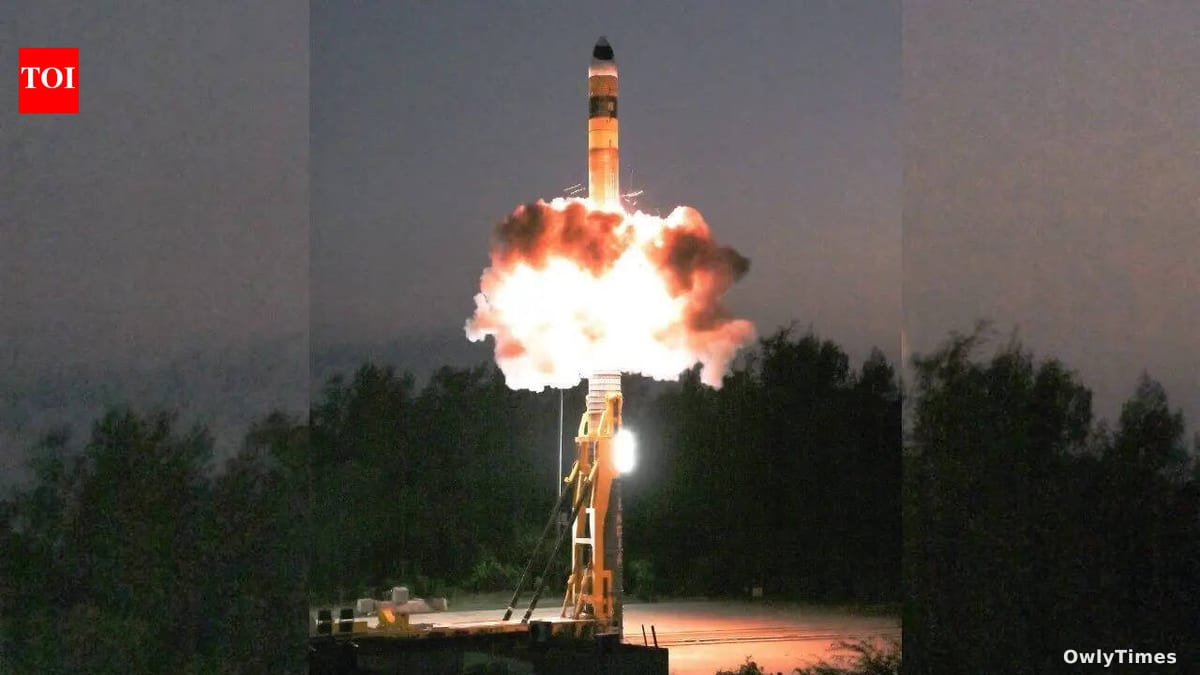
On Friday, the Defence Ministry confirmed a successful flight trial of this MIRV-capable system from Dr APJ Abdul Kalam Island off the Odisha coast. This iteration of the Agni-5, dubbed ‘Mission Divyastra’, is designed to carry multiple nuclear-capable payloads. Unlike a standard ballistic missile that commits its entire force to one point of impact, this technology allows a single launch to disperse warheads across a wide geographical area in the Indian Ocean Region.
This marks the second time this specific configuration has been tested, following the initial flight in March 2024. For the average citizen, the nuance of rocket science might seem abstract, but the strategic implications are grounded in basic efficiency. If you have one delivery vehicle capable of hitting several targets at once, you aren't just increasing your firepower; you are significantly complicating the defensive calculations of any adversary tasked with tracking that incoming trajectory.
Stretching the Reach of Strategic Deterrence
The Agni-5 remains the centerpiece of this development, boasting an officially declared strike range of over 5,000 km. In practical terms, this range effectively brings targets across vast swaths of Asia, Europe, and Africa into the reach of a single, highly maneuverable platform.
Defence Minister Rajnath Singh lauded the Defence Research and Development Organisation (DRDO), the Indian Army, and the domestic industry for this achievement. He framed the success as a critical upgrade to the country's defense preparedness against what he termed "growing threat perceptions." By utilizing a network of ground and ship-based stations to track the entire trajectory—from lift-off to the final impact of individual payloads—the ministry confirmed that all mission objectives were fully met.
The Industrial Backbone of Modern Defense
We often think of defense innovation as a closed-loop system existing only within high-security bunkers, but the reality is increasingly collaborative. This missile system was developed by various DRDO laboratories, yet its production relied on a broad ecosystem of industries spread across the country. This integration suggests that the future of national security is less about a single "eureka" moment in a lab and more about the successful coordination of a complex supply chain.
For the observers in the defense sector, the focus now shifts to the operational deployment of this technology. The next reading of the DRDO’s internal testing metrics and the subsequent integration of these MIRV capabilities into the active Indian Army arsenal will indicate whether this capability transitions from a successful demonstration to a reliable pillar of the nation’s long-term strategic posture.