
The persistent question of how to effectively manage our shared environment has historically been framed – and often constrained – by the methodologies of Western science. But a quiet revolution is underway, one that isn’t about replacing established scientific practice, but fundamentally reshaping it through genuine collaboration with Indigenous knowledge systems. This isn’t simply a matter of ethical inclusion, though that is paramount; it’s a recognition that centuries of observation, experimentation, and deeply nuanced understanding of ecological relationships have been systematically undervalued, and that incorporating these perspectives can unlock more effective and sustainable solutions. The emerging field of “braiding” Indigenous and Western sciences is gaining momentum, but the path forward isn’t without its complexities, and ensuring equitable partnership remains a critical challenge.
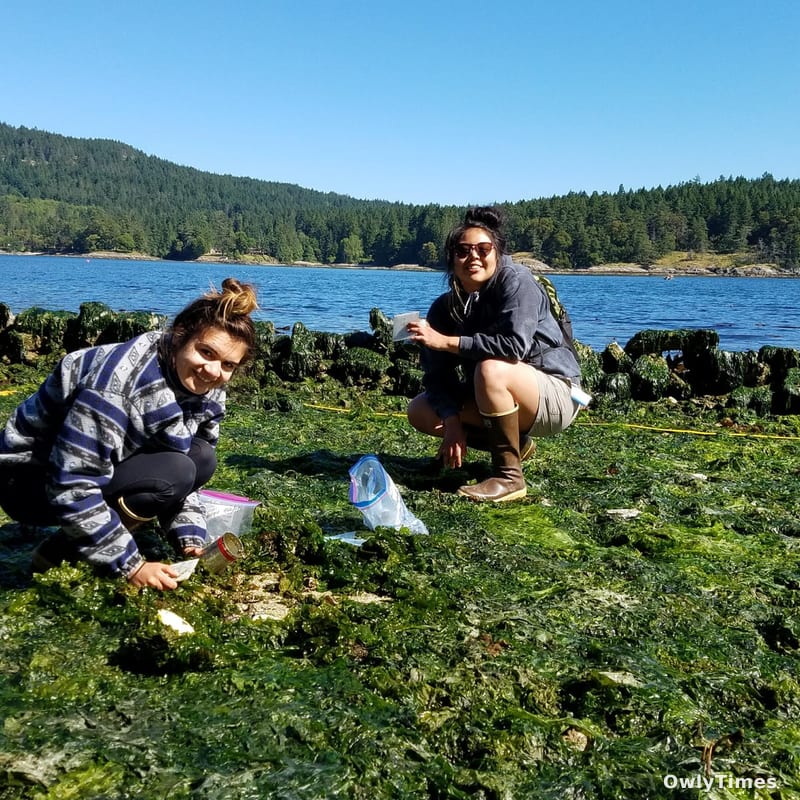
Marco Hatch, a marine ecologist at Western Washington University and an enrolled member of the Samish Indian Nation, embodies this shift. He describes his work surveying mollusks in the Pacific Northwest as being, somewhat self-deprecatingly, “a glorified clam counter.” However, this “counting” isn’t merely academic exercise. Hatch collaborates with seven Indigenous communities to rebuild ancient clam gardens – rock-walled, terraced beaches created and maintained by their ancestors – and the data he collects is crucial for securing permits and asserting tribal control over vital coastal resources. These gardens, dating back at least 4,000 years, aren’t just historical artifacts; scientific research demonstrates they enhance biodiversity, improve clam productivity, and even offer a degree of protection against shoreline erosion. Productivity within these gardens is demonstrably higher than in surrounding areas, a finding that lends concrete support to traditional ecological knowledge.
The significance of this work extends far beyond clam populations. Kyle Whyte, a professor of environmental justice at the University of Michigan and a member of the Citizen Potawatomi Nation, calls this a “massive shift.” Historically, Western science positioned itself as the sole arbiter of “rigorous” and “empirical” truth, often dismissing Indigenous knowledge as myth or superstition. This dismissal wasn’t simply an oversight; it was a consequence of systemic power imbalances and colonial legacies. The re-evaluation of Indigenous ways of knowing, as articulated by scholars like Oscar Kawagley with the concept of “native ways of knowing,” and popularized by authors like Robin Wall Kimmerer in Braiding Sweetgrass, is challenging that long-held assumption. It’s a process of acknowledging that different systems of knowledge can hold validity and offer complementary insights.
This piece references the The Guardian report.
This “braiding” isn’t a simple merging of methodologies, but a careful process of maintaining the distinct integrity of each system while allowing them to strengthen one another. Since 2022, federal funding has been allocated to specifically support research that facilitates this kind of reciprocal learning. Kisha Supernant, director of the University of Alberta’s Institute of Prairie and Indigenous Archaeology, emphasizes that Indigenous knowledge possesses “a rich history of observation, experimentation and understanding that has its own systems of rigor.” This rigor isn’t about replicating Western scientific protocols, but recognizing the inherent validity of knowledge developed through generations of lived experience and careful observation of the natural world.
However, the necessity of “proving” the value of Indigenous practices through Western scientific methods remains a point of contention. Suzanne Greenlaw, an ecologist with the Schoodic Institute and a citizen of the Houlton Band of Maliseet Indians, recounts a 2016 study on sweet grass harvesting. Despite centuries of Wabanaki basket-making tradition, researchers initially designed a study that didn’t account for the community’s existing knowledge of sustainable harvesting practices, leading to a flawed comparison. Ultimately, Wabanaki practitioners demonstrated their superior understanding of the ecosystem, but the initial requirement to validate their knowledge through Western science felt inherently inequitable. This highlights a crucial tension: how do we avoid perpetuating colonial patterns of requiring Indigenous communities to justify their knowledge to dominant scientific institutions?
The path forward requires a fundamental shift in power dynamics. Whyte advocates for Indigenous communities being involved “at the earliest stages of research,” initiating collaborations based on shared interests rather than responding to externally defined research questions. He points to the Sault Ste Marie Tribe of Chippewa Indians as a model, establishing their own Center for Cooperative Ecological Resilience and proactively reaching out to Western scientists. This isn’t about Western science simply “helping” Indigenous communities; it’s about creating a truly reciprocal partnership where both systems of knowledge are valued and contribute to a more holistic understanding of the world.
Looking ahead, the critical question isn’t simply whether we can braid Indigenous and Western sciences, but how we ensure that Indigenous communities retain control over their knowledge and benefit from its application. Will Wabanaki communities, for example, be required to navigate a complex permitting process for each traditionally harvested plant, or will they be granted broader rights to steward the landscapes they’ve cared for over millennia? The answer to that question will reveal whether this emerging collaboration truly represents a paradigm shift, or simply a continuation of historical patterns of extraction and control.