
The Pull of Home and the Urgency of Arctic Knowledge
The impending return of Hajo Eicken to Germany isn’t simply a career move; it’s a pointed illustration of a shifting landscape in Arctic research. While headlines focus on the director of the University of Alaska Fairbanks’ International Arctic Research Center reclaiming his former position at the Alfred Wegener Institute in Bremerhaven in March 2026, the story reveals a deeper tension: the increasing logistical and intellectual challenges of conducting meaningful Arctic science in a rapidly changing climate, and the vital role of Indigenous knowledge in navigating that change. Eicken’s decision, after 28 years in Alaska – “the longest period of my existence so far” – underscores a fundamental truth about Arctic study: access isn’t just about geography, it’s about relationships and recognizing expertise that predates scientific instrumentation.
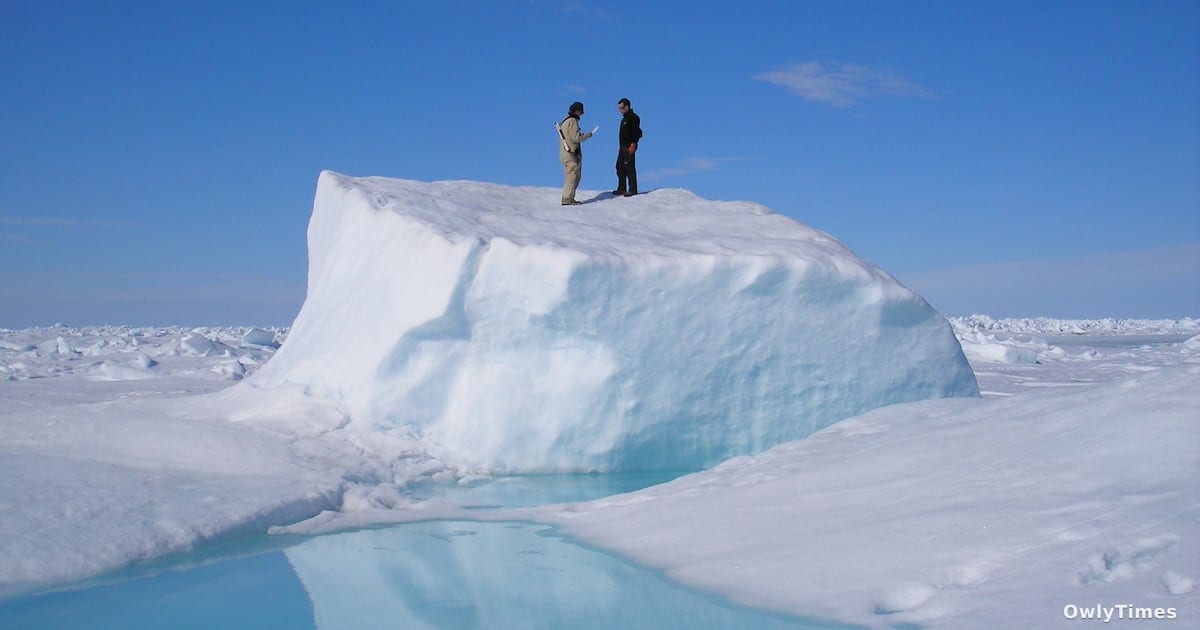
Eicken’s initial move to Fairbanks in 1998 wasn’t driven by dissatisfaction with the Alfred Wegener Institute, a well-respected German research organization. Rather, it was a matter of practical access. At a latitude comparable to Edmonton, opportunities to directly study glaciers and sea ice were limited, requiring lengthy and constrained expeditions aboard icebreakers. The allure of Alaska, specifically the sea ice off the coast of Utqiaġvik (formerly Barrow), was the promise of consistent, immediate access to a critical environment. He recalled the stark reality of working in the Arctic – a minus 40 degree windchill, the tracks of polar bears, and a profound curiosity about the people who thrived in such a harsh landscape. This initial curiosity blossomed into a core tenet of his research philosophy: the invaluable contribution of local expertise.
This emphasis on collaboration wasn’t merely a matter of courtesy. Billy Adams, a 60-year-old Inupiaq whaling captain from Utqiaġvik, recounts Eicken approaching the community for guidance on identifying different types of sea ice. Adams emphasizes Eicken’s “professionalism” and eagerness to learn, a sentiment echoed in the description of him as “the friendly guy we had always known.” Eicken himself views experienced Arctic residents as possessing a level of scientific understanding equivalent to, and sometimes exceeding, that of formally trained researchers. He points to the Inupiat’s ability to monitor “150 different variables across all areas of the environment,” a holistic perspective often missing from focused scientific studies. This isn’t simply acknowledging traditional ecological knowledge; it’s recognizing a sophisticated, long-term dataset built on generations of observation.
This article draws on reporting from adn.com.
The timing of Eicken’s career in Alaska coincided with a period of unprecedented environmental change. 2025 marked the lowest recorded winter sea ice extent since satellite observations began in 1979, and Utqiaġvik has experienced warming at a rate exceeding any other town in America. This dramatic loss of reflective sea ice isn’t just a data point; it’s a lived reality for the Inupiaq community, whose traditional way of life is inextricably linked to the health of the Arctic ecosystem. The urgency of this change likely informs Eicken’s continued commitment to Arctic research even as he returns to Germany. He intends to maintain his work and collaborations, leveraging the significantly larger resources of the Alfred Wegener Institute – “an order of magnitude” larger than his current center – to further the understanding of this critical region.
However, the shift in leadership also raises questions about the future of Arctic research funding and priorities. Will the increased scale of the Alfred Wegener Institute translate into a greater emphasis on community-based research, or will it prioritize large-scale, technologically driven projects? Eicken’s stated belief that “adaptation has to be driven by the community” is reassuring, but the practical implementation of this philosophy within a larger, more bureaucratic institution remains to be seen. The next steps in Arctic research must focus on integrating Indigenous knowledge systems into scientific models, not as supplementary data, but as foundational elements. We should watch for how the Alfred Wegener Institute, under Eicken’s leadership, structures its collaborations with Arctic communities and whether it prioritizes long-term, sustained engagement over short-term research projects. The future of Arctic science – and the future of the Arctic itself – depends on it.





