
The Return of a Metric, and a Question of User Experience
The persistent question of how we quantify and interpret our own health data took a curious turn this week with the release of Apple’s iOS 26.4 beta 1. While tech news focused on the usual suite of software tweaks, the updates to the Health app reveal a fascinating, and somewhat convoluted, story about intellectual property, regulatory adjustments, and the evolving relationship between wearable technology and medical-grade monitoring. The re-integration of Blood Oxygen readings into the Health app’s Vitals overview isn’t simply a feature restoration; it’s a visible marker of a complex legal battle and a revealing case study in how companies navigate restrictions on health technology. It also raises a critical question: is restoring data visibility enough to rebuild user trust when functionality has been deliberately altered?
Drawn from 9to5mac.com.
The saga began in January 2024 when Apple removed the Blood Oxygen feature from its Apple Watch following a patent dispute with Masimo, a medical technology company. Masimo had successfully argued that Apple’s pulse oximetry technology infringed on their patents, leading to a cease-and-desist order. This wasn’t a simple software removal; it represented a significant curtailment of a feature heavily marketed for its potential health benefits. Last August, Apple launched a “redesigned” version of the Blood Oxygen feature, allowing users to take readings on their Watch but requiring them to view the results only on their paired iPhone. This workaround, while technically compliant with the legal restrictions, created a demonstrably less convenient user experience. Crucially, even with this redesign, Blood Oxygen data remained absent from the central Vitals dashboard within the Health app, relegated to a separate, less prominent metric. This meant users couldn’t easily track trends alongside other key health indicators like heart rate and respiratory rate.
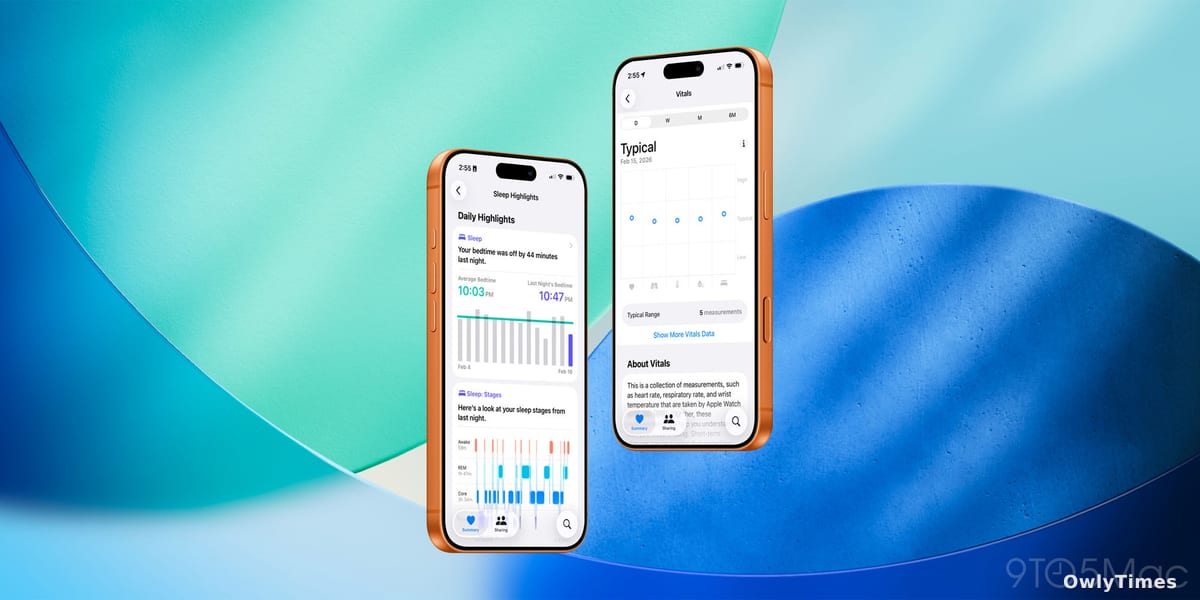
The latest iOS 26.4 beta restores that integrated view. Users can now once again see Blood Oxygen readings alongside those other vital signs in the Vitals graph. This appears, on the surface, to be a straightforward fix. However, the underlying issue – the patent dispute with Masimo – remains unresolved. The restoration of the Vitals graph integration doesn’t change the fact that the feature operates differently than it did before January 2024. It’s a return to how the data was presented, not a return to the original functionality. This distinction is important because it highlights a strategic decision by Apple: address the most visible inconvenience for users (lack of integrated data) without necessarily challenging the core restrictions imposed by the legal ruling.
Beyond Blood Oxygen: A Focus on Sleep Patterns
Alongside the Blood Oxygen update, iOS 26.4 introduces a new sleep metric to the Health app. Users can now view a breakdown of their bedtime over the past two weeks, with a “Sleep Highlight” displaying their average bedtime alongside last night’s bedtime for comparison. This addition aligns with a broader industry trend toward more granular sleep tracking and analysis. While many wearables already offer detailed sleep stage data, Apple’s approach focuses on the consistency of bedtime, a factor increasingly recognized as crucial for regulating circadian rhythms and overall health. The emphasis on bedtime regularity, rather than simply total sleep duration, is a subtle but significant shift. It suggests Apple is moving toward providing insights that are actionable and tied to established behavioral recommendations – in this case, the importance of a consistent sleep schedule.
Limitations to Consider
It’s vital to remember that these updates are currently part of a beta release, meaning they are subject to change before the final public version of iOS 26.4 is launched. Beta software is inherently unstable and may contain bugs. More importantly, the restored Blood Oxygen functionality remains constrained by the ongoing legal situation with Masimo. The feature is still not usable directly on the Apple Watch, and the long-term implications of the patent dispute are uncertain. Furthermore, the accuracy of Blood Oxygen readings from wearable devices, even before the legal challenges, has been a subject of debate within the medical community. These devices are not intended to replace clinical-grade pulse oximeters, and users should not rely on them for critical medical decisions. The new sleep metric, while potentially useful, is based on data collected by the Apple Watch and may not be as accurate as polysomnography, the gold standard for sleep analysis.
What Comes Next for Health Data and Wearables?
The next steps will be to observe how Apple navigates the ongoing legal proceedings with Masimo. Will they seek to fully restore the original Blood Oxygen functionality, or will they continue to operate within the constraints of the current restrictions? More broadly, we should watch for how Apple and other tech companies respond to increasing scrutiny from regulatory bodies regarding the accuracy and reliability of health data collected by wearable devices. The FDA, for example, is likely to increase its oversight of these technologies, potentially requiring more rigorous validation and transparency. The key question moving forward isn’t just what data these devices collect, but how that data is presented to users, and whether it empowers them to make informed decisions about their health – or creates a false sense of security. Will users, having experienced a diminished and then partially restored feature, continue to trust the data provided by their Apple Watches, even as the underlying technology remains legally contested? That’s a question the industry, and consumers, will be grappling with for some time.