
The conversation surrounding adolescent mental health has long been dominated by the fear of a permanent, upward trajectory of crisis. However, recent data from the 2024 CDC WONDER mortality database and the National Survey on Drug Use and Health (NSDUH) suggest a more complex, shifting reality. While headlines often focus on the "record-breaking" nature of the youth mental health crisis, the granular data reveals a nuanced cooling effect in some areas—even as the policy infrastructure designed to support these gains faces significant disruption.
Shifting Trends in Mental and Behavioral Health
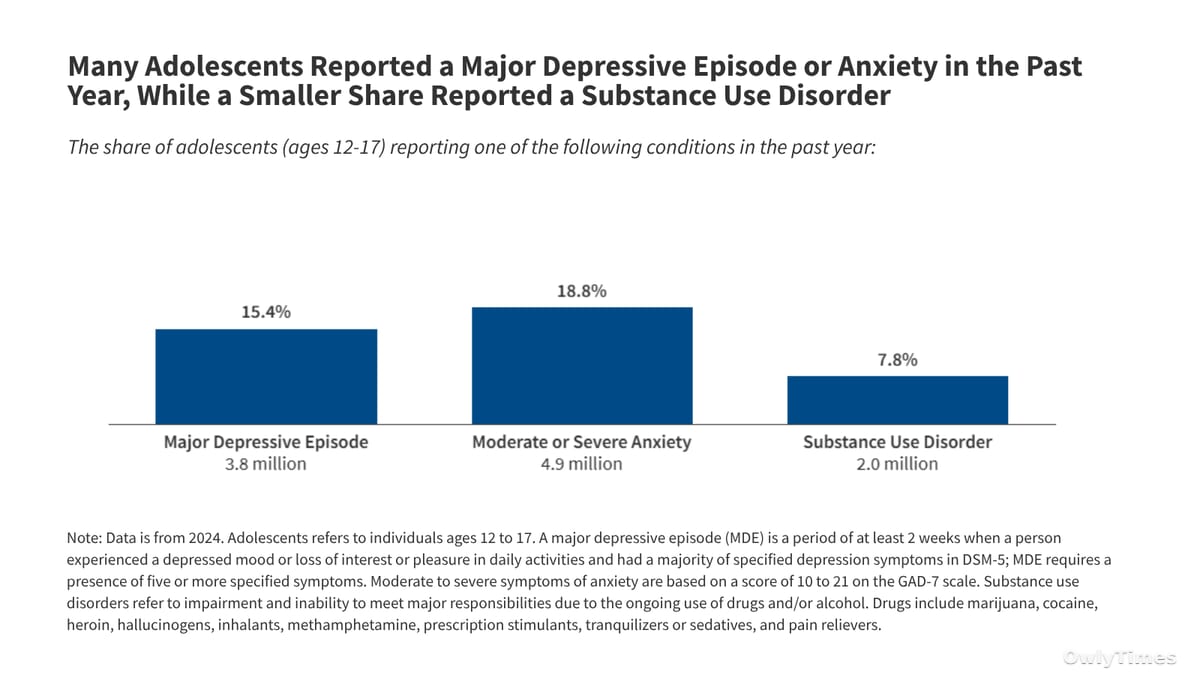
In 2024, 15% of adolescents, or 3.8 million individuals, reported a past-year major depressive episode (MDE). This represents a notable decline from the 21% reported in 2021, at the height of the COVID-19 pandemic. Similarly, substance use disorders among this population saw a slight dip, falling to 7.8% in 2024 from 9.2% in 2021.
While these numbers indicate a retreat from pandemic-era peaks, they do not signal a return to baseline. Anxiety remains the most prevalent mental health condition among youth, with 19% of adolescents—nearly 4.9 million people—reporting moderate to severe symptoms. The data suggests that for many teenagers, substance use is not merely recreational but a maladaptive coping mechanism. Among teens who used substances in the last 30 days, 40% reported doing so specifically to manage symptoms of anxiety or depression. This co-occurrence is particularly concerning regarding marijuana use, which is significantly higher among those with an MDE (25%) compared to their peers (8%).
The Policy Pendulum
The current landscape of adolescent care is defined by a tension between established public health interventions and a recent shift in federal priorities. The 2022 Bipartisan Safer Communities Act (BSCA) had previously channeled essential funds into school-based mental health services and expanded Medicaid-funded youth care. However, the second Trump Administration has moved to roll back these efforts.
These policy changes are arriving at a critical juncture. Because Medicaid covers nearly 40% of children and teens, any contraction in its scope or administrative support could create a significant access gap. Furthermore, the President’s budget for 2027 proposes cuts to agencies managing mental health and substance use disorders, including a restructuring of the Substance Abuse and Mental Health Services Administration (SAMHSA). This agency is the primary overseer of the 988 crisis hotline, a vital resource that has been linked to lower rates of adolescent suicide. While funding for the hotline remains flat in 2027, previous administrative decisions—such as the removal of a dedicated extension for LGBTQ individuals—have already altered the accessibility of these services.
Limitations to Consider
It is vital to interpret these findings with caution, particularly regarding the classification of mortality data. For instance, while suicide deaths dropped by 5% from 2023 to 2024—falling to 1,478 deaths—researchers acknowledge that some suicides may be misclassified as drug overdoses. Distinguishing intentional self-harm from accidental poisoning remains a persistent challenge in vital statistics. Additionally, while overdose deaths saw a sharp decline in 2024—dropping to 272 from 557 in 2023—this improvement is largely tied to a reduction in opioid-related deaths. This progress is fragile, as adolescents continue to source substances through social media channels, where the presence of synthetic opioids like fentanyl remains a constant, lethal variable.
Looking Ahead: Tracking the Access Gap
The next phase of this crisis will likely be measured by the stability of the school-based safety net. As the 2027 federal budget proposals move through the legislative process, the impact on school-based mental health providers will be the primary indicator of whether the modest improvements seen in 2024 can be sustained. With only 30% of the 2.4 million adolescents needing substance use care currently receiving treatment, the future of youth behavioral health will depend less on new breakthroughs and more on whether existing, funded access points—such as school counseling and Medicaid-covered outpatient care—are preserved or dismantled. The upcoming trajectory of state-level Medicaid utilization rates will provide the first clear signal of whether the current policy pivot is widening or closing the gap in adolescent care.