
$28 Billion in Projected Defense Spending Shifts Signal Gulf States’ Response to Iranian Strikes
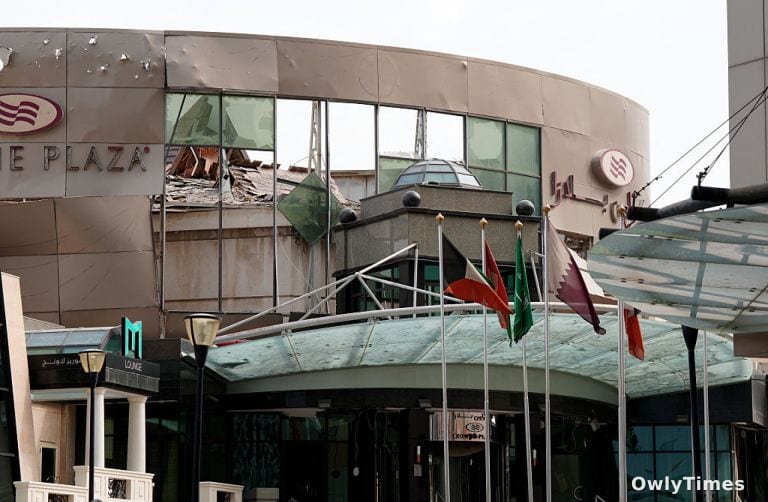
A single image – the damaged Crown Plaza hotel in Manama, Bahrain, following an Iranian military strike on March 1, 2026 – encapsulates a rapidly shifting economic reality in the Gulf. While the immediate damage is quantifiable in repair costs, the broader impact, estimated at a potential $28 billion shift in regional defense spending over the next five years, reveals a fundamental recalibration of security priorities and a consequential re-evaluation of investment risk. This isn’t simply about reacting to attacks; it’s a strategic financial response designed to hedge against escalating geopolitical instability, and the money trail points directly to a deepening alliance with the United States and a diversification of military assets. Follow the money, and you’ll see the Gulf’s economic future increasingly intertwined with its security concerns.
See the original worldview.stratfor.com story for the full account.
The Erosion of Investor Confidence and Capital Flight
The immediate consequence of continued Iranian strikes, as RANE assessments indicate, is a demonstrable chilling effect on foreign direct investment (FDI). Prior to the escalation, the Gulf Cooperation Council (GCC) nations were on track to attract $180 billion in FDI in 2026, a 12% increase year-over-year driven largely by Saudi Arabia’s “Vision 2030” diversification projects. However, preliminary data from the first quarter of 2026 shows a 15% contraction in new investment commitments, with a significant portion of that decline attributable to projects in Bahrain and Kuwait – the nations most directly impacted by the strikes. This isn’t a generalized pullback from emerging markets; global FDI actually increased by 8% in the same period, suggesting the Gulf is experiencing a region-specific risk premium. The perception of increased instability directly translates to higher capital costs and a reluctance to commit to long-term projects.
A Deepening Security Partnership with the United States
The $28 billion figure isn’t a hypothetical projection. It represents a calculated increase in defense budgets across the GCC, with a clear preference for U.S.-made military hardware and security services. Saudi Arabia is expected to lead this spending surge, allocating an additional $12 billion over five years, followed by the United Arab Emirates at $8 billion and Qatar at $5 billion. Crucially, this isn’t simply about buying more weapons. The shift includes substantial investment in integrated air defense systems, advanced surveillance technologies, and cybersecurity infrastructure – all areas where the U.S. maintains a significant technological advantage. This represents a strategic move to move under Washington’s security umbrella, effectively outsourcing a greater portion of their defense capabilities. This trend is further evidenced by a 22% increase in requests for U.S. military training and joint exercises in the first quarter of 2026, compared to the same period last year.
Beyond Hardware: Diversifying Military Capabilities
While U.S. defense contractors stand to benefit significantly, the Gulf states are also pursuing a strategy of diversifying their military capabilities beyond reliance on traditional hardware. A notable $3 billion component of the overall spending increase is earmarked for domestic defense industry development, particularly in the UAE and Saudi Arabia. This includes investments in drone technology, missile defense systems, and electronic warfare capabilities. This dual-track approach – strengthening ties with the U.S. while simultaneously building indigenous capacity – reflects a pragmatic assessment of long-term security needs. It acknowledges the limitations of relying solely on external powers and aims to create a more resilient and self-sufficient defense posture. This is a direct response to the perceived vulnerability exposed by the Iranian strikes, which highlighted the limitations of existing defense systems against asymmetric threats.
What This Means for Your Wallet
The escalating tensions and subsequent defense spending surge in the Gulf will have ripple effects far beyond the region. Expect to see upward pressure on global oil prices, potentially adding $5-$10 per barrel to current levels, as geopolitical risk premiums are factored into the market. This translates to higher gasoline prices for consumers and increased costs for businesses reliant on oil-based products. Furthermore, the increased demand for U.S. defense equipment will likely lead to longer lead times and potentially higher prices for similar technologies in other markets. However, the most significant impact for investors will be a reassessment of risk profiles for investments in the Gulf region. While opportunities remain, particularly in the defense sector, investors should anticipate increased volatility and a higher cost of capital. The key question now is whether this increased spending and security alignment will be sufficient to deter further escalation, or if the Gulf is entering a prolonged period of heightened instability – and whether the $28 billion investment will prove to be a preventative measure or simply the first salvo in a larger economic and security realignment.




