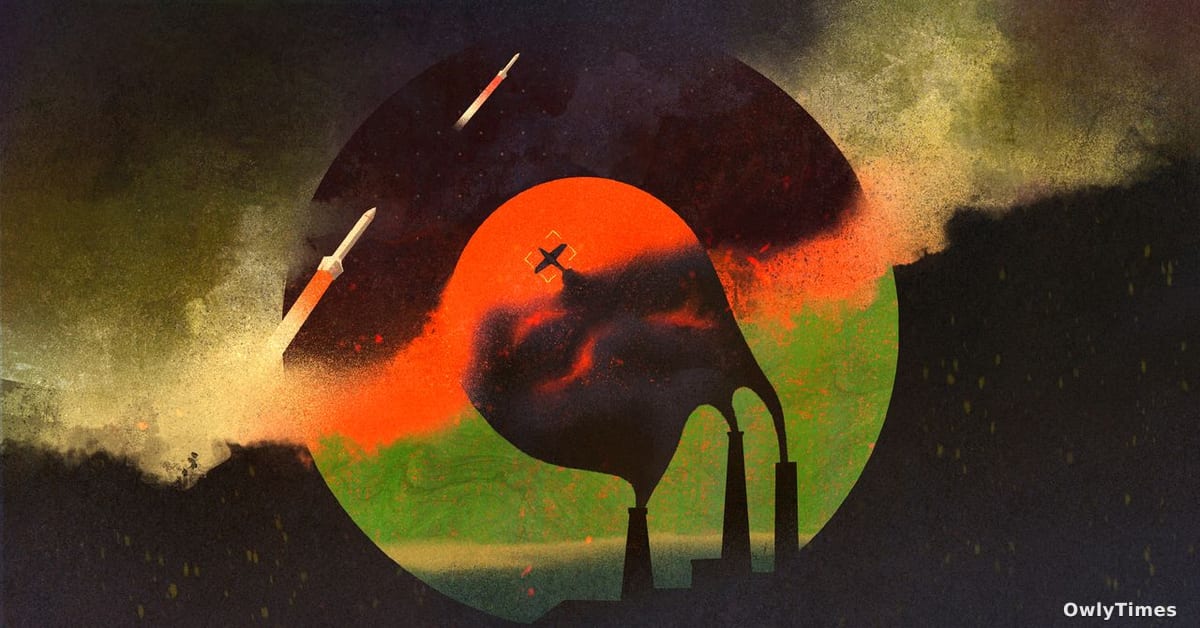

When we analyze the environmental cost of modern warfare, we often focus on the immediate, visceral destruction of infrastructure. However, the true ecological signature of a conflict is written in the invisible shifts in soil chemistry, the persistent toxicity of groundwater, and the atmospheric burden of sustained military operations. As the conflict across Iran, the Gulf, and Lebanon continues to unfold, we are observing a complex, multifront assault on the environment that extends far beyond the reach of any single blast zone.
The Hidden Calculus of Carbon Emissions
To understand the scope of this crisis, we must look past the smoke plumes to the underlying data. The first two weeks of the war alone unleashed more than 5 million tons of carbon dioxide equivalent. This figure is not merely a byproduct of explosions; it encompasses a full supply-chain perspective, including the embodied carbon from missile production and the heavy fuel consumption of naval and aerial sorties.
Researchers estimate that each individual missile strike releases roughly 0.14 tons of CO2 equivalent—a footprint roughly comparable to driving a standard passenger car for 350 miles. While headlines often focus on the geopolitical rationale for these strikes, the environmental reality is that the machinery of war is a massive, relentless emitter. When we consider that a single fighter jet can emit approximately 15 tons of CO2 for every hour of flight, the cumulative impact of thousands of sorties becomes a significant contributor to the regional climate burden.
The Persistence of Rubble and Toxic Debris
The damage to land is often permanent and deceptively complex. According to data from Conflict Ecology, a geospatial research lab at the University of Oregon, 7,645 buildings have been destroyed across Iran, with 1,200 of those located in Tehran. In Lebanon, the scale is equally staggering: the National Council for Scientific Research (CNRS) reported that over 50,000 housing units were destroyed or damaged within the first 45 days of the conflict.
The scientific concern here is not just the loss of shelter, but the chemical composition of the debris left behind. As policy adviser Antoine Kallab notes, rubble is rarely inert. Once a structure is pulverized, it releases a cocktail of insulation fibers, heavy metals, solvents, and asbestos into the immediate environment. When this debris mixes with soil and water, it creates a long-term contamination vector that persists long after the fires are extinguished. Wim Zwijnenburg of the Dutch NGO PAX highlights that the danger is particularly acute near industrial and military sites, where the destruction of facilities involved in missile production can release specialized toxic substances into the ecosystem.
Ecological Stress in the Gulf
The marine environment faces a similarly precarious future. The Gulf is a semi-enclosed body of water with limited circulation, making it uniquely vulnerable to the accumulation of pollutants. The grounding of the Shahid Bagheri—a container ship converted into a military drone carrier by the IRGC—resulted in a significant fuel leak that drifted toward the Hara Biosphere Reserve. This Unesco-recognized site is a critical habitat for turtles, pelicans, and sea snakes. When we add the risks posed by mines, sonar, and shipping congestion to an environment already stressed by warming waters, we see a habitat that may struggle to recover. The region is home to fewer than 100 Arabian humpback whales, a nonmigratory population that cannot escape the mounting ecological pressure.
Limitations to Consider
It is important to maintain a nuanced perspective when quantifying these impacts. Much of the damage is "harder to see" and difficult to measure in real-time. Organizations like the Conflict and Environment Observatory (CEOBS), led by Doug Weir, emphasize that many local contamination events—such as burning oil leaking into sewer systems—may never be fully documented or addressed. The reliance on satellite imagery and open-source data provides a vital snapshot, but it cannot capture the full depth of the biological degradation occurring on the ground or beneath the surface of the sea.
The Path Toward Environmental Recovery
Looking ahead, the primary concern is the potential for "death by a thousand cuts." As Patrick Bigger of the Climate and Community Institute warns, the most insidious long-term risk is the bioaccumulation of heavy metals and persistent organic pollutants within the food chain.
The next meaningful indicator of this crisis will be the state of environmental governance in the post-conflict period. History suggests that states recovering from war often lack the resources or the political bandwidth to prioritize ecological restoration. Whether international support will mobilize to address these toxic legacies remains an open question. For now, the regional environment remains a silent, compounding casualty, with the true scale of the degradation likely to remain hidden until long after the last missile has been fired.





