
$2.2 Billion Offline: Assessing the Economic Impact of Iran’s Steel Plant Shutdowns
A projected $2.2 billion in economic damage – that’s the immediate fallout from the shutdown of Iran’s two largest steel plants, Khuzestan Steel Company and Mobarakeh Steel Company, following coordinated US-Israeli airstrikes. While geopolitical tensions dominate headlines, the deliberate targeting of industrial infrastructure signals a shift in strategy, moving beyond direct confrontation with the Iranian government to a calculated disruption of its economic engine. This isn’t simply about crippling Iran’s military capabilities; it’s about systematically dismantling its capacity for economic resilience, a resilience already severely tested by decades of Western sanctions.
Drawn from the BBC.
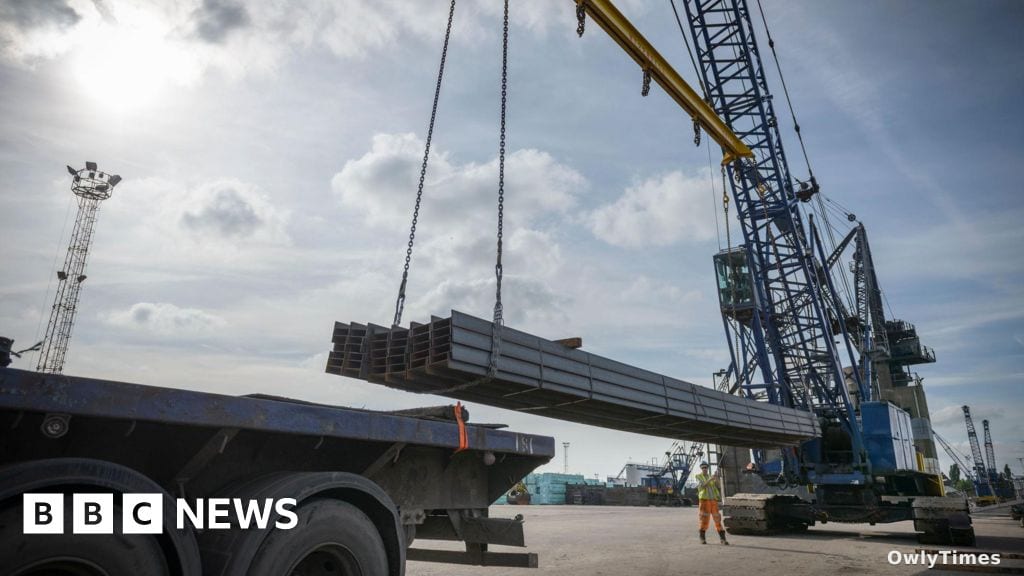
Iran ranks as the world’s 10th largest steel producer, a position achieved despite ongoing economic constraints. Steel isn’t just a component of construction and manufacturing within Iran; it’s a significant export commodity, generating crucial foreign revenue. Mehran Pakbin, deputy head of operations at Khuzestan Steel, estimates restarting the impacted units will take six to twelve months – a best-case scenario that assumes no further escalation or secondary damage. This timeframe translates to a substantial loss of export earnings, potentially exacerbating Iran’s existing currency devaluation and fueling inflation. Consider that in 2023, Iran exported approximately 8.2 million metric tons of steel, generating an estimated $2.2 billion in revenue based on average export prices. The complete cessation of production from these two plants, representing a significant portion of that total, directly threatens that income stream.
The strikes aren’t occurring in a vacuum. They follow a pattern of escalating attacks targeting not only military infrastructure but also civilian facilities like the Pasteur Institute of Iran, a medical research center, and Tofigh Daru Research & Engineering Company, a pharmaceutical manufacturer. The Israel Defense Forces (IDF) justified the latter strike by alleging the company was involved in chemical weapons research, a claim that, while unverified, underscores the broadening scope of the offensive. This expansion beyond purely military targets is fueling concern even among Iranians who support intervention against the Islamic Republic, as highlighted by reports of growing anxiety regarding the potential for widespread economic and social disruption. The targeting of a highway bridge linking Tehran to Karaj, resulting in civilian casualties, further illustrates this widening scope.
The rhetoric from US President Donald Trump and Defence Secretary Pete Hegseth, vowing to bring Iran “back to the stone ages,” isn’t merely hyperbole. It reflects a deliberate strategy of economic strangulation. The destruction of infrastructure, coupled with the existing sanctions regime, aims to severely limit Iran’s ability to function as a modern economy. The parallel attacks by the Islamic Revolution Guard Corps (IRGC) on US-linked facilities in Gulf states and even an Amazon cloud computing center in Bahrain demonstrate a reciprocal escalation, raising the risk of a regional conflict that could further disrupt global supply chains. The IRGC’s actions, while retaliatory, also highlight the vulnerability of critical infrastructure in the region, potentially triggering a cycle of escalating attacks.
Compounding the situation is a near-total internet blackout in Iran, now lasting 34 days and reducing connectivity to just 1% of normal levels, according to NetBlocks. This information suppression makes independent verification of damage assessments and economic impacts exceedingly difficult, creating a fog of war that obscures the true extent of the crisis. The lack of transparency also hinders effective response efforts and fuels speculation, potentially exacerbating panic and instability.
What this means for your wallet: Watch for potential increases in global steel prices, particularly in the Middle East and Asia, as Iranian supply is removed from the market. More significantly, monitor the potential for broader supply chain disruptions stemming from escalating regional instability. The question isn’t if this conflict will impact global markets, but when and how severely. Investors should assess their exposure to companies reliant on Middle Eastern supply chains and prepare for increased volatility in commodity markets.