
The Strait of Hormuz, a vital maritime chokepoint that serves as the conduit for 20 percent of the world’s oil and gas, currently sees only a handful of vessels passing through its waters. This is a stark departure from the normal volume of roughly 130 ships a day, a disruption that has already triggered a measurable increase in gasoline prices and inflationary pressure across the United States. As the global economy faces this bottleneck, the path forward remains tethered to a high-stakes standoff between Washington and Tehran.
Following the Money: The Blockade Economics
The financial calculus for both nations is becoming increasingly untenable. For Iran, the damage caused by extensive U.S. and Israeli air strikes is estimated at $270 billion. With its oil exports effectively bottled up by the U.S. naval blockade, the Iranian economy faces the long-term prospect of total collapse. Tehran’s leverage, however, remains significant; according to estimates from the New York Times, the nation still retains 40 percent of its drones and 60 percent of its missile launchers, assets that allow the Islamic Revolutionary Guard Corps (IRGC) to project power and threaten energy infrastructure throughout the Gulf.
The United States, led by President Donald Trump, faces its own set of mounting pressures. Despite Trump’s rhetoric on social media—where he claimed on Friday that the strait was “completely open and ready for business”—the reality on the ground contradicts the official narrative. While Foreign Minister Abbas Araghchi initially signaled a willingness to keep the route open during the ceasefire, the IRGC has publicly undermined those commitments, leading to direct confrontations including the firing on tankers and the U.S. Navy’s Sunday seizure of an Iranian-flagged cargo ship.
Negotiating Through the Chasm
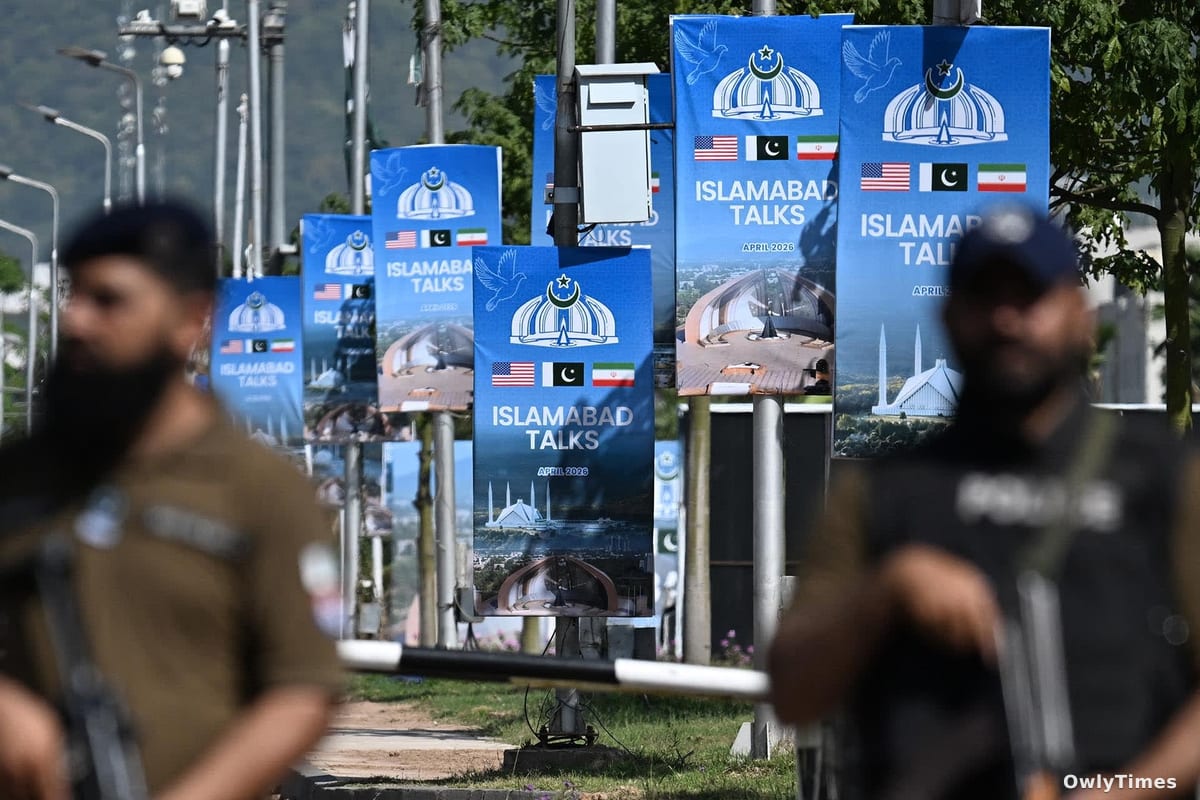
The current diplomatic stalemate is exacerbated by a fundamental disconnect in the U.S. negotiating approach. Trump has threatened to “knock out every single Power Plant, and every single Bridge, in Iran” should negotiations in Islamabad fail to yield a deal. Yet, Iranian envoys have signaled their absence, citing Washington’s “excessive demands” and “constant shifts in stance.” Max Boot, the Jeane J. Kirkpatrick senior fellow for national security studies at the Council on Foreign Relations, notes that the two sides remain divided by deep-seated suspicion, ranging from the 2018 U.S. exit from the nuclear deal to air strikes conducted as recently as June 2024 and February 2026.
The negotiating team for the U.S.—comprising Vice President JD Vance and special envoys Steve Witkoff and Jared Kushner—faces a narrow window to achieve a breakthrough. History suggests the complexity of these issues is immense; the 2015 Joint Comprehensive Plan of Action required more than eighteen months of intense deliberation. Without a pivot toward a more pragmatic framework, such as the “open for open” proposal that would see both sides lift their respective blockades, the risk of further escalation remains acute.
What This Means for Your Wallet
For investors and consumers, the volatility in global energy markets is directly tied to the status of the Strait of Hormuz. The current closure is not merely a geopolitical concern; it is a direct driver of domestic inflation. The next reading of global oil transit volumes through the region will indicate whether the current naval standoff is cooling or intensifying. Until a mutual agreement is reached to restore normal shipping lanes, the energy sector will likely continue to price in the risk of sustained supply chain disruptions, keeping upward pressure on fuel costs.




