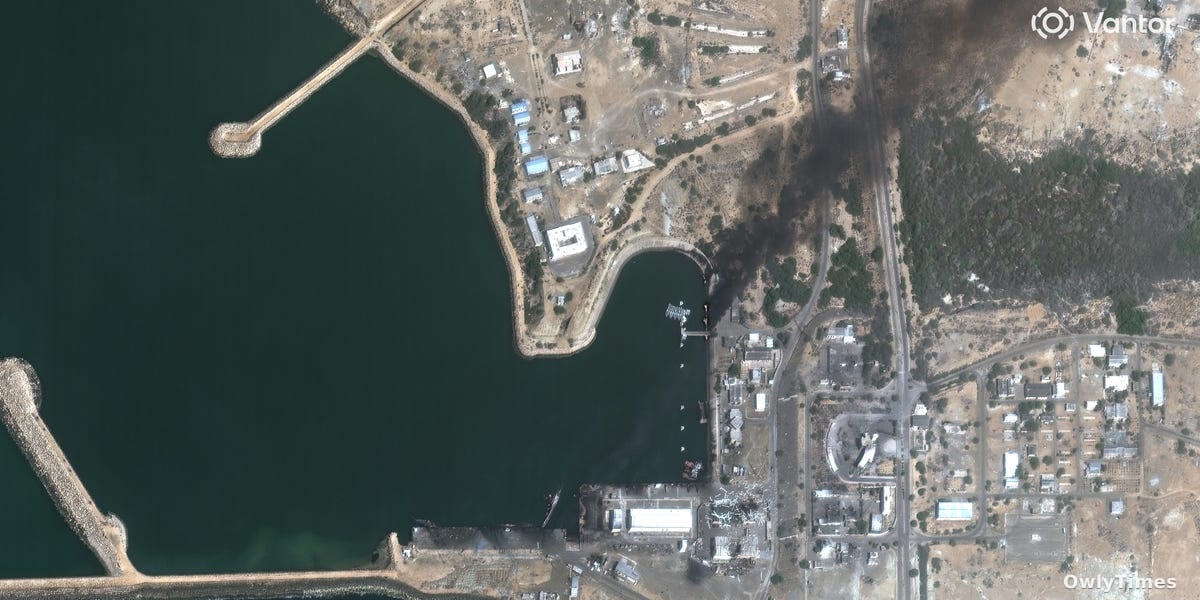

The calculated escalation unfolding across the Middle East isn’t about isolated incidents; it’s a strategic re-alignment of power predicated on a demonstrable weakening of Iranian regional influence. The joint US-Israeli strikes, evidenced by new satellite imagery from Vantor showing extensive damage to Iranian drone bases, naval facilities, and radar systems, represent a shift from targeted disruption – as seen in the June 2025 strikes focused on nuclear sites – to a broader attempt at degrading Iran’s conventional military capabilities and command structure. This isn’t simply a response to Iranian proxy attacks; it’s a pre-emptive move designed to constrain Iran’s future actions and re-establish a deterrent posture that eroded during the previous administration’s period of de-escalation.
The scope of the current operation, with President Trump claiming the destruction of nine Iranian naval vessels, signals a willingness to accept a higher level of risk than previously demonstrated. This contrasts sharply with the limited nature of the June 2025 strikes, which were largely symbolic. The targeting of the Islamic Revolutionary Guard Corps (IRGC) command and control facilities, alongside air defenses and missile launch sites utilizing B-2 stealth bombers and 2,000-pound bombs, indicates a deliberate attempt to cripple Iran’s ability to project power. Who benefits and who loses is starkly defined: Israel gains a temporary reprieve from direct Iranian aggression, the US aims to reassert its regional authority, while Iran suffers a significant blow to its military infrastructure and prestige. The casualties already reported – three US service members killed and five seriously wounded – underscore the cost of this strategy.
See the original Business Insider story for the full account.
The narrative of “40 senior Iranian commanders” killed, as claimed by the Israeli military, including a direct strike on Ayatollah Ali Khamenei’s compound, is a key component of this messaging. While the veracity of these claims requires independent verification, the intent is clear: to destabilize the Iranian leadership and sow discord within the regime. This echoes historical precedents, notably the US strategy during the Vietnam War of targeting key leadership figures to disrupt the North Vietnamese war effort. However, the parallel isn’t perfect. Unlike the relatively isolated North Vietnam, Iran operates within a complex network of regional alliances and proxy forces, making complete decapitation of the leadership far more difficult and potentially counterproductive. The retaliatory missile and drone launches targeting Israel, the UAE, and US bases demonstrate Iran’s continued capacity to inflict damage, even while under intense pressure.
The reported damage to civilian infrastructure across the Gulf, and the deaths and injuries in Israel and the UAE, are not collateral damage; they are inherent risks of this escalation. US Central Command’s acknowledgement of casualties – the first since the operation began – is a critical turning point. President Trump’s pre-emptive warning about potential losses, framing the operation as a “noble mission” for the future, attempts to manage public expectations and justify the human cost. This rhetoric mirrors justifications used during the early stages of the Iraq War, where the promise of a stable and democratic Middle East was invoked to legitimize military intervention. The key difference here is the explicit acknowledgement of potential losses before they fully materialize, a calculated attempt to preempt domestic backlash.
The current situation isn’t simply a military conflict; it’s a complex game of signaling and deterrence. Iran’s response, while damaging, appears calibrated to avoid triggering a full-scale regional war. The question now is whether this calibrated response will be sufficient to deter further escalation from the US and Israel. The political chess move to watch next isn’t another round of airstrikes, but rather the reaction of regional actors – specifically Saudi Arabia and Egypt – to this new power dynamic. Will they align more closely with the US and Israel, or will they attempt to mediate a de-escalation, potentially creating a new axis of influence that challenges both Washington and Jerusalem? The answer to that question will determine the long-term trajectory of the Middle East.