
The Succession Void: Calculating the Risks of a Post-Khamenei Iran
The coordinated U.S. and Israeli strikes targeting Ayatollah Ali Khamenei weren’t simply a response to Iranian proxy activity; they were a calculated gamble to destabilize the Iranian regime by removing its central figurehead at a moment of acute economic and social pressure. This wasn’t about eliminating a tactical threat, but about triggering a succession crisis – a power vacuum the architects of the strikes clearly believe can be exploited. The immediate fallout, as evidenced by retaliatory missile strikes across the region and the outpouring of both grief and celebration captured in images from Tehran to Glasgow, confirms the high-stakes nature of this move. The question now isn’t whether Iran will retaliate further, but how and whether the resulting internal struggle will eclipse the external conflict.
Based on the original NPR report.
The initial wave of Iranian missile strikes, impacting targets in Israel and Bahrain, demonstrates a desire to project strength and deter further attacks. However, the geographically dispersed nature of these strikes – hitting both direct adversaries and regional partners of the U.S. – suggests a broader strategic intent: to raise the cost of intervention for all parties involved and to rally support amongst its network of regional proxies. The damage inflicted appears calibrated to avoid triggering a full-scale war, but the escalation nonetheless underscores the inherent risk of miscalculation in a region already saturated with volatility. Who benefits and who loses from this escalation? Israel gains a temporary reprieve from direct Iranian attacks, but faces a prolonged period of heightened alert. The U.S. aims to reassert its regional dominance, but risks being drawn into a wider conflict. Iran, meanwhile, seeks to preserve its influence, but faces the prospect of internal unrest and economic collapse.
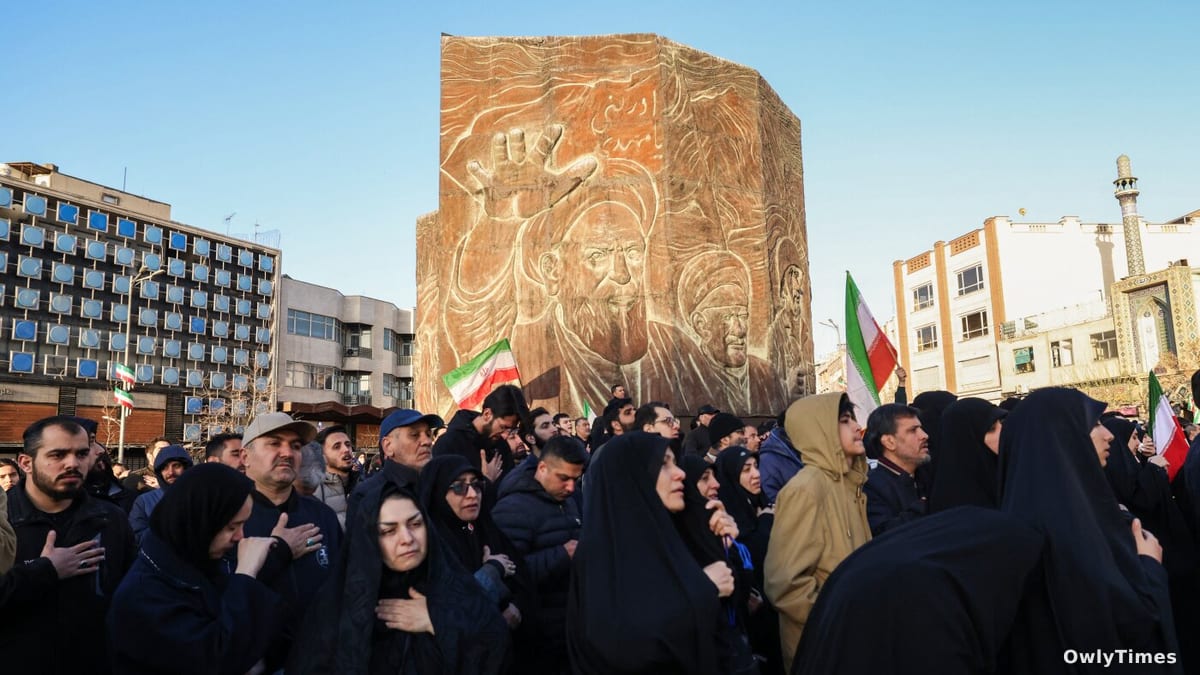
The death of Khamenei introduces a critical uncertainty: the succession process. Unlike many Western democracies, Iran’s political structure isn’t built on clearly defined lines of succession. The Assembly of Experts, a body of 88 clerics, is tasked with selecting the next Supreme Leader, but this process is rarely transparent and often fraught with internal power struggles. The images emerging from Tehran – mourners gathering in public squares alongside pro-government demonstrations – reveal a fractured public opinion. While state media attempts to portray a unified front, the underlying tensions between hardliners and those advocating for reform are palpable. This mirrors the period following the death of Ayatollah Ruhollah Khomeini in 1989, when a similar power struggle ultimately led to Khamenei’s ascension, albeit after a period of intense political maneuvering.
The international response is equally revealing. While the U.S. and Israel have framed the strikes as defensive measures, many nations have expressed concern over the escalating violence. The protests unfolding in cities like Houston and Los Angeles – some supporting war, others vehemently opposing it – highlight the deep divisions within the Iranian diaspora itself. Crucially, the reactions from Iran’s regional neighbors are mixed. Saudi Arabia, while publicly calling for de-escalation, has historically viewed Iran as a rival and may quietly welcome a weakened Iranian regime. Yemen, controlled by Iran-backed Houthis, has seen demonstrations supporting Khamenei, demonstrating the extent of Iran’s regional reach and the potential for proxy conflicts to intensify. The Houthis’ continued support for Iran, despite the Supreme Leader’s death, is a clear signal of their continued allegiance and willingness to act as a forward operating base for Iranian interests.
The current situation bears a striking resemblance to the lead-up to the 2003 invasion of Iraq. Then, as now, the U.S. sought to reshape the Middle East by removing a perceived authoritarian leader. The stated justification – weapons of mass destruction – proved to be false, but the resulting power vacuum unleashed a decade of instability and sectarian violence. The key difference this time is the presence of a more sophisticated and resilient Iranian state, capable of projecting power across the region through its network of proxies. The risk of a similar outcome – a prolonged and bloody conflict with unintended consequences – is very real. The immediate priority for Washington and Jerusalem is to manage the escalation and prevent a wider war, but the long-term challenge lies in navigating the complex political landscape of a post-Khamenei Iran.
The political chess move to watch next isn’t another military strike, but the composition of the Assembly of Experts’ deliberations. Who emerges as the frontrunner to succeed Khamenei – a hardline cleric aligned with the Revolutionary Guard, or a more moderate figure willing to engage in dialogue with the West – will determine the future trajectory of Iran and the stability of the region. The coming weeks will reveal whether the architects of this operation have successfully calculated the risks, or whether they have inadvertently opened Pandora’s Box.





