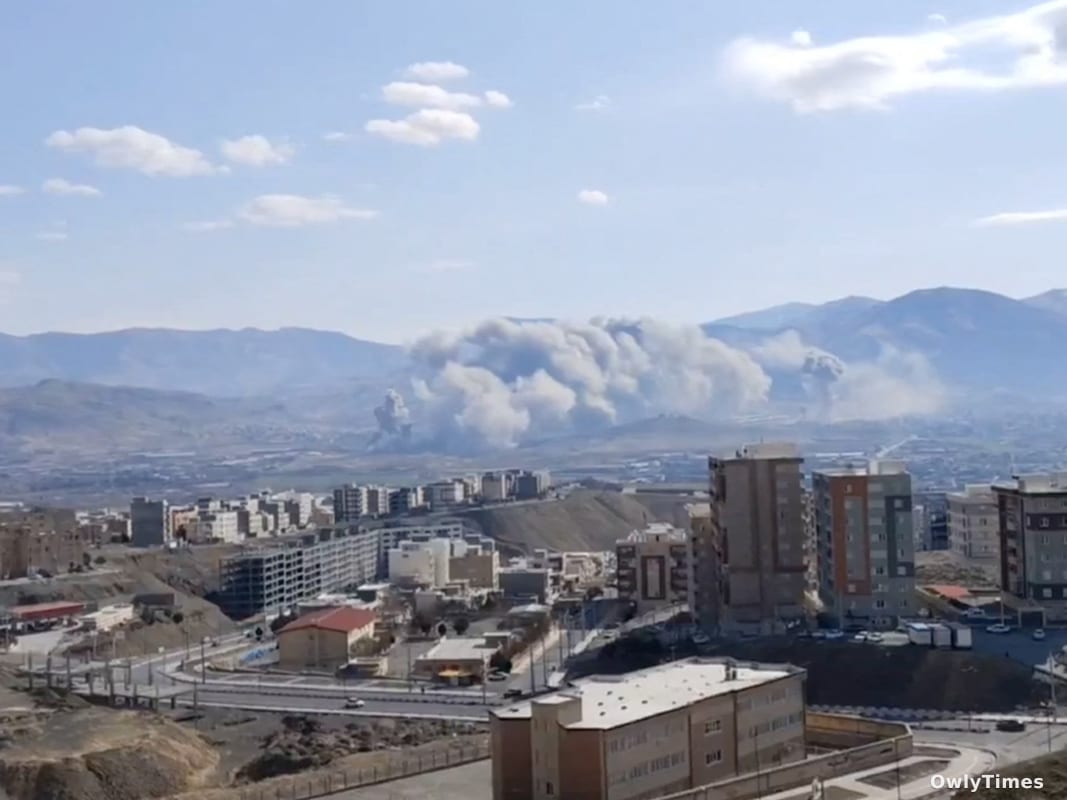

Is the world sleepwalking into another proxy war, this time fueled by a decades-old quest for a Kurdish state? The headlines scream about escalating tensions in Iran’s Kurdistan province – 112 confirmed deaths and 969 injured as of Friday, according to local officials – but the real story here isn't simply about attacks within Iran, it’s about the calculated gamble President Trump is taking by openly courting Kurdish groups while simultaneously claiming to desire de-escalation. It’s a strategy that echoes historical interventions with predictably messy outcomes, and ordinary citizens, both in the region and globally, are the ones who will ultimately pay the price for this geopolitical chess match.
A Province Under Fire, A History of Dispossession
The attacks on Iran’s Kurdistan province, carried out by the United States and Israel, aren’t happening in a vacuum. Kurds, an Indigenous ethnic minority spread across four countries – Turkey, Syria, Iraq, and Iran – have long sought self-determination, a state of their own. Estimates suggest they comprise nearly 10 percent of Iran’s population, a significant demographic with a distinct language and culture, yet lacking official recognition of their numbers. This lack of representation, coupled with historical persecution, has fueled decades of resistance movements operating from bases in northern Iraq and along the Iran-Iraq border. These groups, collectively numbering in the thousands of fighters, represent a tempting, if volatile, asset for any power looking to destabilize the Iranian government.
Reporting from Al Jazeera informs this analysis.
Trump’s Contradictory Signals and the Risk of Blowback
The timing is critical. Reports suggest President Trump has been in direct talks with both Iranian and Iraqi Kurdish groups, seemingly aiming to leverage them in a ground operation designed to spark a popular uprising within Iran. This isn’t a new tactic – the US has a long history of backing non-state actors to achieve strategic goals – but it’s one fraught with peril. What makes this situation particularly dangerous is the blatant contradiction in Trump’s messaging. He publicly stated last week that he doesn’t want the Kurds to launch an offensive, claiming the US doesn’t want to “make the war any more complex than it already is.” Yet, the attacks are happening, and the encouragement of a ground operation continues. This dissonance suggests either a deliberate strategy of plausible deniability or a chaotic internal power struggle within the administration, neither of which inspires confidence.
Beyond the Headlines: The Human Cost and Regional Fallout
The immediate impact is devastating for the people of Iran’s Kurdistan province. The Kurdistan Provincial Emergency Department reports 27 people hospitalized in standard wards and five in intensive care. These aren’t just numbers; they represent families torn apart, lives irrevocably altered. But the consequences extend far beyond the immediate casualties. Iran has already responded by launching operations against Kurdish groups in neighboring Iraq, a move that threatens to destabilize the semi-autonomous Kurdish region and potentially draw in other regional players. The Iraqi Kurdish regional government, understandably, denies any involvement in arming groups for an offensive into Iran, but the situation is rapidly spiraling beyond their control. This isn’t simply a conflict between Iran and Kurdish groups; it’s a proxy war with the US and Israel pulling the strings, and the potential for wider regional conflict is alarmingly high.
The Echoes of Past Interventions and a Looming Question
The situation bears an unsettling resemblance to past US interventions in the Middle East, where supporting one group against another often led to unintended consequences and prolonged instability. The arming of the Mujahideen during the Soviet-Afghan War, for example, ultimately contributed to the rise of the Taliban. Are we witnessing a similar pattern unfolding in Iran? The real question isn’t if this strategy will succeed in triggering a popular uprising, but what will fill the power vacuum if it does. In the next six months, watch closely for a significant increase in Iranian military presence along the Iraq-Iran border, and more importantly, for evidence of direct US funding and weaponry flowing to Kurdish groups despite President Trump’s public denials. The coming months will determine whether this is a calculated risk or a catastrophic miscalculation.





