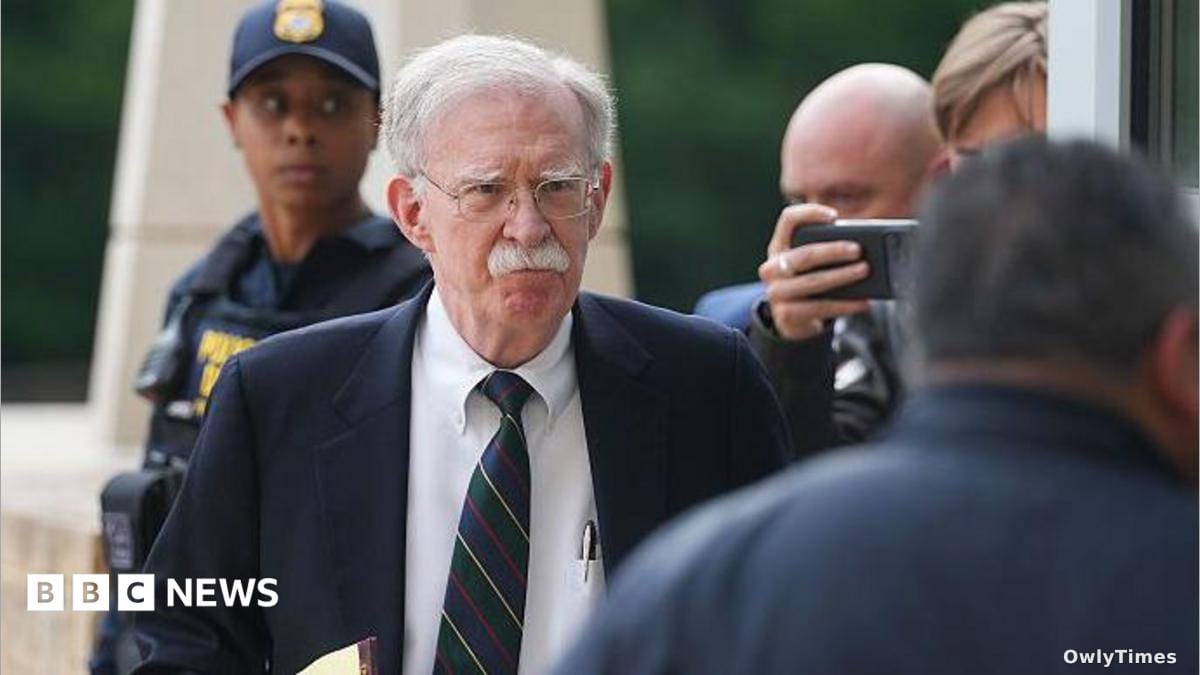

The strategic calculus behind the guilty plea entered by former national security adviser John Bolton on Friday is a calculated maneuver to minimize long-term exposure while capping the volatility of a protracted legal war. By admitting to a single count of illegal retention of classified information, Bolton has effectively traded a potential five-year prison sentence for a plea deal that limits his judicial jeopardy, according to both the BBC and CBS News. For the former official turned vocal critic of the administration, the move serves as a defensive shield against the prospect of a public trial that threatened to expose further sensitive material.
The "who benefits and who loses" framework in this case reveals a complex power dynamic. Bolton avoids the uncertainty of a full criminal trial, though he must pay a $2.25 million fine and perform 100 hours of community service. Conversely, the administration gains a powerful political weapon. As noted by NPR, the conviction allows the President to paint a former conservative stalwart and national security hawk as a lawbreaker, neutralizing a high-profile adversary. While Bolton’s lawyer, Abbe Lowell, framed the plea as a responsible act of leadership to save government resources, the administration’s allies view the outcome as a vindication of their oversight of national security protocol.
The specifics of the indictment highlight the sheer volume of material at the center of the dispute. CBS News reports that prosecutors alleged Bolton shared over 1,000 pages of diary-like entries with two relatives via non-governmental messaging apps and personal email accounts between April 2018 and August 2025. The BBC adds that the documents included information classified at the "top secret" level. While Bolton initially entered a plea of not guilty to the original 18-count indictment in October, his admission on Friday before U.S. District Judge Theodore D. Chuang marks a definitive end to his legal resistance.
Historical parallels are already being drawn to frame the current political atmosphere, though the context remains contentious. NPR highlights that Vice President JD Vance recently invoked the Watergate era, suggesting that in today’s hyper-partisan environment, such a scandal would be reduced to a fleeting news cycle. This rhetoric reflects a broader strategy of questioning the legitimacy of the "deep state" and its investigative reach. However, legal experts like Carrie Cordero of the Center for a New American Security maintain that while the prosecution of high-ranking officials is rare, it is not unprecedented, noting that such cases can be brought against both high- and low-level officials when the evidence of security risks is clear.
The political chess move to watch next is the sentencing hearing scheduled for October 28. Until then, the administration will likely continue to leverage the optics of Bolton’s plea to cast doubt on the integrity of its former officials. Meanwhile, the legal aftermath continues to evolve; as reported by CBS News, part of the plea agreement requires Bolton to debrief national security officials on the information he retained, a process that may yet yield additional friction between the former adviser and the executive branch.