
Is the American political establishment finally hitting its "legacy software" wall, or are we just witnessing a massive, disruptive firmware update? This week’s New York Democratic primaries weren't just a series of local contests; they functioned like a high-stakes stress test for the entire party’s infrastructure, proving that even the most entrenched political incumbents can be "deprecated" by a well-organized, ideologically driven movement.
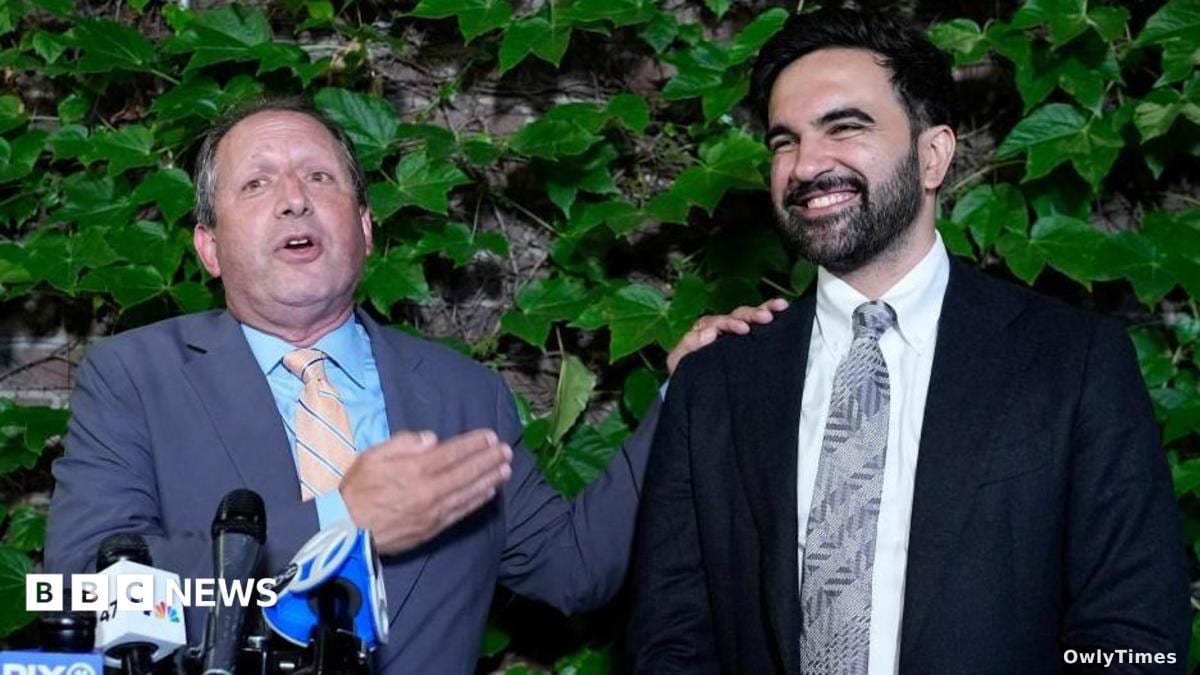
The real story here isn’t just that incumbents lost—it’s that the political machine is being re-engineered by a specific, centralized effort to replace institutional experience with ideological alignment. According to The Guardian, New York City Mayor Zohran Mamdani successfully leveraged his political capital to secure a clean sweep for three specific candidates, effectively rewriting the delegation's future. The BBC confirms this "clean sweep," highlighting that the mayor's strategy was explicitly framed not as electing more Democrats, but "better" ones.
The scale of these upsets varies significantly in the reporting, creating a complex picture of the shift. While all outlets agree on the winners, the specific defeats reveal different narratives. CBS News reports that Brad Lander ousted incumbent Dan Goldman in the 10th District, a victory The BBC quantifies with a decisive 65.7% to 34.1% margin. However, the 13th District result is framed with varying intensity: The Guardian describes the defeat of five-term incumbent Adriano Espaillat by Darializa Avila Chevalier as a "stunning upset," while CBS News calls it "perhaps the most shocking result of the evening."
Discrepancies in the race details also emerge regarding the 7th District. The Guardian reports that Claire Valdez defeated Brooklyn Borough President Antonio Reynoso, who was the preferred successor of retiring Representative Nydia Velázquez. CBS News provides a more crowded picture of that same race, noting that Valdez had to top a field that also included Vichal Kumar and Julie Won.
For the average voter, this is the political equivalent of a platform shift where the user interface suddenly changes overnight. As CBS News notes, citing a poll by the Honan Strategy Group, half of respondents are already primed for this, expressing a desire for a "new generation" of candidates. But the establishment is clearly bracing for system instability. House Minority Leader Hakeem Jeffries has already publicly signaled his dissent, stating, according to The BBC, that he and Mamdani have "agreed to strongly disagree."
This isn't just about a few primary seats; it’s about the vulnerability of the entire stack. The Guardian points out that in the 12th District, Micah Lasher managed to hold the line for the establishment against a chaotic field, including Jack Schlossberg and George Conway, who managed only 6% of the vote per The BBC.
The immediate signal to watch is how this "left-wing upgrade" performs in the November midterms. If these new candidates struggle to appeal to the swing voters that The BBC notes establishment Democrats are worried about, we can expect a massive "rollback" attempt by party leadership in the next cycle. The ultimate test will be whether this movement has the durability to survive a general election, or if it will be treated as a buggy release that voters reject when the real-world stakes of November arrive.