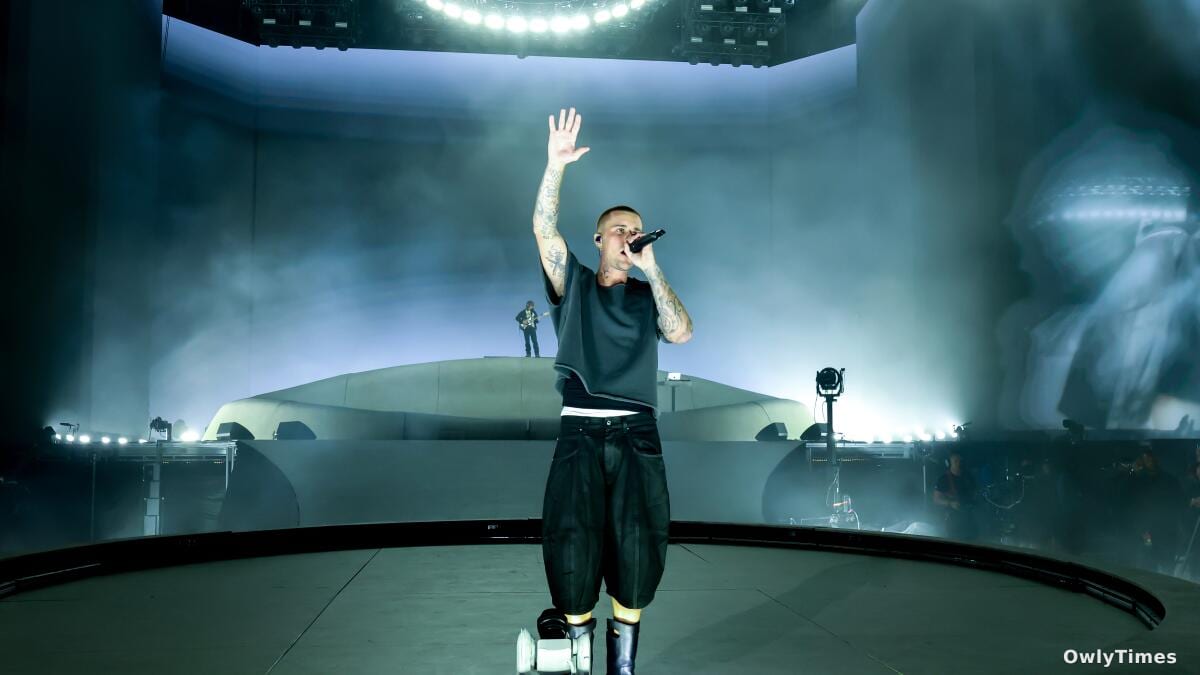

The desert dust of Coachella had barely settled on Justin Bieber’s boots before he was whisked away to a vastly different kind of stage. While his recent headline performance in Indio cemented his status as a record-breaking commercial juggernaut—reportedly becoming the highest-paid and most lucrative merch-selling headliner in the festival’s history—his latest appearance was defined by a restricted guest list and a starkly geopolitical atmosphere. Last week, at the Rosewood Miramar in Montecito, Bieber traded thousands of screaming fans for a room filled with the most influential titans of tech, entertainment, and defense.
The Intersection of Celebrity and Surveillance
The event, dubbed WNDR, served as a high-stakes gathering hosted by entertainment mogul Jeffrey Katzenberg, who founded his investment firm WndrCo in 2017. The guest list reads like a census of global power: director James Cameron, former Disney CEO Bob Iger, YouTube CEO Neal Mohan, FIFA President Gianni Infantino, and cultural icons like Oprah Winfrey, Julia Roberts, Chris Rock, Trevor Noah, and artist Jeff Koons. Yet, beneath the veneer of a celebrity-studded retreat, the conference served as a conduit for a more aggressive brand of industrial influence.
The programming reflected a jarring juxtaposition between the whimsical and the martial. While attendees enjoyed a karaoke party with pop producers StarGate and a culinary discussion with chef Nancy Silverton, the agenda pivoted sharply toward the architects of modern warfare. This was not merely an entertainment summit; it was a space where the creative class rubbed elbows with the leaders of companies deeply engaged with the current administration.
Defense Tech Takes Center Stage
The presence of Palantir Chief Executive Alex Karp and Anduril Industries’ Palmer Luckey signaled a shift in how elite circles are normalizing the defense industry. Luckey, whose company recently hosted Defense Secretary Pete Hegseth—a visit that prompted Hegseth to declare they were "rebuilding the Arsenal of Freedom"—brought the realities of defense policy directly into the Montecito ballroom.
This proximity to power is particularly pointed given the scrutiny surrounding these firms. Palantir’s AI-driven software, specifically the Maven Smart System, has faced intense criticism regarding its alleged use in targeting civilians in the Iran war. By integrating these figures into a landscape usually reserved for Hollywood deal-making, the WNDR confab underscores a broader trend of "multi-discipline" summits hosted by figures like Jeff Bezos and Eric Schmidt, where the boundaries between soft power and hard defense become increasingly porous.
The Ideological Pivot
In his recent book, The Technological Republic, Karp argues that the West must move away from what he calls "the shallow temptation of a vacant and hollow pluralism." His presence at the podium suggests that for the ultra-elite, the future of the American project is being redefined not through cultural collaboration, but through a more singular, technologically driven focus on national strength.
When an artist like Bieber performs at such a nexus, he does more than just provide entertainment; he acts as the glue in a room where defense tech and Hollywood glamour converge. The ongoing scrutiny of Palantir’s global impact, measured by the ethical debates surrounding their surveillance capabilities, will serve as the primary metric to watch. As these elite gatherings continue to proliferate, the next report on the deployment of AI-driven defense systems will indicate whether this newfound alliance between the arts and the military-industrial complex is merely a trend or a permanent restructuring of elite social influence.