
Is the era of the epic halftime show over, or has it just become a hyper-condensed, star-studded fever dream? The FIFA World Cup 2026 final certainly offered a potent cocktail of both, packing a lineup that would make any festival promoter blush into a segment that felt both impossibly long and frustratingly brief.
A Stadium Packed with Superstars, Briefly
The most significant consensus across multiple reports is the sheer density of talent crammed into the FIFA World Cup 2026 final's halftime show at New York New Jersey Stadium. Both the BBC and Variety highlight the presence of global titans like Madonna, BTS, Shakira, and Justin Bieber. However, the BBC claims the halftime show was the longest in World Cup history, running to 27 minutes and 22 seconds. In stark contrast, Variety and The Hollywood Reporter insist the show was a mere 11 minutes long, with Variety specifying that performers received "fleetingly as possible," and none got more than about two minutes on stage. This discrepancy in timing is a critical point of divergence among the reporting outlets.
A Musical Medley of the Unexpected
The performances themselves were a whirlwind. Madonna, as reported by The BBC and Variety, seemed to materialize from tunnels beneath the arena, accompanied by Brazilian football legends Ronaldo and Ronaldinho. Her segment, however, was notably short for such a colossal star. Variety notes that by the time she appeared, her performance of "Music" was nearly over. Following her, the BBC and Variety mention the conductor Gustavo Dudamel leading orchestral sections from New York and Venezuela, joined by the Muppets for a rendition of "Seven Nation Army." The Hollywood Reporter confirms BTS took the stage next, performing their hit "Dynamite" for what Variety estimates was about a minute and 40 seconds, with altered lyrics like "King Kong, kick the ball" as noted by The Hollywood Reporter.
Familiar Faces and New Collaborations
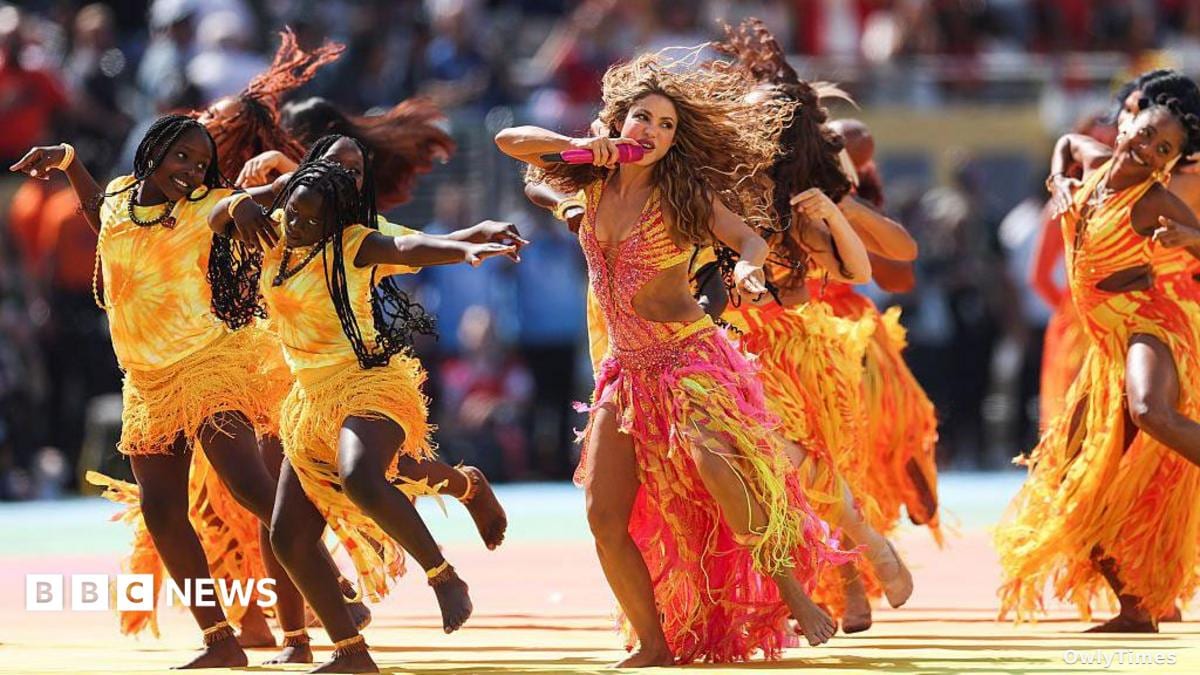
The show continued with Justin Bieber performing a solo acoustic rendition of "Everything Hallelujah," as detailed by Variety and Rolling Stone. The Hollywood Reporter and Rolling Stone also note the surprising appearance of actor Jason Sudeikis, reprising his role as Ted Lasso, to coach Bieber. The official FIFA anthem "Dai Dai" was then performed by Shakira and Burna Boy, a reunion after their performance at the tournament's opening ceremony, according to the BBC. Rolling Stone mentions that the show closed with the PS22 Chorus and Chris Martin, who curated the halftime programming, singing "We Dance." The BBC also reported on other performers earlier in the day, including Jennifer Hudson singing the national anthem, Tom Cruise giving a speech, and individual sets by Post Malone, Nicole Scherzinger, Robbie Williams, and Laura Pausini.
The Underlying Purpose: Education and Funding
Beyond the spectacle, the halftime show, produced by Global Citizen, had a charitable objective. As The Hollywood Reporter and Rolling Stone explain, the event aimed to raise $100 million for the FIFA Global Citizen Education Fund, with $1 from every ticket sold contributing to this goal. Rolling Stone adds that the fund has already raised more than half of its target. This focus on education underscores a growing trend of major sporting events leveraging their massive platforms for social impact.
The Real Story: A Calculated Gamble on Star Power
The real story here isn't just the parade of A-list performers; it's the calculated gamble FIFA and Global Citizen took on cramming so much star power into such a compressed timeframe. The sheer number of artists, the rapid transitions, and the divergent reports on the show's length all point to a logistical feat that prioritized maximum impact through sheer name recognition over sustained artistic immersion. For the ordinary fan watching, the experience was likely a dizzying blur of familiar faces and hit songs, a stark contrast to the more traditional, longer-form performances of Super Bowl halftime shows.
Looking ahead, the success of this hyper-condensed, star-packed halftime model will likely be measured not just by immediate audience reaction, but by its ability to attract sponsors and drive charitable contributions. If it proves financially and logistically viable, we can expect future mega-events to follow suit, turning halftime into an even more intensely curated, albeit fleeting, spectacle.